Walk through a Yonkers apartment building on a weekday evening and you can almost map the change by the glow coming from the windows. Fewer cable boxes, more tablets and smart TVs, and a steady hum of people watching, playing, and competing on their own schedule rather than the network’s. The way Westchester consumes entertainment has moved faster in the past two years than in the decade before it, and the habits that felt new in 2023 are now simply the default.
Streaming stopped being the alternative
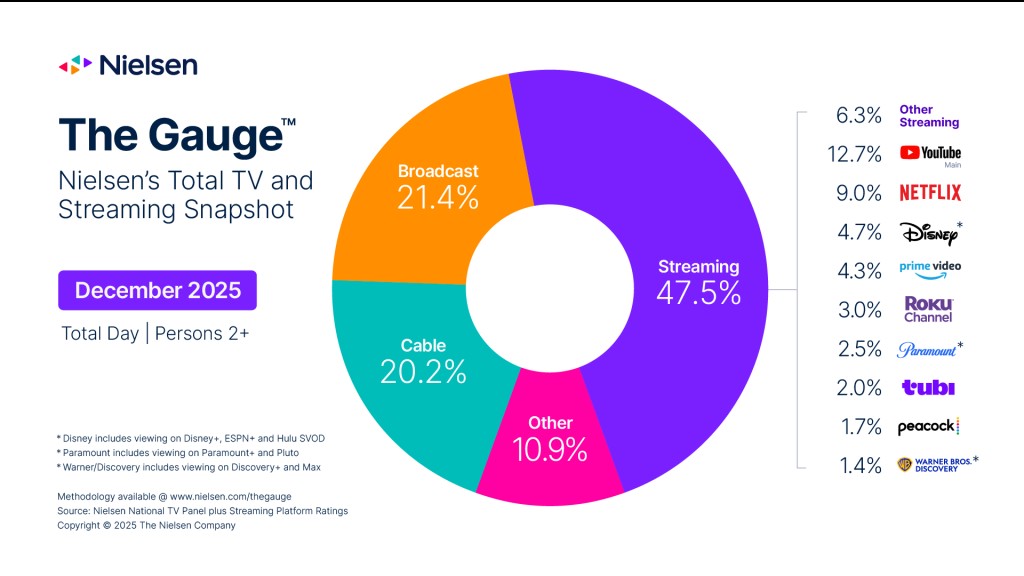
The clearest evidence is on the television itself. Streaming captured 47.5% of all U.S. television viewing in December 2025, a record high and more than broadcast and cable combined, according to Nielsen’s monthly Gauge report. For most households that figure reads less like a surprise and more like a confirmation of what the remote already shows.
Live sports still pull families to traditional channels, and a busy news cycle can spike cable numbers in any given month. But the everyday baseline has quietly become on-demand. Younger viewers in particular treat a cable bundle the way their parents treated a landline: technically available, rarely used. The growth in free ad-supported services has only sped that up, giving cord-cutters a way to trim the subscription stack without losing much to watch.
Interactive entertainment is closing the gap
That same on-demand instinct is reshaping more than what people watch. The biggest changes are happening in the entertainment people take part in rather than just sit through.
Esports has outgrown the bedroom console. Competitive events now fill arenas and draw online audiences larger than many televised finals, and a growing share of local players follow Counter-Strike or League of Legends the way an earlier generation followed the Knicks. Online gambling sits on the same trend line. New York still has not legalized online casino games, and offshore casinos have stepped into that gap, giving residents access to slots and table games on internationally licensed sites that have no regulated in-state equivalent. The pull is the same one that sends people to stream a series filmed abroad or join a game lobby hosted out of state: if the option exists somewhere, they go and find it. Mobile gaming, meanwhile, has folded casual play into the Metro-North commute, turning a 40-minute ride into a few rounds of whatever is on the phone.
The throughline across all three is control. Audiences increasingly decide what they want, when they want it, and from where, and they expect every screen to bend to that schedule.
A local stake in a national shift
Westchester is not only on the receiving end of this. Yonkers bills itself as Hollywood on Hudson and hosts some of the largest film production studios in the Northeast, and the school district is building a media and production magnet school to feed local talent into the industry. As both production and distribution move toward digital-first models, the places that make content stand to gain alongside the platforms that deliver it.
That matters for the regional economy in a way the viewing numbers alone do not capture. Streaming budgets, gaming studios, and the post-production work that follows a film shoot all create jobs that did not exist in the cable era, and a growing share of them are within driving distance of the Cross County Parkway.
What to watch through the rest of the year
A few threads are worth following over the coming months. The first is Albany, where bills to legalize online casino gaming have stalled for a fourth straight session and where any change would still take time to reach players. The second is the FIFA World Cup this summer, which is likely to push streaming sports figures even higher and test how well the major platforms handle live audiences at scale. The third is the slow squeeze on subscription spending, as free ad-supported tiers keep pulling viewers away from paid plans.
The common denominator is convenience. Once audiences get used to entertainment that fits their schedule instead of the other way around, they rarely go back. For Westchester households, the practical takeaway is simpler than the data suggests: the remote, the controller, and the phone are converging into a single screen-time decision, and the services that win will be the ones that make that decision effortless.
‘ The preceding article may include information circulated by third parties ’
‘ Some details of this article were extracted from the following source yonkerstimes.com ’