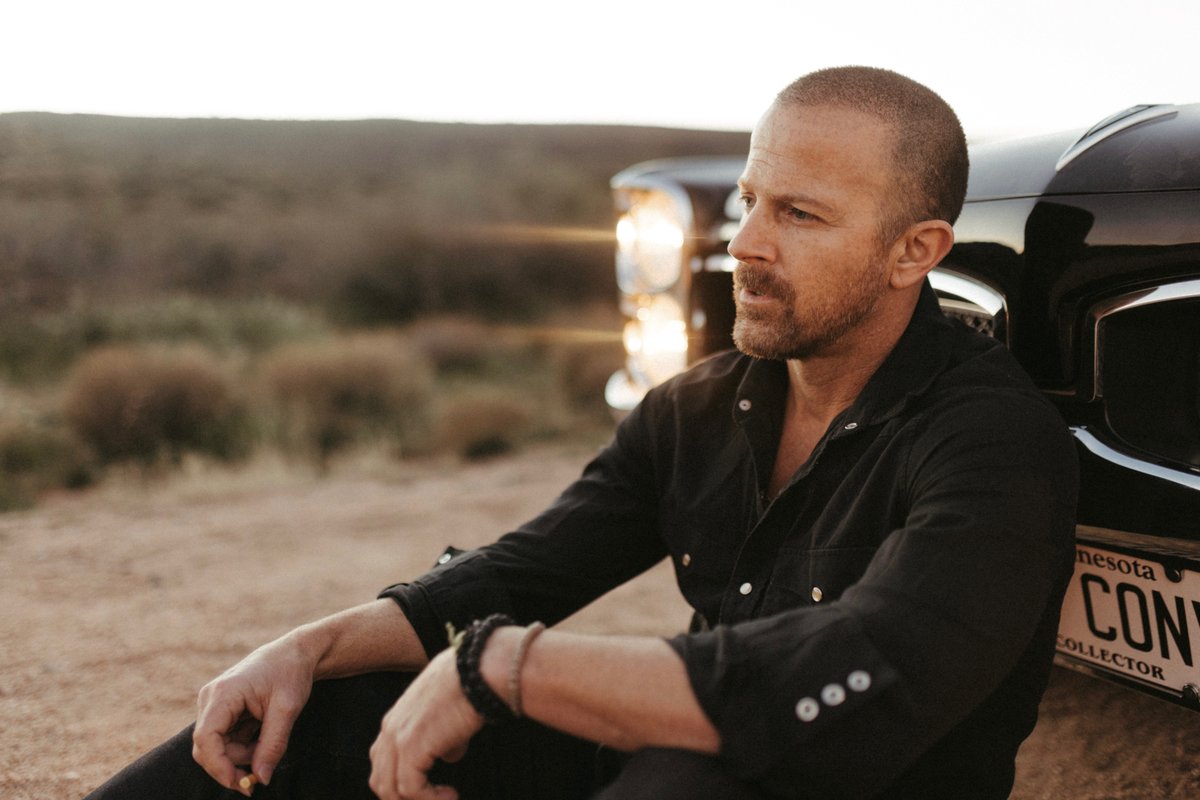
It was around 2011. Moore hadn’t released an album yet, but his record label was convinced the charismatic Georgia native was destined to become country music’s next star. After a marathon interview, his publicist turned and laughed.
“I feel like I just sat through three hours of therapy.”
Some things haven’t changed.
More than a decade later, Moore is still the kind of artist who can spend hours unpacking life, faith, loss, and the questions that linger between them. Calling from Hawaii while on a surfing trip, he reflected on a year that became the emotional backbone of his seventh studio album, Reason to Believe.
“I felt like I was describing more of who I am as a human,” Moore says. “This album is my daily thoughts. In here,” he adds, tapping his chest. “It’s an ‘in here’ kind of thing.”
Moore simply documented where life had taken him, rather than chasing a concept. Rooted in honesty rather than perfection, the result is one of the most personal albums of his career.
“When you’re honest, the song happens faster,” he says. “You’re not preaching — you’re just telling the truth.”
That honesty flourished alongside producer Andrew DeRoberts and songwriter Luke Preston, collaborators who encouraged Moore to follow instinct instead of expectation.
“I was having one of those days where I was personally struggling a little bit,” Moore says of writing “The Darkness.” “For whatever reason, I could see it all over Luke, too. I feel a very kindred spirit in him.”
The chemistry was immediate, giving rise to songs including “The Darkness,” “Faith in the Wind,” and “Headlights.”
DeRoberts also challenged Moore’s approach in the studio. Rather than layering guitars and instrumentation, he embraced restraint, allowing each musical part room to breathe.
“It can make parts sound huge because they’re not fighting or competing with anything else,” DeRoberts says. “So many of Kip’s reference points are classic albums, and the aesthetic of those records is more stripped down.”
The approach reminded Moore of the records that first defined his sound.
“Even though this record is different than those first two records, there is, I think, more of a connection point with it,” he says.
Then tragedy changed everything.
While Moore was making the album, his longtime friend and earliest producer, Brett James, died in a plane crash. The two had recently been texting about finally spending meaningful time together after years of busy schedules. They were planning a trip that never happened.
“He was like my favorite person on this planet,” Moore says. “I kept thinking there would be another time.”
In the weeks that followed, songs he’d already written took on entirely new meaning. “Headlights” became something neither Moore nor DeRoberts had initially recognized.
“It was like, ‘Oh, I think this song is about something that we didn’t even realize,'” DeRoberts says.
The loss also inspired the album’s title. Moore had long held onto “Reason to Believe,” a song James loved but that Moore had never fully captured in the studio. Recording it now felt right.
Elsewhere, “Faith in the Wind” explores the uncertainty that comes with choosing an unconventional life.
“When you live unconventionally, sometimes you question it,” Moore says. “‘Faith in the Wind’ is trusting I’m where I’m supposed to be.”
Even “Levee,” the album’s first single, grew from emotional exhaustion rather than anger.
“I was so tired of the loudness of the world,” Moore says. “It’s not right or left. I was just tired of the noise.”
For an artist who has spent more than a decade following instinct over industry expectations, Reason to Believe isn’t just another collection of songs. It’s a snapshot of grief, hope, faith, and hard-earned perspective — proof that sometimes the most powerful music comes from simply telling the truth.
Images by PJ Brown.
‘ The preceding article may include information circulated by third parties ’
‘ Some details of this article were extracted from the following source nashvillelifestyles.com ’