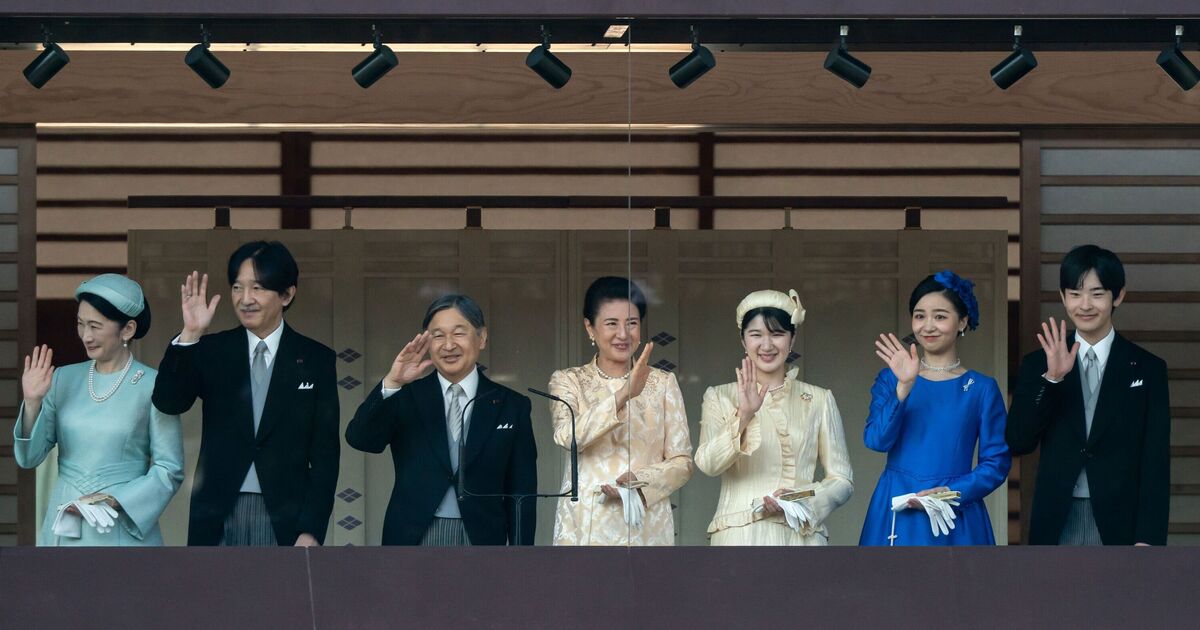
A Royal Family has made a huge change to succession laws. On Friday, Japan’s Parliament made changes to imperial succession rules, allowing male distant relatives to rejoin the imperial family and women to retain royal status after marrying commoners.
There’s a catch to the new laws – they keep the ban on female emperors. For the first time since 1949, Japan has updated its Imperial House Law to expand the number of eligible members of the Japanese Royal Family, but the new rule continues to exclude women. Opinion polls have indicated public support for allowing women to ascend the throne. The change marks an important moment in Japanese history.
The revision to the 19th-century Imperial House Law now means only male line descendants can become emperor. Some are worried that this could shrink the imperial family even more.
The 1,500-year-old institution could be in trouble due to concerns about the dwindling family numbers. Japan’s Emperor Naruhito has a 24-year-old daughter who is hugely popular, and many Japanese want her to be his successor.
However, under the rules, Princess Aiko is ineligible because she is a woman. Japan’s male-only succession rule means the line must move to the emperor’s younger brother, then to his 19-year-old nephew, Prince Hisahito.
Next in line after him is the emperor’s 90-year-old uncle.
Prime Minister Sanae Takaichi insists the male bloodline is “the only source of the emperor’s authority and legitimacy”.
“It’s a declaration to prevent female monarchs … and to defend the male lineage at all costs,” said Hideya Kawanishi, a Nagoya University expert on monarchy. “They cannot say it’s male chauvinism, so they call it tradition.”
There have been protests from members of the Japanese Government, which wants to see Aiko rule and raise the issue of discrimination against women and a patriarchal system.
Five single princesses, including Aiko, will also be affected by the change to the Imperial House Law: if they marry commoners, they will retain their royal status and continue to undertake official duties.
‘ The preceding article may include information circulated by third parties ’
‘ Some details of this article were extracted from the following source www.express.co.uk ’