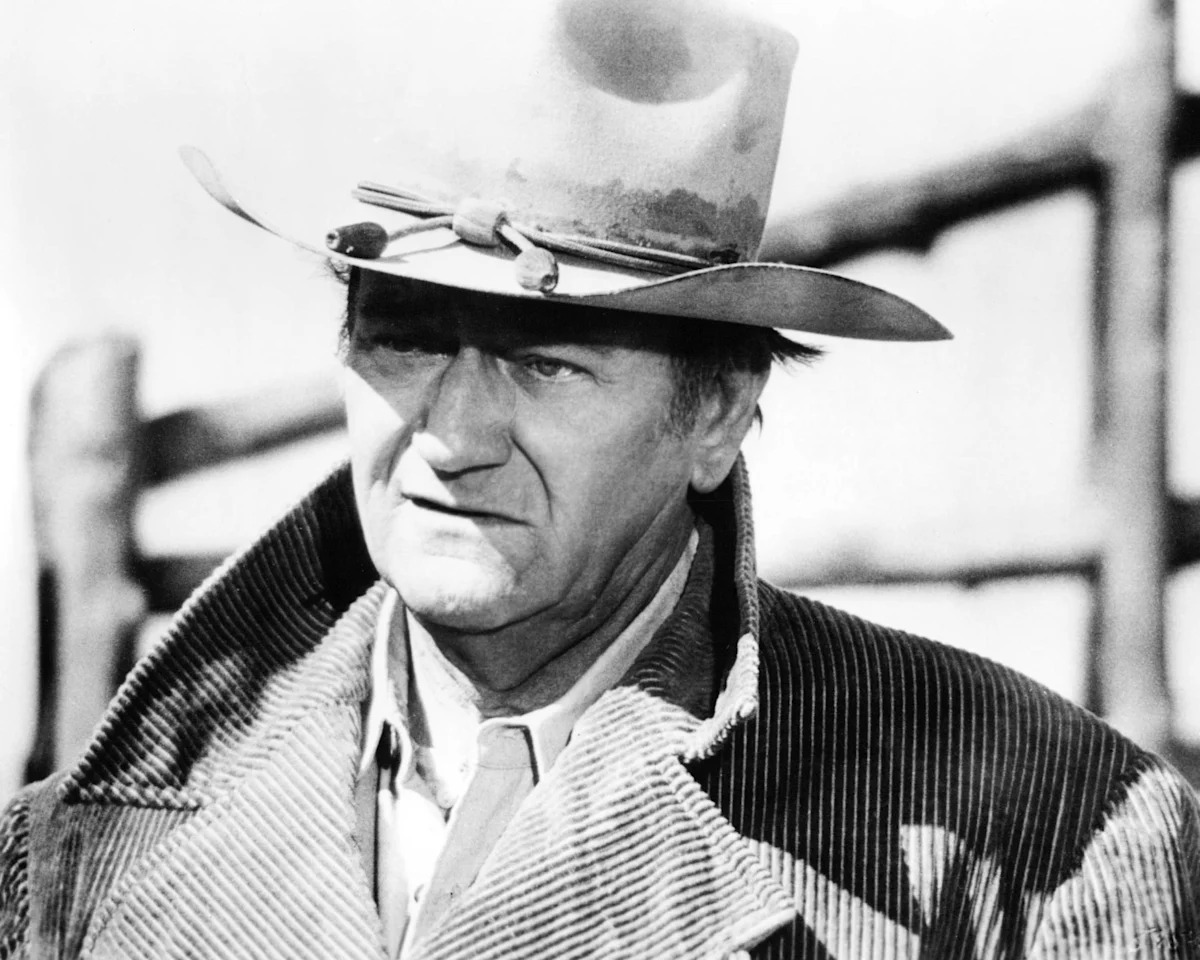
John Wayne spent decades working alongside some of Hollywood’s biggest stars, becoming one of the most recognizable actors of the 20th century in the process. But according to his daughter, there was one future legend whose performances he simply couldn’t stand.
That actor was Gene Hackman.
Today, Hackman is widely regarded as one of the greatest actors of all time, with IMDb including the two-time Academy Award winner among the best actors in Hollywood history. Yet Wayne reportedly dismissed him in remarkably blunt terms long before Hackman’s legacy was firmly established.
John Wayne Had Harsh Words for Gene Hackman
Aissa Wayne, wrote about her father’s opinions of fellow actors in her 1998 book John Wayne: My Father. According to The Duke’s daughter, Wayne never warmed to Hackman’s acting.
“He could never appear on-screen without my father skewering his performance,” she wrote, adding that Wayne considered Hackman “the worst actor in town.”
She also recalled that her father repeatedly described the future Oscar winner as “awful” and never offered much explanation for his opinion. Of all the actors Wayne discussed over the years, Aissa noted that Hackman was the only one he spoke about “with any real venom.”
Hackman went on to win the Academy Award for Best Actor for 1971’s The French Connection before claiming a second Oscar two decades later for 1992’s Unforgiven. Along the way, he delivered acclaimed performances in films including The Conversation, Mississippi Burning, Hoosiers, The Royal Tenenbaums, and Superman, earning a reputation as one of Hollywood’s most versatile and respected actors.
His work continues to be celebrated decades after his retirement, with critics and movie fans regularly placing him among the greatest screen actors of all time.
Two Hollywood Icons, Two Very Different Perspectives
While Wayne never publicly explained why he disliked Hackman’s performances, the two actors represented very different eras of American filmmaking.
Wayne became synonymous with the classic Hollywood leading man, often portraying larger-than-life heroes defined by confidence and moral certainty. Hackman, meanwhile, emerged as one of the faces of the “New Hollywood” movement in the late 1960s and 1970s, embracing more naturalistic, morally complex characters that reflected changing audience tastes.
This story was originally published by Men’s Journal on Jul 26, 2026, where it first appeared in the Entertainment section. Add Men’s Journal as a Preferred Source by clicking here.
‘ The preceding article may include information circulated by third parties ’
‘ Some details of this article were extracted from the following source www.yahoo.com ’