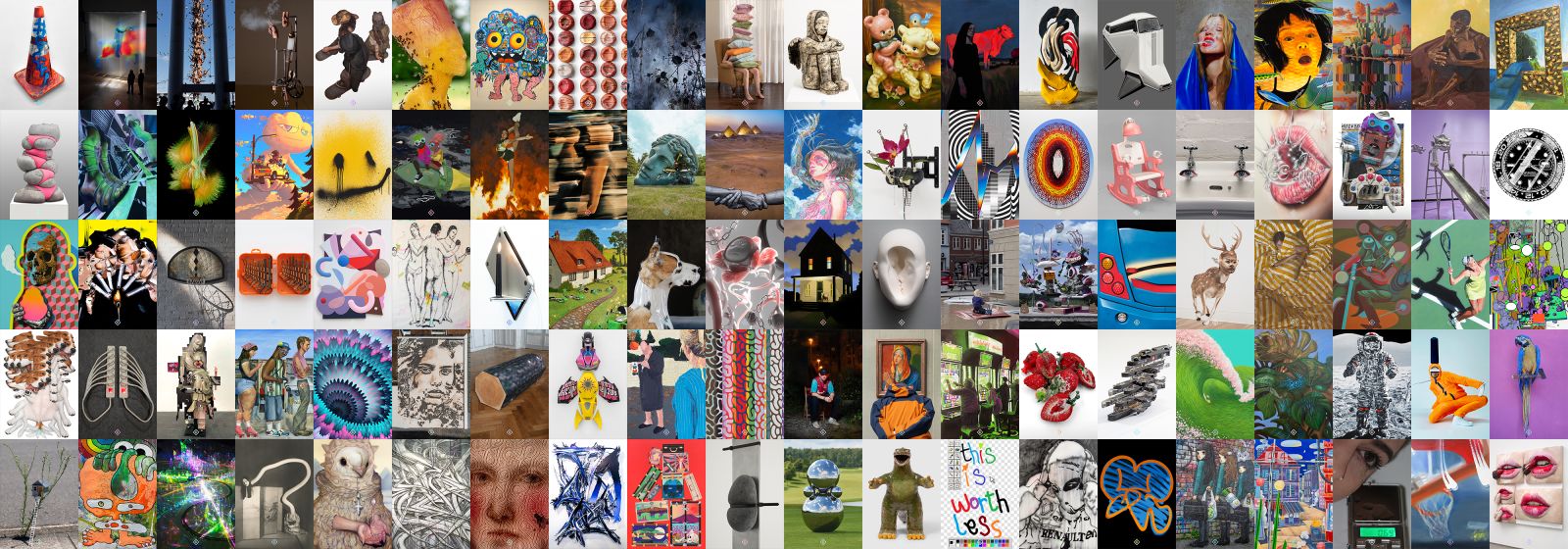
Contemporary100 is bringing trading card culture into the contemporary art world with Contemporary [Trading Cards], a new collectible platform built around 100 artists and launching July 28, 2026, exclusively through Contemporary100.com.
The inaugural 2026 Collection, positioned as the world’s first contemporary art trading card universe, packages works and artist stories into randomized 10-card packs, each containing nine Base Cards, one Foil Card and the possibility of a one-of-one Artist-Signed Card.
For collectors who follow art through galleries, auction headlines, social media and museum shows, the launch arrives at a moment when limited-edition objects have become a familiar language of fandom, while contemporary art continues to search for formats capable of reaching audiences beyond traditional buying circles.
Contemporary [Trading Cards] aims to make each card function as both a collectible object and an introduction to the artist behind it, since every pack offers a compact way to encounter practices spanning painting, sculpture, installation, photography, digital art, performance, video and public art.
Daniel Arsham, Felipe Pantone, Hebru Brantley, Tyrrell Winston, Johnson Tsang, Mulgil Kim, Joshua Vides, Stash, Tanya Marcuse, Stickymonger, Vhils, Ludovic Nkoth, Joseph Lee, Brooke DiDonato, Josh Sperling, Gina Beavers and Xavi Bou are among the names included in the first roster.
Arsham, whose work has long moved between fine art, design and popular culture, framed the project through the emotional mechanics of collecting.
“Trading cards exist between image, object, and memory, carrying stories that extend beyond their surface,” Arsham said in the release. “Bringing contemporary artists into this format opens up collecting more extensively, giving artists a chance to create something attainable and exciting for their fans.”
The format borrows the suspense of sports and entertainment cards, where pack ripping, chase inserts and scarcity shape the experience, while the subject matter shifts attention toward artists whose work often circulates in less accessible markets.
Each release is designed to create a discovery loop, since collectors may buy for a favorite name, pull an unfamiliar artist and then follow the trail from a card-sized image to a broader body of work.
The timing also places the project inside a broader shift in how culture is collected, since trading cards have increasingly moved from childhood nostalgia into a social, investment-aware marketplace shaped by online communities, live openings, grading culture and limited-edition drops.
“Every major cultural category, from sports to music to entertainment, has benefited from standardized collectibles that help people discover, collect, and engage with the people they admire. Contemporary art has never had that. We’re creating a collectible format for today’s artists that makes collecting more approachable while helping people discover, collect, trade, and follow artists throughout their careers,” Vivek Jayaram, founder of Jayaram, a firm representing many of the world’s leading contemporary artists, creators, and brands, told Newsweek.
![The Contemporary [Trading Cards] collection features reflective foil cards](https://assets.newsweek.com/wp-content/uploads/2026/07/FOIL-RAINBOW-wide.jpg?w=1600&quality=80&webp=1)
For contemporary art, a field often mediated by price opacity, institutional gatekeeping and geographic access, the card format reframes discovery around participation, since a collector can enter through the familiar ritual of opening a pack before moving toward the less familiar terrain of an artist’s studio, exhibition history or larger market.
Although artists have previously used trading cards through standalone projects and limited collaborations, Contemporary100 is presenting this launch as the first unified platform to gather 100 contemporary artists inside one collectible ecosystem, with future drops, new artworks, chase cards, limited editions, collaborations and community activations planned throughout the year.
For Contemporary100 founder Coby Katz, the release extends an audience-building mission already rooted in digital discovery, although the new product turns online attention into a physical, pack-based ritual.
“We’ve spent years helping tens of millions of people discover contemporary art online,” Katz said in the press release. “Contemporary Trading Cards is the next step in that mission. We’re bringing that same sense of discovery into the real world, making contemporary art more accessible by giving fans a new way to discover artists, support the ones they love, and build their own collection.”
The price structure also signals a bid for entry-level participation, since packs will be sold as a Single Pack for $49.99, a 3-Pack for $129.99 and a 10-Pack for $399.99, while the one-of-one Artist-Signed Cards add a rarity mechanic likely to appeal to seasoned card collectors and art fans who respond to limited editions.
In practical terms, the project folds several cultural habits into one object: the visual immediacy of a print, the serial logic of a card set, the anticipation of a randomized pack and the community energy of a drop-driven collectible market.
Culturally, the appeal rests on a tension between intimacy and scale: a card is small enough to hold, trade and display casually, while the image on it can point toward an artwork, a career and a community far larger than the object itself.
This dynamic helps explain why the format feels timely, since younger collectors often encounter artists through feeds, drops and collaborations before they encounter them through galleries, while older collectors may recognize the pack as a nostalgic object now carrying a different kind of cultural signal.
Because the first collection includes artists working across mediums and geographies, Contemporary100 is also betting on range, with the card universe giving established names and broader audiences a shared format through which contemporary art can circulate more freely.
Contact Newsweek editors on this story: Mark Muir and Sam Wilson.
‘ The preceding article may include information circulated by third parties ’
‘ Some details of this article were extracted from the following source www.newsweek.com ’