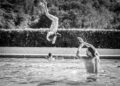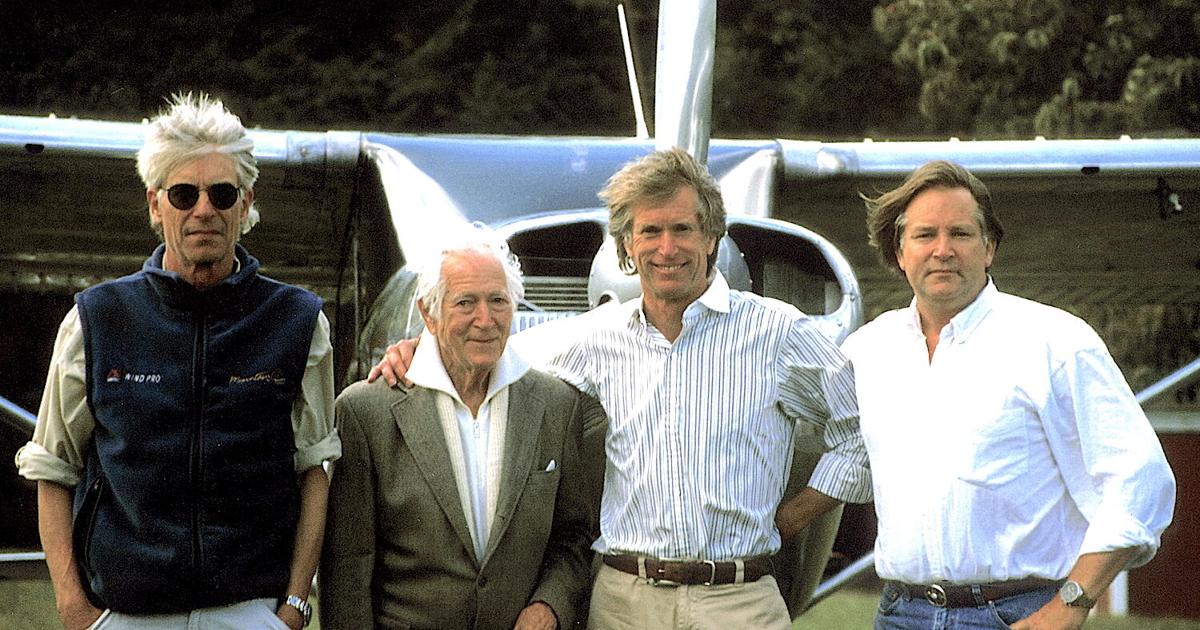
The creative works of Bob, Robert Jr., Travis and Rawn Fulton, pictured, make up the show “An Artistic Journey With the Fulton Brothers,” which is scheduled for Friday from 7:30-9 p.m. at the Wheeler Opera House. The event is free and open to the public.
Over the last 50 years, Travis Fulton has left an indelible legacy in the DNA of the art world of Aspen.
He helped found Anderson Ranch Arts Center in Snowmass Village in 1969. In 1980, he and the late Nick DeWolf designed and built the first computerized dancing fountain, which remains an iconic downtown Aspen attraction to this day.
On Friday, Fulton will present a retrospective of his life’s work in the arts at the Wheeler Opera House, alongside the work of artists whose DNA he literally shares, his brothers Bob Fulton and Rawn Fulton, and their father Robert Fulton Jr.
The free show, which is called “An Artistic Journey With the Fulton Brothers” will run from 7:30-9 p.m. The presentation will feature film footage, still photography and commentary tracing nearly 100 years of creative work by the Fulton family.
“An Artistic Journey” accompanies the opening of Travis and Rawn Fulton’s sculpture and photography exhibition at Aspen Collective gallery, where there will be a reception after the Wheeler event. Rawn will present images from his recent photographic collage series, “Mandalas: Bach and Buddhism — Visual Fugues and Dream Palaces.” The work draws on the symmetry of traditional mandalas and the structural logic of Bach’s fugues, combining a single photograph with mirrored iterations of itself to explore balance, rhythm and meditative space.
“The Fulton family is famous for their creativity and ability to push the limits of what’s possible Whether it’s the Flying Car, the dancing fountain in Aspen, incredible films from around the world or colorful Mandalas, their collective work never ceases to amaze,” said DJ Watkins, curator and owner of Aspen Collective.
Travis Fulton describes his work as an effort to translate real life experience into physical form.
“I’d like to share how the hourglass of experience and thought have transformed wood, water, stone, and light into stories,” he told the Aspen Daily News. During the program, Fulton and longtime collaborator Peter Hutter will present examples of their large-scale collaborative landscape projects from across the country.

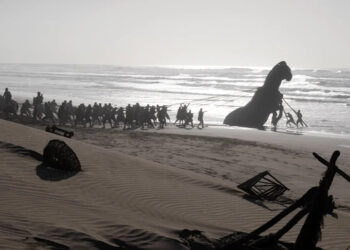
In 1932, Robert Fulton Jr. traveled the world for a year and a half on a motorcycle with a .32-caliber revolver hidden beneath the crankcase and a straw sun helmet on a rack between his handlebars. He logged 25,000 miles and shot 40,000 feet of 35mm nitrate film. Some of that footage will be shown on Friday from 7:30-9 p.m. at the Wheeler Opera House during the free show, “An Artistic Journey With the Fulton Brothers.”
Rawn Fulton spent most of his career as a filmmaker, covering an extensive range of topics from world population and the environment, to drug addiction, to the computer revolution, to several films about artists and the teachings of the Dalai Lama.
In the 1990s and 2000s, Rawn worked with John and Kate McBride of Aspen’s Sopris Foundation on the “World Population Film/Video Festival,” which challenged high school and college students to create their own films on the four cardinal challenges of our time: population, consumption, environment, and sustainability.
Bob Fulton, who lived in Aspen from the 1960s through the late 1980s, was widely regarded as one of the world’s most inventive aerial cinematographers. Known for flying and filming solo with wing-mounted cameras, Fulton’s work blended philosophical reflection with stunning imagery of natural landscapes, samples of which will be shown at Friday’s show.
His films have appeared in major commercial and broadcast projects, including work for the BBC. He earned an Emmy Award in 1997 for “Denali: Alaska’s Great Wilderness.” He died in a private plane crash in 2002. His legacy continues through the Robert E. Fulton III Fellowship in Nonfiction Filmmaking at Harvard University.
The brothers’ father, Robert E. Fulton Jr., was an inventor whose more than 70 patents included the Airphibian, the first flying car certified by U.S. aviation authorities, and the Skyhook aerial rescue system, later used by the military and popularized in films such as “Thunderball” and “The Green Berets.” His work as a filmmaker, photographer and writer will be represented alongside that of his sons, proving that the A in the Fulton DNA stands for “art.”
Together, the material that will be presented at the Wheeler reflects a shared family vision rooted in curiosity, experimentation, innovation and a lifelong engagement with nature, philosophy and art, underlined by a zestful love for life.
“As brothers, we have individually and collectively shared in an evolving artistic process our entire lives,” Travis Fulton said. Rawn Fulton punctuated the thought, saying, “Every film, every photograph, every sculpture, and every thought reflects this commitment to the exploration of what the world provides — how it has touched us, and how our work might continue to be of service.”
Robert Fulton Jr. captured the family’s adventurous spirit when he wrote in his 1986 book, “The Winds Of Life”: “To the mysterious adventure of life and all who share it, may your hearts stay young.”
‘ The preceding article may include information circulated by third parties ’
‘ Some details of this article were extracted from the following source www.aspendailynews.com ’