
CHRISTIANA MBAKWE MEDINA: So Daniel Day-Lewis, to me, he’s a star. He’s famous, but he’s not a celebrity ’cause he – I don’t…
BRITTANY LUSE, HOST:
No, he doesn’t play into it.
MBAKWE MEDINA: He doesn’t play into it. I don’t know anything about him. I think Kim Kardashian – I think she’s famous. I think she’s a celebrity. I don’t think she’s a star.
LUSE: Ooh. Ah.
(LAUGHTER)
MBAKWE MEDINA: I don’t. I just don’t. I don’t.
LUSE: I mean, I don’t disagree with you (laughter).
MBAKWE MEDINA: Yeah, yeah. Timothee Chalamet – I think he’s famous for acting. I think he’s a celebrity. I don’t think he’s a star. I don’t feel it. And so it’s just been the most helpful rubric for, I think, digesting celebrity or, like, pop culture right now, because there are so many people who – and I think this is a real boomer thing. They’re like, who are these people? Why do the kids care about Alix Earle? And I’m like, well, it’s ’cause she’s a star.
LUSE: (Laughter).
MBAKWE MEDINA: Do you know what I mean? Like, you may not like it, but she actually is a star. That’s why people want to see her do her makeup and get drunk. And there – millions of people are following this on TikTok.
(SOUNDBITE OF TAPE RECORDER)
LUSE: Hello, hello. I’m Brittany Luse, and you’re listening to IT’S BEEN A MINUTE from NPR, a show about what’s going on in culture and why it doesn’t happen by accident.
(SOUNDBITE OF MUSIC)
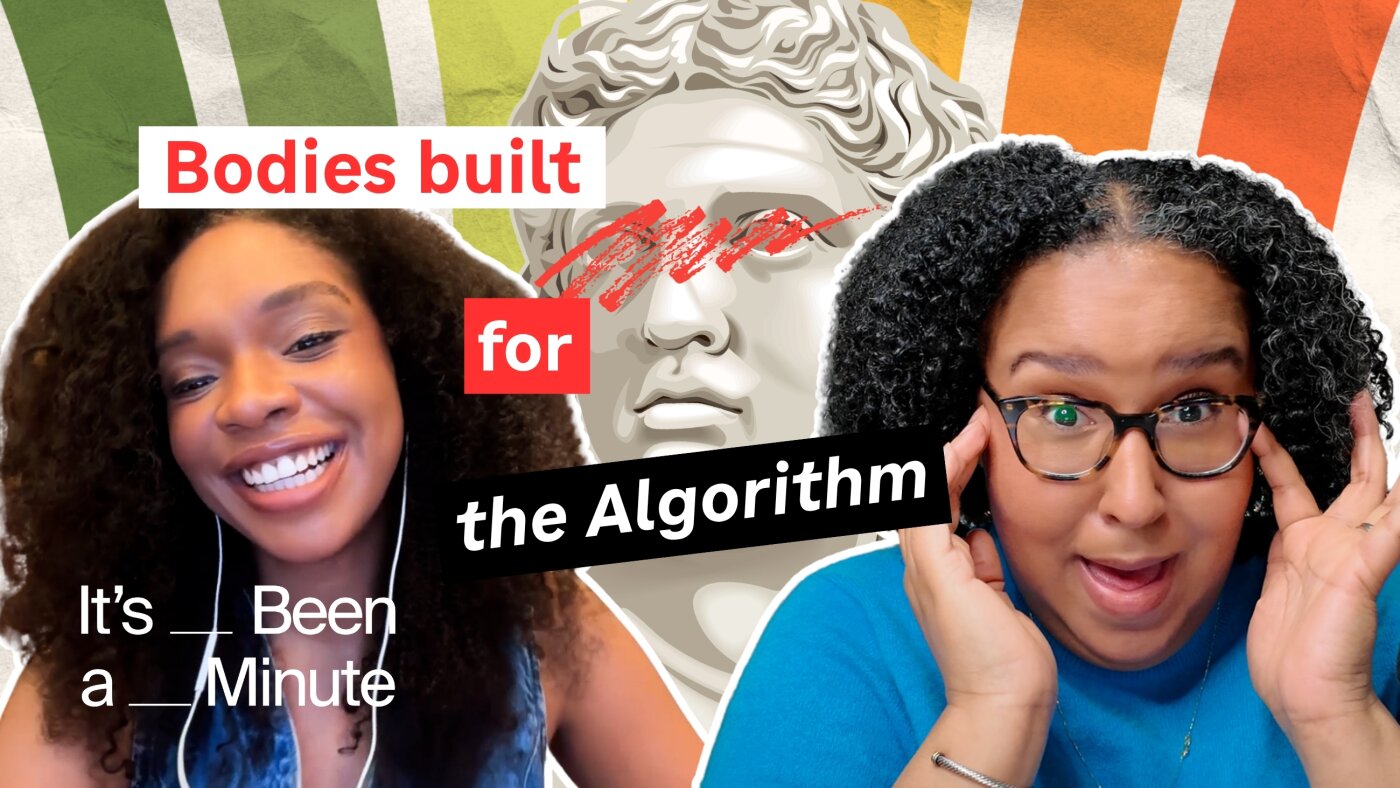
LUSE: I don’t know about you, but I am constantly having conversations with people about what it means to be a star in today’s crowded media landscape. It’s a question that has both Hollywood and audiences stumped. The film industry is having trouble capitalizing on newer stars, even those with household name status, and even bona fide A-listers aren’t selling at the box office the way they used to. But what even makes someone a star? Is it talent? Using generative AI to de-age you? TikTok follower count? Or maybe it’s what our guest today theorizes – a body built for the algorithm.
Screenwriter and host of the Pop Syllabus podcast Christiana Mbakwe Medina joins me to unpack how the taxonomy of what makes a star has changed. And what the advent of social media and AI means for Hollywood as we know it – for better or worse. Christiana, welcome to IT’S BEEN A MINUTE.
MBAKWE MEDINA: Thank you for having me.
LUSE: I’m so excited to have you. I’m so excited to have you. There are so many of, like, your pop culture theories that I have just been blown away by, and I’m so glad that we get to give some of them a deeper examination today. So I’m very thrilled that you’re on the show. I want to start, though, by bringing in a conversation that I’ve seen unfolding across social media the past couple weeks, but also kind of the past few years. Who defines modern-day movie stardom to you?
MBAKWE MEDINA: Oh, my gosh. That is – that’s a…
LUSE: It’s layered.
MBAKWE MEDINA: …Brilliant question. That is very layered.
LUSE: (Laughter).
MBAKWE MEDINA: And it’s interesting you start with that question because yesterday I was speaking to my husband when we were talking about the studio system, you know, in the era of Golden Old Hollywood…
LUSE: Yeah, right.
MBAKWE MEDINA: If you were an actor or an actress, you were assigned to a particular studio, and you could…
LUSE: Yeah.
MBAKWE MEDINA: …Only make movies for that studio. And for that reason, the studio had, like, a huge – I don’t know. They invested in their stars. It was bad for the star…
LUSE: Yes, yes, yes.
MBAKWE MEDINA: …Because sometimes they were like, I don’t want to – I want to make a movie with that studio. I don’t want to be at MGM. I want to be over there – right? – so…
LUSE: Sometimes they were like, we’re going to take your hairline up, Rita Hayworth (laughter).
MBAKWE MEDINA: Yeah, yeah, yeah, yeah. We’re going to give you mood stabilizers and some cocktails and we’re going to make you do this horrible thing on set. But basically, the studio system were like, you’d pluck people from obscurity, or the agents would push them to you, and you’d be like, you’re assigned to this studio, and you’re churning out X number of pictures per year. And the studio system very much defined who is a star and who is not because it’s institutionalized, it’s gate-kept. It’s – it works a certain way.
LUSE: Yeah, yeah, yeah, yeah.
MBAKWE MEDINA: Obviously, we don’t have that studio system now. Like, it’s a very different one. And in the ensuing decades, we’ve had – the tabloid press for a while, have kind of decided who is a star. It’s like…
LUSE: Yeah.
MBAKWE MEDINA: …You’re really following coming out of clubs, and it’s the paparazzi being drawn to a particular person – right? – it’s – ’cause, you know…
LUSE: Yeah.
MBAKWE MEDINA: Princess Diana was never in a movie, but I would put her up there in terms of…
LUSE: Absolute star.
MBAKWE MEDINA: …The stardom. Absolute star. So sometimes it was, like, the tabloid press or the mainstream press. And then, in the digital age, things kind of got democratized a bit because then it was the bloggers saying, who are we leaning towards? Or people making themselves stars in terms of the influencer class. And so if you’re saying now who defines what a movie star is, it’s really hard to say. I think it’s very fractured and fragmented. I think the machine still is there. But then you have, like, kids watching Twitch streams, and they’re like, I care what IShowSpeed does. And I’m going to – you can – you know when you…
LUSE: They care so much what IShowSpeed does.
MBAKWE MEDINA: And you have, like, hundreds of thousands of people watching Kai Cenat live or whoever it is on Twitch, and they’re following their adventures. And that’s the public, I think, deciding who a star is. Now, that – if that translates into movie stardom, that’s a different question.
LUSE: Yeah.
MBAKWE MEDINA: We have to wait and see. I think, increasingly, the people kind of decide who the stars are. Now, are they Hollywood movie stars that make blockbusters? I don’t know. I don’t think they really exist anymore. Everything’s a niche now. Don’t they say that, like, everything is niche, everything is siloed? So it’s that big, like, unifying mainstream star. I think that’s something that only us millennials will remember.
(LAUGHTER)
LUSE: I mean, you know, I actually want to dig deeper into this ’cause you actually have a really brilliant, well-thought-out rubric for how you think about stardom, celebrity and famous people.
MBAKWE MEDINA: Yeah.
LUSE: If you wouldn’t mind breaking that down for the people…
MBAKWE MEDINA: Yeah.
LUSE: …Who haven’t read this. What is the difference between a star, a famous person and a celebrity?
MBAKWE MEDINA: Yeah. My feeling is that most stars are kind of unknown, and sometimes you run into them in the gas station, and you look at this woman, you’re like, you’re not supposed to be here. You’re a star.
LUSE: Yes.
MBAKWE MEDINA: You know, these people…
LUSE: Yeah. Yeah, yeah, yeah.
MBAKWE MEDINA: So it’s kind of like charisma, right? Just this charisma, and we don’t know why they have it. And I do like to say that stars aren’t always necessarily likable. I think Donald Trump is a star. But you can’t – but you have to keep looking at them, right? A star has that thing where you’re like…
LUSE: No, there’s something compelling. There’s something compelling there.
MBAKWE MEDINA: Something compelling.
LUSE: And it’s like you can’t buy it.
MBAKWE MEDINA: You can’t buy it.
LUSE: But you also can’t hide it.
MBAKWE MEDINA: You can’t buy it. You can’t hide it. I think there are, like, some stars – the greater stars know how to transpose their stardom. I don’t know if this is a true story or not, but there is this urban legend of Marilyn Monroe walking down, I think, a New York street, and she’s been interviewed by a journalist, and she – no one recognizes her and she was like, I am – this is me as Norma Jeane. and she turned to the journalist. She said, do you want to see me become Marilyn Monroe? And she changes her body language and just her posture. And people start saying, Marilyn, Marilyn, Marilyn. And that’s all to say that, like, a real star knows how to switch it on and off and modulate…
LUSE: Yeah.
MBAKWE MEDINA: …In a way, ’cause they know what their power is, what – like, when they really learn to harness it. And so I say Beyonce is an example of that of someone who’s, like, deeply introverted and very shy. But then on stage, you’re, like – you can’t stop watching. I think celebrity, on the other hand, is where a person or sometimes it’s even, like, a institution can cultivate the human need for idolatry. Like, I think humans just need to worship something. There’s something we’re just – we’re just hard-wired to finding gods wherever we can.
LUSE: (Laughter)
MBAKWE MEDINA: And celebrity is when you really exploit that innate need. And I think that’s leaning into the act of stardom. Whether you’re a star or not, you call the paps. You get a publicist, you leak stories. You know, you get your stylist to say you got married, and then you show up on the…
LUSE: (Laughter).
MBAKWE MEDINA: …Red carpet wearing something borrowed. Like, that is celebrity. But that’s celebrity, like, done really in a very smart way, but then sometimes…
LUSE: Yeah.
MBAKWE MEDINA: …Celebrity is very naked. So, like, Kim Kardashian to me…
LUSE: Oh, like – a lot of people, I was going to say, respond to with the Kardashians, for sure.
MBAKWE MEDINA: Yeah, it’s completely naked. It’s just that – it’s lustful, it’s so naked. It’s so really primal. And it’s, like, celebrity news that you really wanted. You know? It’s just like when you see these pictures of people outside of their house and they’re taking out their trash, but they’ve got a full face of makeup and they’re dressed perfectly.
LUSE: (Laughter).
MBAKWE MEDINA: And it’s like, your publicist called…
LUSE: Yeah.
MBAKWE MEDINA: …The paps, right? We know what’s happening here. And so, to me, that is celebrity. And then fame or famous people is really different because, you know, the thing about fame is that you can become famous very suddenly, overnight, for doing some, you know, brilliant thing. You know, sometimes, it’s like, you may have rescued a child from a burning building or whatever it is, or you may be famous because you accomplished something. I give the example of, like, Dr. Fauci, who was momentarily famous, right?
LUSE: Yeah, yeah.
MBAKWE MEDINA: Been like a doctor his whole life, and then COVID happens, and suddenly this guy is really famous and he’s famous for being a doctor. And I think fame is often skill and accomplishment-based, you know? So it’s just – it’s – fame is very different because it’s – I don’t say it’s more pedigree, but often to become famous, you have to have done something, right?
LUSE: Well, you also mentioned – in your newsletter, you said that you – it often requires fame – excuse me, often requires luck, rich parents…
MBAKWE MEDINA: Yeah.
LUSE: …Or both.
MBAKWE MEDINA: Yeah, often.
LUSE: Like you said, it could very much be skill-based, like tons of people become famous for their skill or for their charm. But there are also lots of people who don’t have any talent (laughter).
MBAKWE MEDINA: Yeah, yeah. And it’s true.
LUSE: Or any charm.
MBAKWE MEDINA: No, no, not at all. Or it’s just – I think, like, the fame portion of it all, I think, kind of exposes, like, how meritocratic our society isn’t, right? ‘Cause if you think of, like, famous lawyers, famous doctor, famous inventors, it’s often you’re like, oh, you had really good parents and you came from a certain type of home, and you were kind of pushed and nourished, right? Like, fame is, like – you know, fame is the one that it’s just like, we know why people accomplish what they’re doing. Yeah, sometimes they’re brilliant and they’re hardworking, but it’s often a reflection of, like, their socioeconomic upbringing, right?
LUSE: Yeah.
MBAKWE MEDINA: So I put fame in a different category. Well, fame is just like, you’re so excellent. So Daniel Day-Lewis, to me, he’s a star, he’s famous but he’s not a celebrity. ‘Cause he…
LUSE: No, he doesn’t play into it.
MBAKWE MEDINA: He doesn’t play into it. I don’t know anything about him. I think Kim Kardashian – I think she’s famous. I think she’s a celebrity. I don’t think she’s a star.
LUSE: Ooh. Ah.
(LAUGHTER)
MBAKWE MEDINA: I don’t. I just don’t. I don’t.
LUSE: I mean, I don’t disagree with you.
MBAKWE MEDINA: Yeah, yeah. Timothee Chalamet – I think he’s famous for acting. I think he’s a celebrity. I don’t think he’s a star. I don’t feel it. I don’t feel it in the..
LUSE: But there’s like an investment, though, in him becoming a star.
MBAKWE MEDINA: A huge investment. And I think that if you look at the kind of genesis of his career, and he had two big films behind him, it was “Lady Bird” and “Call Me By Your Name.” And this is not even conspiratorial, but you could almost feel them being like, OK, this is the neo. This is the one. This is who we want to be the next Leonardo DiCaprio ’cause I think that’s what the machine has been looking for for the longest time, right? They want…
LUSE: Yeah.
MBAKWE MEDINA: …A Leo, who is all three, actually. He’s one of these rare people who is, like, Leonardo DiCaprio, I consider all three. And I think…
LUSE: Yeah. Yeah, yeah, yeah.
MBAKWE MEDINA: But, like, I just don’t think he’s a star in that regard. And so it’s just been the most helpful rubric for I think digesting celebrity or, like, pop culture right now because there are so many people who – and I think this is a real boomer thing – they’re like, who are these people? Why do the kids care about Alix Earle? And I’m like, well, it’s ’cause she’s a star. Do you know what I mean? Like, you may not like it but she actually is a star. That’s why people want to see her do her makeup and get drunk. And millions of people are following this on TikTok. So, yeah, that’s the theory.
LUSE: She was on the football field for, like, Bad Bunny’s Super Bowl performance.
MBAKWE MEDINA: She was.
LUSE: She was the only person who I would not consider a traditional celebrity who was there.
MBAKWE MEDINA: Yeah. Yeah.
LUSE: She was the main person that I was like, what is she doing here?
MBAKWE MEDINA: Yeah.
LUSE: But that sent a message to me.
MBAKWE MEDINA: Yeah.
LUSE: You know, as somebody who is, you know, getting up there, that, you know, there’s a different generation who has a different perspective on who…
MBAKWE MEDINA: For sure.
LUSE: …Is a star and who isn’t. And maybe it’s not for me to say.
MBAKWE MEDINA: Yeah.
LUSE: But I bring all this up because, like, I don’t know, award season is now, thankfully, firmly, firmly behind us.
MBAKWE MEDINA: It was so long.
LUSE: So now – what’s that?
MBAKWE MEDINA: It was so long (laughter).
LUSE: It was so long. It was so long. And it drug on forever, and it got so nasty and so ugly. So I’m glad it’s in the past. But now, it’s like, we’re looking forward toward the spring releases and the summer blockbusters. And so all of these different trailers are hitting the streets, and, you know, everyone’s looking at this new – or at least a lot of people are talking about the new Zendaya and Robert Pattinson film, which seems like a film that is engineered to be a star vehicle. And everyone’s looking – you know, and these are also – also, too, we’re looking at Timothee Chalamet. Like, both Zendaya and Robert Pattinson have other movies coming out – blockbusters – this year.
MBAKWE MEDINA: Yeah.
LUSE: And I think a lot of people, like you said, are kind of looking around like, is this all there is (laughter)?
MBAKWE MEDINA: Yeah. Yeah.
LUSE: Is that all there is? Which is no shade to those people. It’s just, like you said, there used to be – Hollywood used to work in a different way than, you know, as you mentioned, basically millennials – people our age and up – are going to remember. But maybe those new rules don’t apply anymore. It feels to me like there’s kind of, like, a lot of anxiety right now in Hollywood or across entertainment more broadly…
MBAKWE MEDINA: Yeah.
LUSE: …Regarding, like, who’s going to rule this next era of Hollywood, like, and also who’s going to save Hollywood as a business…
MBAKWE MEDINA: Yeah. Sure.
LUSE: …You know, as Timothee Chalamet pointed out. It was an interview he did earlier this year that was for, like, a promotional conversation from “Marty Supreme.” I think he was talking to, like, Matthew McConaughey or something like that. You know, the movie business could one day become this kind of, like, niche, you know, kind of form of entertainment, similar to opera or ballet. Those are the examples that he used. People freaked out about the – we don’t have to talk about the freak-out…
MBAKWE MEDINA: (Laughter).
LUSE: …Or people freaking out. But, I mean, these are – while these are, like, very beloved, like, forms of entertainment, they do have increasingly small – I mean, they have – rather, they have much smaller, more niche audiences than mass entertainment, like movies. But I don’t know. Like, you know, what seemed to me that Timothee Chalamet was saying was that, like, if the business doesn’t figure out a way to sort of connect with audiences and possibly grow audiences and sustain those audiences, then cinema could go that way. I don’t know.
MBAKWE MEDINA: No, yeah.
LUSE: I wonder, like, how are you seeing this play out in your corner of the industry – this kind of, like, anxiety over, like, this disconnect? And, like, what happens if Hollywood, like, fails to find new stars?
MBAKWE MEDINA: Yeah. I mean, it’s quite stressful. I will say, like, I felt – I feel very fortunate that after the strike, I was able to get into a room – a room that I really enjoyed and a room I really loved – and learnt a ton. But I know people that haven’t worked since the strike. I know people that haven’t worked who, even before the strike, were having trouble because of COVID. And it’s not just the writers that are impacted. There’s – we have to remember our crew. Like, the shows are made – movies and TV shows don’t exist without the crew, right? And the crew often – you know, you kind of represent the middle class of Hollywood and are being pushed out and finding LA increasingly unaffordable. And obviously, the fires disproportionately impacted people in crew and in the animation world. And there’s, like, a veiled, palpable sense of worry, you know, because if you think about it, this is the only job a lot of people have ever known, and they’re not qualified…
LUSE: Yeah.
MBAKWE MEDINA: …For anything else. So for some people, it’s too late for a pivot. And they really love what they do. Like, it’s – there’s an alchemy to making television or making movies. It’s great. You can create stories, and these are things that people watch when they get home from a hard day at work. Like, there’s actually something very beautiful and almost sacred about that. And so to – for some people, it’s like, they want to stay in the game. But, you know, you read all the data about how many lots are empty and how much work is not happening in the industry, and it’s worrying. And then you have the advent of AI. But when I do speak to friends about this, especially friends who are much further than me in their writing careers, they kind of keep coming back to the fact that human beings have this longing for story. And that’s not going anywhere. And we’re seeing it on, like – currently on TikTok. This fruit love drama is going super viral. I think it’s American, but…
LUSE: When I tell you it doesn’t matter what the topic is…
MBAKWE MEDINA: One of my friends loves it. He’s like, oh, it’s great. It’s like Tyler Perry but with fruit. And my friend loves that show.
LUSE: It is.
MBAKWE MEDINA: (Laughter).
LUSE: No, but it’s so funny. That literally – like, the fruit dramas – that has come up, no matter the topic, in, like, the last six interviews that I’ve done. No matter the topic.
MBAKWE MEDINA: It’s kind of crazy. I’m like, what is going on? But…
LUSE: I know. I know.
MBAKWE MEDINA: It just tells that, like, humans, we – like, we tell stories and listen to stories to make sense of the world. So the people are always going to want to watch television, and they’re going to want to watch movies. We just have to figure out a way to make them come back to wanting to watch it on a network or a streamer or – ’cause they’re going to just find it somewhere.
(SOUNDBITE OF MUSIC)
LUSE: Don’t go anywhere. We’ve got more coming up after the break.
MBAKWE MEDINA: These women are super tiny. I think the thing that I find interesting about the sculpted body is that so many contradictions exist in it.
(SOUNDBITE OF MUSIC)
LUSE: I’m glad you bring up, like, the labor aspect of all of this ’cause I think that’s something that kind of gets lost when people are thinking about these things. Like, they’re like, oh, Timothee Chalamet, he’s going to be rich anyway.
MBAKWE MEDINA: Yeah.
LUSE: Why do I care?
MBAKWE MEDINA: Yeah.
LUSE: But, I mean, there are so many people that have fed and raised families off of this…
MBAKWE MEDINA: Yeah.
LUSE: …Industry for generations.
MBAKWE MEDINA: Yeah.
LUSE: For decades. I mean, Hollywood is one of the big drivers of California’s economy. The state of California has one of the largest economies – not just in the United States…
MBAKWE MEDINA: Yeah.
LUSE: …In the world.
MBAKWE MEDINA: In the world, yeah.
LUSE: Like, there are potentially, like, it’s – there’s so many layers that are sort of, like, caught up in whether or not Hollywood continues to exist or not. And I’m not saying that, like, everything that Hollywood has put out has been, like, you know, a net positive for society. Like, we could – I’m not – we don’t even have to…
MBAKWE MEDINA: Yeah.
LUSE: …Open that can of worms…
MBAKWE MEDINA: Yeah.
LUSE: …Because we already know.
MBAKWE MEDINA: Yeah, I think people think of, for instance, SAG, which is, like, the actors’ guild. It’s just like – it’s just regular people, you know, working people and their labor is acting your – using your body. Do you know what I mean? If your body doesn’t work, you can’t work. I think people forget that part of it. And you think of an actor or writer, a producer or – you just think it’s, like, fancy Hollywood but it’s like, no, the vast majority are just, like, just working a job, trying to make a living, trying to make a life to support themselves and support their families. And that’s vanishing. And, you know, it seems like – I think Hollywood, as a whole, like, as a monolith, is kind of an unsympathetic institution as it were. And we were like, oh, those coastal elites, boo-hoo-hoo. And you’re – but it’s just…
LUSE: (Laughter) Yeah.
MBAKWE MEDINA: It’s, like, no, these are just, like, regular people who have a dream and want to make money and want to work and aren’t particularly rich and are also one check away from losing everything, right?
LUSE: Yeah.
MBAKWE MEDINA: Most people aren’t this mega version of a star who’s making X million per movie. Most people are really living paycheck to paycheck. That’s the reality.
LUSE: We can’t really have this conversation without talking about kind of, like, AI, and where AI is kind of, like, fitting into all of this. Like, one recent move that feels kind of foretelling in this moment is the use of AI in resurrecting the image of the late Val Kilmer for an upcoming film called as – let me make sure I get this right, “As Deep As The Grave.” And this is a role that he secured before his passing in 2025. And he was brought to life, I guess, on screen with this generative AI technology.
And basically, he – like, you know, he was cast in this movie. He couldn’t show up to set because he – you know, because of his illness, he wasn’t well enough. And I’ll say, like, this is something – this is a choice the director made, but it was done in collaboration with Val Kilmer’s estate. His daughter Mercedes, she was in full support of it. According to the director, one of Val Kilmer’s other children also was in support of making this film in this way. Like, it’s not my personal decision to make, right? But, like, people were really bugged out by that. Like…
MBAKWE MEDINA: Yeah.
LUSE: I was really bugged out by that. I saw the image, and it was kind of like – it was a little too uncanny valley for me. It felt a little – not to sound, like, superstitious, necessarily, but there is something very shaky to me about sort of reanimating the dead in this way…
MBAKWE MEDINA: Yeah.
LUSE: …That I think, like, that’s something that cuts across, I think, a lot of cultures and a lot of people’s beliefs, whether they are secular or spiritual. I don’t know, when I think about what makes, like, a movie star or a star of any kind, like, really compelling, it feels so antithetical to AI. Like…
MBAKWE MEDINA: Yeah.
LUSE: …One of the things that was interesting about Val Kilmer is, like, he was this super handsome guy who was a great dramatic actor, but sometimes would, like, completely transform himself. But also sometimes he was really good at comedy. There’s a sort of unexpected, kind of surprising element to him that to me feels very at odds with, like…
MBAKWE MEDINA: Yeah.
LUSE: …The entire concept of generative AI. So I wonder, like – I don’t know, like how – what does this move toward embracing AI in Hollywood say about what, like, maybe executives think…
MBAKWE MEDINA: Yeah.
LUSE: …Audiences want to see?
MBAKWE MEDINA: Yeah, that’s an interesting question. I think there’s kind of two components to it. On the one hand, I think it is a reflection of tech’s increasing influence on Hollywood and how people in tech think right now. Hollywood has a lot of tech money right now. Like, there are tech companies that also have streamers. Like Apple has a streamer and Amazon has a streamer. These are fundamentally tech companies. Netflix…
LUSE: Yeah, yeah, yeah.
MBAKWE MEDINA: …At its core, is a tech company before it’s kind of an entertainment company, interestingly enough, because of its disruptive effect on, you know, the DVD industry and how it kind of pioneered so much about streaming, right?
LUSE: That’s a good point. I wouldn’t have thought about it that way, but you’re absolutely right. Yeah.
MBAKWE MEDINA: Yeah, but – so they kind of – they think of themselves in a different way than, say, a traditional studio would – right? – ’cause they’re kind of – like, Netflix is, like, algorithmic and technology first, and the things they make feed into that technology for good or for bad. I’m kind of, like, neutral on it. But I think that what they forget ’cause I think they’re kind of being ahistorical about it all, is that we’ve kind of had this – we had this move with the holograms, right? They had the Whitney Houston hologram and they had the Tupac hologram.
LUSE: Oh, the Tupac hologram
MBAKWE MEDINA: And there is something about just an embodied human that makes a show that fills seats. And I think that’s what people miss when they’re like, oh, we’re going to take everything to AI. It’s just like, no, first of all, most people kind of feel creeped out by seeing dead people come to life. They don’t want to see it. They…
LUSE: They don’t want to see it.
MBAKWE MEDINA: …Find it really weird. And what makes a star – what makes somebody come and see Robert Pattinson is that Robert Pattinson is an embodied living thing. That is where the curiosity is. That’s where the charisma is, and that’s what keeps people coming back to whether it’s watching something somebody is doing with a streamer or doing in the movies. And I think they forget that the human – the humanity is where the magic is, rather than the technology. And if you remove the humanity from stardom or from your projects or whatever you’re going to make, it just is not going to connect the same way, no matter how hard you try. And we’re already kind of seeing that, right?
LUSE: We are. We are kind of seeing this already. I mean, just last month, after OpenAI pulled the plug on their Sora AI video app, Disney’s plans to invest $1 billion in the app also fell apart. You know, SAG-AFTRA members are bargaining a tax on AI characters to basically make them cost as much as human performers, which I think is kind of genius. But also, in March, Ben Affleck’s AI company, InterPositive, I believe it’s called, was acquired by Netflix for an untold sum that seems like it was probably a lot of money.
(LAUGHTER)
MBAKWE MEDINA: A lot of money. Yeah.
LUSE: So AI’s place is definitely – I don’t know, AI’s place in Hollywood does seem to be in flux. But it doesn’t seem like it’s fully going away anytime soon. But, you know, when you talk about, again, that sort of like human element, at least, that we can see, and that we can hear, like, in the way that we experience it when we’re looking at someone on screen, InterPositive seems like they want to keep that relatively – I mean, they want to keep that untouched.
MBAKWE MEDINA: Yeah.
LUSE: So, you know, to your point, it does seem like we might be kind of turning a corner in terms of that sort of stuff.
MBAKWE MEDINA: Yeah.
LUSE: But I mean, it remains to be seen. But this feels connected to me, though, to something else that you talked about on your substack that I love. You wrote a piece about the rise of what you call the sculpt.
MBAKWE MEDINA: Oh, my God. Yes.
LUSE: This, like, sculpted…
MBAKWE MEDINA: Kind of in the…
LUSE: …Body look…
MBAKWE MEDINA: …Sculpted body.
LUSE: …In Hollywood.
MBAKWE MEDINA: Yeah.
LUSE: I mean, and it really is ever – especially now. I think I read this, like before, maybe award season, maybe?
MBAKWE MEDINA: Yeah, I wrote about it…
LUSE: And then…
MBAKWE MEDINA: …In September. I was like, hey, guys, skinny is going to be out. This is the next body coming. And I think six months on from now, it’s like, I think we can say we’re fully in sculpt land, for sure.
LUSE: We are fully in…
MBAKWE MEDINA: Yeah.
LUSE: …Sculpt land right now.
MBAKWE MEDINA: Yeah.
LUSE: It’s like this very slim, but super toned…
MBAKWE MEDINA: Yes.
LUSE: …Kind of muscular, like, look, that – I’ll say, like, a version of that, I think, has kind of always been in style. at least for the past, like, in some way, shape or form, since maybe, like, the ’80s I would say, at least – but there is – but now we have, like, it’s – there’s, like, this sort of, like, thinness obsession has met…
MBAKWE MEDINA: Yeah.
LUSE: …With science and opportunity…
MBAKWE MEDINA: Yeah.
LUSE: …Of…
MBAKWE MEDINA: I mean, they’re super tiny. These women are super tiny.
LUSE: Super tiny.
MBAKWE MEDINA: I think the thing that I find interested about the sculpted body is that so many contradictions exist in it, because these women have incredibly low body fat – the type of body fat that’s so low that you would not have breasts, but because you get a breast augmentation, so you have these very – they call them the ballerina boobs. That’s the new term that doctors are using. Like, these kind of…
LUSE: Oh, wait. I was going to say it’s in – at the sea in New York City.
MBAKWE MEDINA: (Laughter).
LUSE: We are ahead on a lot of things, so I would say that the body modifications, we’re looking to the west. So…
MBAKWE MEDINA: Yeah, yeah, that’s fair, yeah. I think…
LUSE: …I don’t know anything about ballerina breasts, OK?
MBAKWE MEDINA: …New York is ahead on the face, and then LA is ahead on the body. That’s…
LUSE: I think you could be right about that.
MBAKWE MEDINA: That’s kind of my theory.
LUSE: That’s fair. That’s fair.
MBAKWE MEDINA: But it’s kind of like these perky, full, supple breasts that you would associate with, like, youthfulness, right? And you would have…
LUSE: Oh, yeah.
MBAKWE MEDINA: …You associate with having a certain amount of body percentage fat, just to have these boobs and – to occur naturally, right? But these women are very tiny, but they are also uber ripped ’cause they’re borrowing from the principles of bodybuilding. So you look at their backs, you look at their arms, you look at their thighs, like, super defined.
LUSE: Yeah.
MBAKWE MEDINA: Almost look like statues. Incredibly tiny waists. Some of these women get rib remodeling or rib removal, which is like a surgery that is kind of rising – surging in popularity. The New York Times actually did a really great piece on the surgeon who kind of popularized the technique of this surgery. And the interesting thing about the sculpted body is that it pulls from a lot of recent aesthetic traditions. So when I think about this super tiny waist, you’re thinking about Black and Brown women in the early – in the 2010s and the 2000S with the waist trainers, right? So – which is what you could connect to corsetting, but, you know, in Black and Brown communities, where it’s been like – where fuller bodies are appreciated, but they love the tiny waist illusion, hence the waist training, right? So…
LUSE: Yeah.
MBAKWE MEDINA: …That’s something that comes from that world. The muscular arms are what come from the bodybuilding world, but then there’s also the Pilates influence. So this body is very much a – an amalgamation of a lot of recent cultural influences and some historical. But I think the thing about this body is that you don’t know it’s assembled by a team. It takes nutritionists. It takes plastic surgeons. It takes…
LUSE: Yeah.
MBAKWE MEDINA: …Personal trainers. It takes – they are using, like, biotech in ways that we don’t think about and you don’t realize, like, this body has been assembled. And I won’t say the name of the star, but I recently shared a video of a kind of famous Black woman, and I was like, peak sculpt. And someone got in my comments, and they were like, how dare you say that? This – she’s had this body her whole life. I was like, no. Right?
LUSE: Yeah.
MBAKWE MEDINA: But that’s the thing. I think that’s the thing about a sculpted body that is kind of so insidious that, like, the average woman, the average person may not be able to detect the amount of financial capital and time, how time-intensive it is to have this body. And what my theory is that this body exists is because GLP-1s and the rise of Ozempic, Wegovy, etc., have kind of democratized thinness in a way that thinness isn’t a status symbol, right? Being thin, it – before it used to mean something, right? It means you could lie and say, oh, I’m just born like this. It’s just natural. Or it’s just like, oh, that’s the woman that’s, like, disciplined enough to starve herself. But now you see a thin body, and it’s – you’re like, she’s probably on Ozempic, right? And so it’s a – the sculpted…
LUSE: That’s people’s first thought a lot of the time.
MBAKWE MEDINA: Yeah.
LUSE: Yeah.
MBAKWE MEDINA: The sculpted body is a real status signifier, and I often use Lauren Sanchez Bezos and the images from the wedding they had in Venice as just, like, that was one of the images I used to say, like, look…
LUSE: Oh, peak sculpt.
MBAKWE MEDINA: …This is where we’re – peak sculpt. And she is – you can tell she – like, she lifts. Do you know what I mean? It’s just like – and there’s a moment where she’s in this corsetted outfit, and I’m like, these proportions are absolutely unreal. And, you know, it was a – it’s a body I’m seeing increasingly around me in LA. But then I get emails from women – like, I live in northern England, and I just saw a bunch of girls leaving their Pilates class, and I can see what they are doing. Like, the sculpt is – it’s kind of spreading.
(SOUNDBITE OF MUSIC)
LUSE: Don’t go anywhere. We’ve got more coming up after the break.
MBAKWE MEDINA: The sculpted body is actually, like, ethnically neutral, if that’s possible. Like, that’s why it’s so aspirational and why you see so many groups, you know, gunning for it.
(SOUNDBITE OF MUSIC)
LUSE: I think about, like, Lori Harvey, right?
MBAKWE MEDINA: Yeah. Very sculpted. Yeah.
LUSE: Somebody who’s extremely sculpted, and, like, in some ways, has kind of kicked off, like, this, like, Pilates – I mean, Pilates has been, I think, quite popular for at least 20 years in the United States.
MBAKWE MEDINA: Yeah.
LUSE: But it really kicked off, I think, this, like, interest, I think, more broadly in Pilates, as this thing that’s just going to, like, snatch your body. You know, she did an interview. I think it was on a red carpet somewhere or a step and repeat, and someone asked her like, oh, you look great. You know, anything you’ve been doing? Or whatever they said. And she’s like, Pilates. And I think she later came out and said, like, and also all these other things as well.
MBAKWE MEDINA: Yeah.
LUSE: It’s not just Pilates. But that – I saw plenty of people on social media being like, Lori Harvey does Pilates. I’ll do Pilates. Like, this is not just something that only white women are doing or…
MBAKWE MEDINA: Yeah, no.
LUSE: …Only Black women are doing. And not only wealthy women are…
MBAKWE MEDINA: No.
LUSE: …Doing. This is, like…
MBAKWE MEDINA: That’s – and I think that’s why it’s so important…
LUSE: …Everywhere.
MBAKWE MEDINA: …That, like, it’s interesting how, like, the sculpted body is actually, like, ethnically neutral, if that’s possible. Like, that’s why it’s so aspirational and why you see so many groups, you know, gunning for it. And it’s also an extension of, like, wellness culture, right? And, you know, the wellness movement is only associated with, like, a certain type of wealthy, white, neurotic woman who’s been ignored by the medical industrial complex, but, you know, Black folk – you know, half of our family believe Dr. Sebi was, like, killed by the CIA ’cause he had the cure for HIV. Like, our people are – have been in the…
LUSE: Literally (laughter). Literally.
MBAKWE MEDINA: They’ve have been in their wellness bag.
LUSE: I’ve heard that exact thing before, yes.
MBAKWE MEDINA: You know, some of us had to beg our family members to vaccine – to get the vaccine ’cause, like, you know, I always say, like, Blackness and wellness, there’s a whole book that can be written there.
LUSE: That’s such a good point. And, you know, the other thing it makes me think about, too, in terms of, like, the sculpt kind of taking over Hollywood, and like you said, like, we saw that play out the entire award season. It also makes me think about this sort of, like, kind of confusion happening in Hollywood and kind of the confusion, like, in figuring out how to meet consumers and meet audiences. Like, I wonder if – it’s made me wonder if, like so many starlets – or not even starlets. Listen, there are some very established grown, grown senior-aged women – OK? – that have been unveiling their sculpted looks, right? And no shade, it’s just the reality situation. But it makes me wonder, like, in a time where your business or your industry feels in flux, and your business is your body and your face and the way…
MBAKWE MEDINA: Yeah.
LUSE: …That you look and how much you can inspire envy or adulation for other people. Like, is investing in a sculpted look a way of kind of, like, staying on the safe side of what…
MBAKWE MEDINA: Of course.
LUSE: …Might get you cast, what might get you brand deals, what might get you back on that red carpet? It seems to me like there – like, similarly to kind of, like, with AI or even, like, constantly engaging in, like, you know, old IP. There’s – it feels to me like this overall move toward safety because that feels like something that might sell. But that also feels kind of in line with, like, some of, like, the cultural conservatism that I think…
MBAKWE MEDINA: Oh, of course.
LUSE: …That we’ve seen across politics, entertainment and our everyday lives.
MBAKWE MEDINA: Yeah. I mean, you can’t disconnect it from our current political climate and uncertainty. But…
LUSE: Yes.
MBAKWE MEDINA: …The thing about a sculpted body is kind of built for the algorithm. It’s a body that you know is going to get reposted, reshared. It’s going to get the likes. I look at – ’cause one thing I’ll say, Teyana Taylor crushed this award season – right? – in terms of her looks.
LUSE: She was fab. Yeah.
MBAKWE MEDINA: She – every single look was impeccable, and she was going viral all the time, and she was being re-shared all the time. And so many people are commenting like, tell us. Drop the body deets (ph), sis. What’s the workout routine, sis? The body is a dress – I think there was a point she wore a dress that was almost, like, painted on, you know?
LUSE: Yes, yes.
MBAKWE MEDINA: And she’s got these incredible abs. And it’s just, like, when you kind of embody an ideal, people gravitate towards that. You know, there is – there’s no way around that. And Teyana is always someone that’s been very athletic and, you know, she was in the Kanye…
LUSE: I remember the “Fade” video.
MBAKWE MEDINA: We all remember the “Fade” video.
LUSE: (Laughter).
MBAKWE MEDINA: So she’s always kind of been sculpt adjacent, right? And so it’s just, like, there is a material reward for being sculpted right now. We can’t ignore that. And I speak to friends in the business who are, like, talent and on camera. And, you know, I had a friend saying like, well, I have to say a size 2 because otherwise, I don’t work. You know, she’s just like, I can tell difference in brand deals when I’m size…
LUSE: Jeez.
MBAKWE MEDINA: …Compared to that size.
LUSE: Jeez.
MBAKWE MEDINA: And that’s just, like, the reality. And there’s, like, data that kind of bears it up about, you know, women losing weight and…
LUSE: Yeah.
MBAKWE MEDINA: …Getting an increase in pay. So this is not just something that is unique to Hollywood and you say, oh, Hollywood people, they’re so fickle. No, this exists in the wild.
LUSE: You know, it’s the same way in your office.
MBAKWE MEDINA: In your office, there’s a correlation between weight and income and, you know – and so I think what is kind of surprising to me and what the whiplash of it all is, like, you know, I’m 39 years old and came up on the internet in a time where it was kind of, like, the peak of the body positivity movement.
LUSE: Yes, me too. Yeah.
MBAKWE MEDINA: And the beautiful thing about that is that I saw so much more body acceptance. I saw so much more fat acceptance. I saw so many more – I just saw variation in body types, and there were things that just weren’t being said and weren’t being done. And it – this feels even beyond, like, the kind of very punishing body goals of the ’90s because there’s, like, zero opposition. Like, people are, like, doubling down, and it feels like history is almost repeating itself in a way. This is something that permeates, like, permeates our real lives. Like, you know, it’s not – this is not – that speaks to the inescapable thing about it. It’s not just social media 24/7. It’s not just your TV shows or your movies. It’s in your world.
LUSE: Yeah. It’s all – and it’s all of those things all of the time. It’s all of those…
MBAKWE MEDINA: Yeah.
LUSE: …Things all of the time.
(SOUNDBITE OF MUSIC)
LUSE: But, oh, my gosh, Christiana, I’m so glad we had you on the show. I’m so glad we got to unpack these things. Thank you so much. I really appreciate this conversation.
MBAKWE MEDINA: Oh, my God, thank you for having me. It hasn’t – it just felt like catching up with an old friend. I’ve loved it.
(SOUNDBITE OF MUSIC)
LUSE: That was screenwriter and host of the “Pop Syllabus” podcast, Christiana Mbakwe Medina. And wherever you’re watching or listening to this podcast, be sure to hit the follow or subscribe button for IT’S BEEN A MINUTE. That way, you’ll be sure to get notified when I drop new episodes every Monday, Tuesday, Wednesday, and Friday. Stay in the loop and subscribe to the show right now.
This episode of IT’S BEEN A MINUTE was produced by…
ALEXIS WILLIAMS, BYLINE: Alexis Williams.
LUSE: Our supervising producer is…
BARTON GIRDWOOD, BYLINE: Barton Girdwood.
LUSE: Our VP of programming is…
YOLANDA SANGWENI, BYLINE: Yolanda Sangweni.
LUSE: All right, that’s all for this episode of IT’S BEEN A MINUTE from NPR. I’m Brittany Luse. Talk soon.
Copyright © 2026 NPR. All rights reserved. Visit our website terms of use and permissions pages at www.npr.org for further information.
Accuracy and availability of NPR transcripts may vary. Transcript text may be revised to correct errors or match updates to audio. Audio on npr.org may be edited after its original broadcast or publication. The authoritative record of NPR’s programming is the audio record.
‘ The preceding article may include information circulated by third parties ’
‘ Some details of this article were extracted from the following source www.npr.org ’






![pt. 1446 | Sayfalse – Esse Cara! (Mega Slowed) [Edit Audio] #music #phonk #funk](https://celebrity.land/en/wp-content/uploads/2026/07/1784714374_maxresdefault-120x86.jpg)
