Alyssa Milano recently spoke out about the backlash over celebrity GoFundMe campaigns, and I have to say — she’s right. Most actors aren’t as rich as people assume. Working in Hollywood today doesn’t guarantee financial security. Streaming shows have shorter seasons, residuals are smaller, and many actors struggle to make ends meet.
Milano emphasized that being recognizable doesn’t automatically mean wealth. Fame does not equal fortune, and visibility is not a bank account. I get behind her point completely — too often, the public sees a face on TV and assumes that person is living a life of luxury. That perception couldn’t be further from the truth for many working actors today.
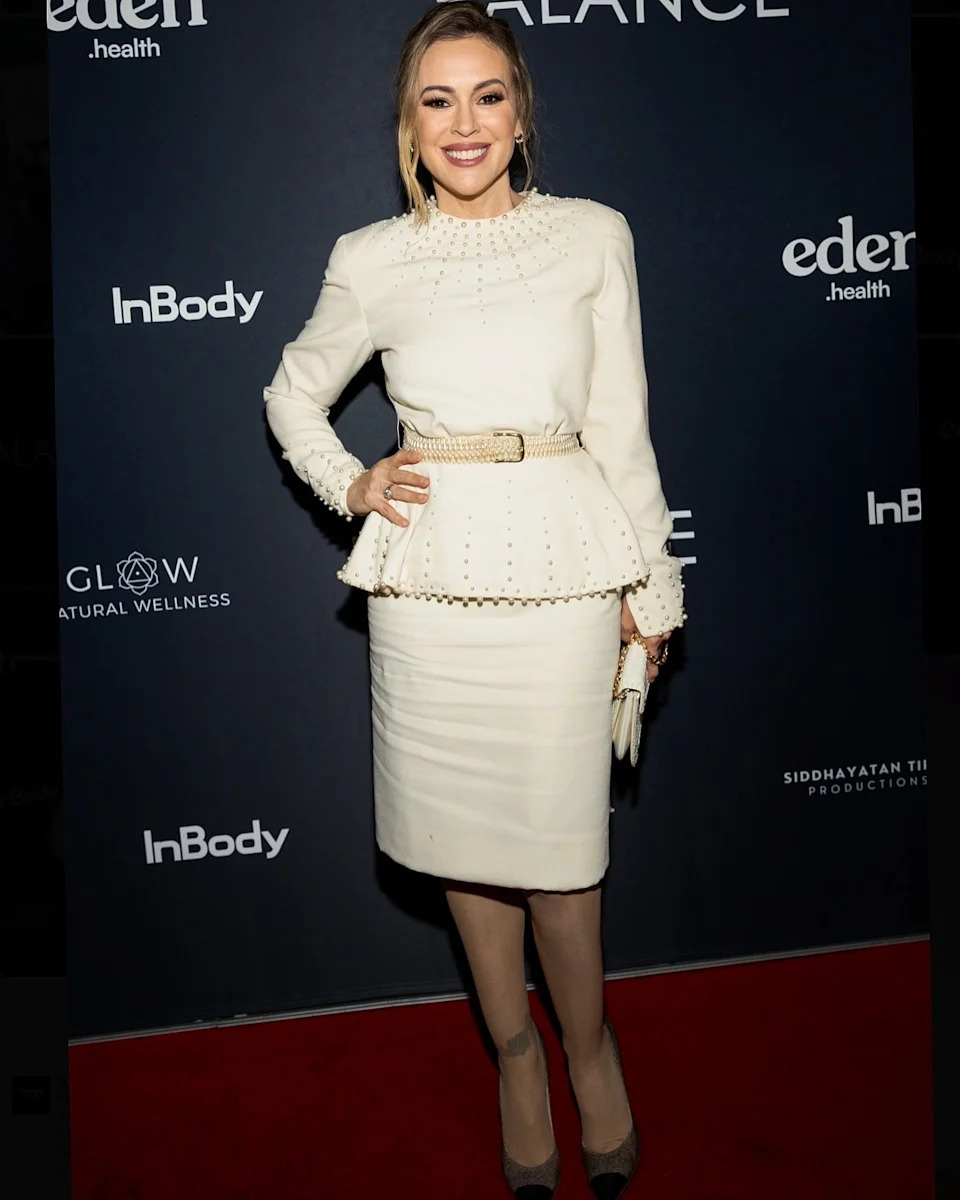
Alyssa Milano poses at a wellness event, wearing a coordinated pearl-trimmed ensemble.
(Viktoria Sirakova/Instagram)
Criticism over celebrity fundraisers
In her essay, Milano addressed the criticism surrounding recent fundraisers for late actors Eric Dane and James Van Der Beek. Dane, best known for Grey’s Anatomy and Charmed, and Van Der Beek, famous for Dawson’s Creek, recently passed away, prompting fundraisers to support their families. GoFundMe pages were set up to support their families, but online reactions were mixed. Some people argued that celebrities shouldn’t need public help, while others were confused why actors were relying on community support instead of personal wealth.
Milano pushed back against these assumptions, explaining that the entertainment industry has changed drastically over the years. Network TV’s long seasons and DVD residuals that once guaranteed long-term security no longer exist in the streaming era. Many actors now take on smaller roles, commercials, or independent projects, often without benefits or steady pay. She reminded readers that the “Hollywood myth” of endless wealth is outdated.
Why critics are missing the point
I understand why some people feel frustrated. We see celebrities launching fundraisers while ordinary people are struggling with medical bills, housing costs, and student loans. On the surface, it can feel unfair. But here’s the thing: asking your community for help during a crisis is not wrong. In fact, it’s something people have been doing for decades, whether through church collections, union funds, or community events. Crowdfunding just modernizes that idea.
Alyssa Milano made it clear that actors are humans first. When tragedy hits, support networks — even digital ones — are vital. Criticizing fundraisers as though the participants are taking advantage ignores the reality that Hollywood paychecks aren’t what most people imagine. Being famous doesn’t shield someone from illness, financial strain, or unexpected loss.
And here’s a key point: celebrity fundraising often benefits the family, not the actor directly. Dane’s and Van Der Beek’s families faced immediate costs for healthcare, funeral arrangements, and everyday living expenses. Supporting them doesn’t enrich anyone beyond what’s necessary — it’s a lifeline, plain and simple.

A promotional graphic for Milano’s Substack piece addressing public discourse and recent headlines.
(Alyssa Milano/Instagram)
My take: nuance matters
From where I sit, Alyssa Milano is shining a light on an important truth. Hollywood is changing, and many actors face financial stress that’s invisible to the public. Fame may open doors, but it doesn’t erase bills, mortgages, or medical costs.
At the same time, I get the public’s frustration. Seeing a celebrity ask for help while you’re struggling yourself can sting. But it’s not about greed or entitlement — it’s about human vulnerability. Simplifying the situation into “rich actors exploiting GoFundMe” is misleading.
Perception and reality don’t always match. Milano is reminding us that visibility doesn’t equal wealth and that compassion matters, even when the beneficiaries are famous. For me, this story is a call to look deeper. We need to consider the systems that create insecurity for actors just like we consider them for anyone else. Financial myths don’t help anyone, and shaming people for accepting help in crisis doesn’t either.
Why this matters beyond Hollywood
This isn’t just celebrity gossip. It’s a conversation about assumptions, fairness, and empathy. When we assume fame equals fortune, we erase the struggles that people face in public and private. Milano’s essay forces us to confront that and ask: why do we judge so quickly? And why do we believe myth over fact?
I think it’s worth asking those questions. The lesson here is simple: visibility doesn’t mean wealth, fame doesn’t erase struggle, and empathy should never have a price tag. Alyssa Milano’s words aren’t just for actors — they’re for all of us, reminding us to look beyond appearances and consider the human reality.
‘ The preceding article may include information circulated by third parties ’
‘ Some details of this article were extracted from the following source creators.yahoo.com ’