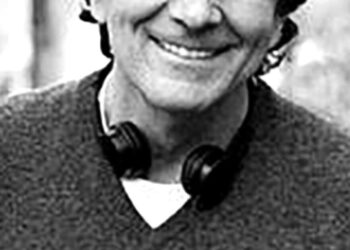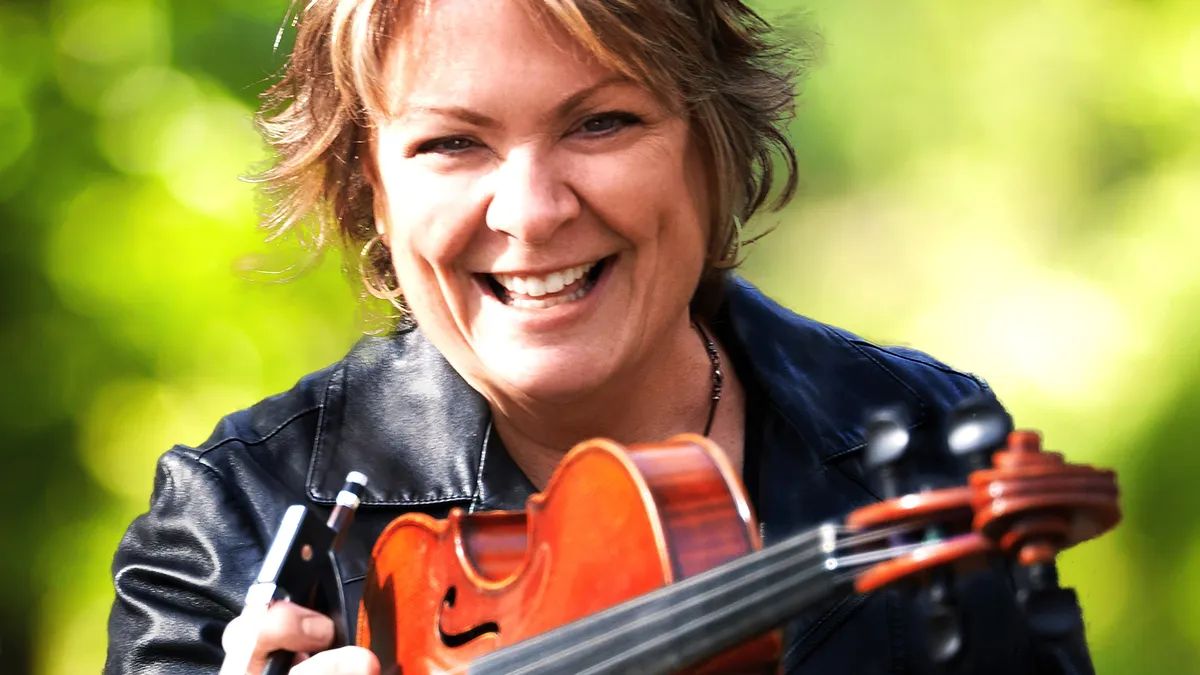
Eileen Ivers has always had a deep pride of her Irish heritage. Her parents, both Irish immigrants, instilled in her and her sister a love and appreciation for it.
Irish music was played in the family home, so it was no surprise Ivers began playing the Irish fiddle as a child.
Now 60 and a Grammy-winning artist, Ivers will bring her talents to the stage at the James Hugh Powers Hall, on the second floor of Needham Town Hall, as part of the Needham Bank Great Hall Concert Series.
The show starts at 7:30 p.m. on Saturday, May 2.
“An audience knows when a band is really feeling the music,” Ivers told Wicked Local in a recent interview. “It becomes a really great experience for everyone. Connecting with the audience is key. I enjoy speaking at my shows and giving some backdrop to my songs.”
It has served her well.
Ivers has had a celebrated career as a performer, composer, producer, songwriter, band leader and educator. She has performed with The London Symphony Orchestra, The National Symphony at the Kennedy Center, The Boston Pops, The Chieftains, Hall and Oates, Sting and Patti Smith, among others. And she has contributed to movie scores, including “Gangs of New York” and “Some Mother’s Son,” and was the groundbreaking musical star of “Riverdance.”
From child prodigy to international platforms
Besides her parents, Ivers credits music teacher Martin Mulvihill for sparking her interest in the Irish fiddle when she was growing up in a culturally diverse neighborhood in the Bronx.
“He was a wonderful Irish teacher,” she said. “He taught hundreds of kids all the instruments and Irish music. He was a kind soul who loved the music and wanted to pass it along. I loved it.”
Soon enough, Ivers began to “make music sounds,” and was happy to make Mulvihill and her parents proud, she said.
“My sister and I realized the sacrifices my parents had made, so it hit me as a kid that this music was really special,” Ivers said. “I enjoyed playing music with other kids my own age and becoming part of a community. Martin had wonderful students, and many of those students became music teachers themselves. It’s certainly in our psyche to want to encourage passing along that music and heritage.”
Having her original music performed by different orchestras and working with some of the most talented artists in modern time is not something to be taken for granted, she said.
Touring and being part of “Riverdance” was “amazing.”
“It’s something I won’t forget,” she said. “There was such a pride in that show. We all felt it was really special, and that we were breaking new ground. It is always exciting to be in that element. It was just incredible.”
She said she’s grateful for all of the opportunities she’s received, and said that while mastering the fiddle can be challenging, “you keep learning until the day you die.”
A fine fiddle
There is no difference between the fiddle and the violin — each is a four-stringed instrument either played with a bow, or is strummed or plucked — other than the style of music played on them. The violin is favored for classical music, played in orchestras and symphonies, while the fiddle is often used for more festive types of music, including bluegrass, folk and country.
Fiddles have not changed much since the 1700s, Ivers said, other than to have been set up slightly different today.
They’ve even gone electric.
“The modern electric element to the fiddle is ideal to amplify sound when playing in large venues or at festivals,” Ivers explained. “You can also use microphones or clip-on microphones like I sometimes do. An added bonus is when using my electric fiddle, I can run it through guitar effects pedals on a couple of pieces, one being a solo violin piece I do with a looping pedal. It’s very emotive. It can be very cathartic, and melancholy, and powerful.”
Ivers praises her band, Universal Roots, saying it’s important to keep the music new and engaging for both the band and the audience.
“An audience knows when a band is really feeling the music,” she said. “It becomes a really great experience for everyone. Connecting with the audience is key. I enjoy speaking at my shows and giving some backdrop to my songs.”
She hopes the audience leaves her shows feeling “uplifted or moved, and that they take that into their lives and their psyched.”
“If God is still giving you these feelings and is directing you to connect with people through music, that’s a blessing,” Ivers said. “Music can change lives and inspire others. I am blessed to be a part of that.”
‘ The preceding article may include information circulated by third parties ’
‘ Some details of this article were extracted from the following source www.wickedlocal.com ’