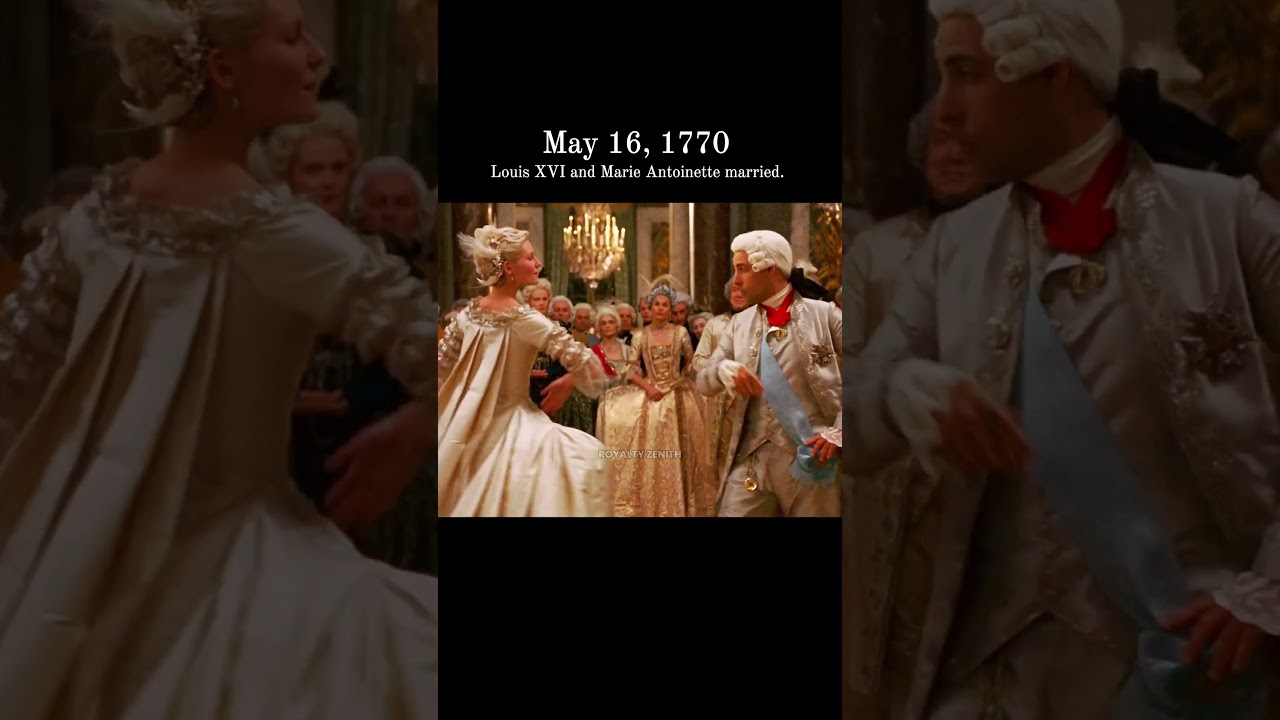
The marriage of Louis XVI, the Dauphin of France, to the Austrian Archduchess Marie Antoinette took place on May 16, 1770, at the Chapel of the Palace of Versailles. The union was a political alliance aimed at strengthening the ties between the two great European powers, the Bourbons and the Habsburgs .
Their reign, beginning in 1774, coincided with a period of severe financial crisis and growing social unrest in France. Louis XVI proved to be an indecisive monarch, struggling to enact the necessary reforms to address the country’s immense debt and the public’s demands for change. Marie Antoinette, in turn, became a symbol of royal excess and was widely criticized as “Madame Déficit” for her extravagant spending amidst widespread poverty.
The French Revolution erupted in 1789, leading to the abolition of the monarchy. The royal family attempted to flee France in 1791 but was captured at Varennes and returned to Paris under guard. Their perceived treason and resistance to the revolution sealed their fate. Louis XVI was put on trial for high treason, found guilty, and executed by guillotine on January 21, 1793, at the Place de la Révolution. Marie Antoinette faced her own trial nine months later, was also convicted of treason, and met the same fate on the guillotine on October 16, 1793. The executions marked the end of the Ancien Régime and the dawn of the French Republic.
Video Source