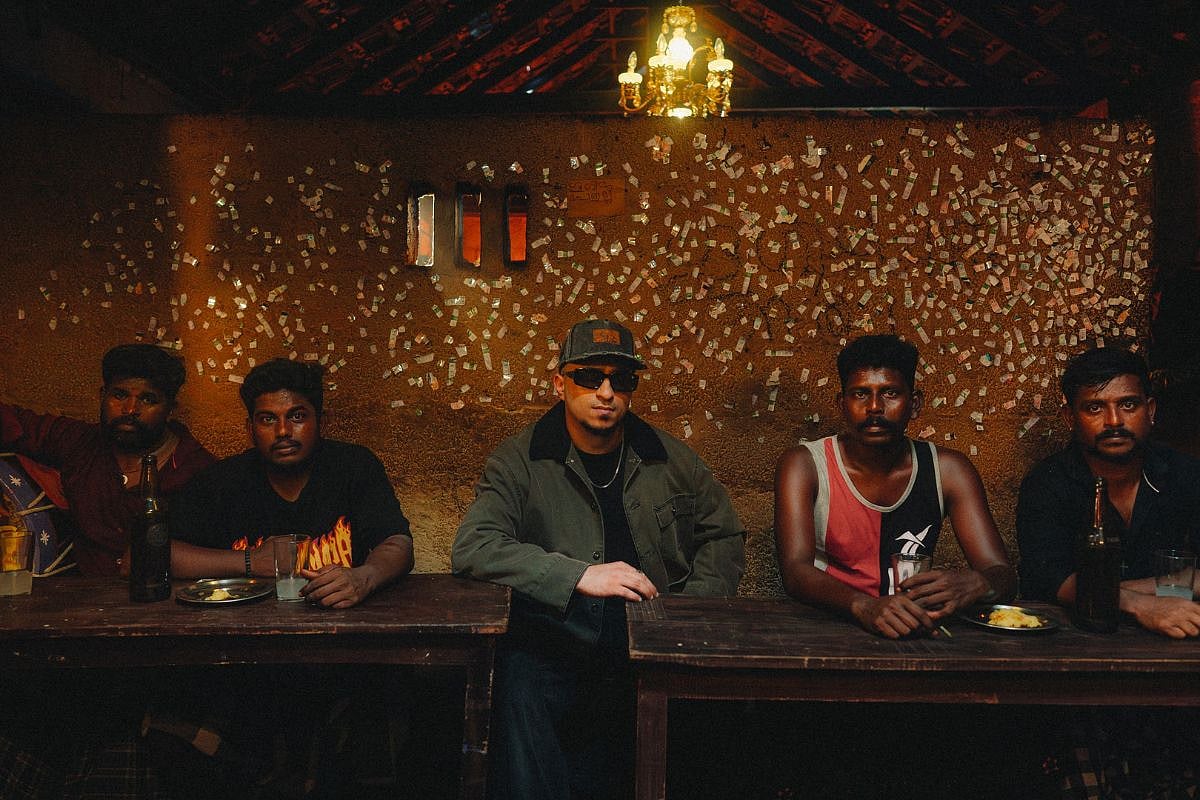
“After making music for nearly 18 years, you start seeing how much the business has changed, and honestly, how broken it is today. The people calling the shots and running the system are actively making it harder for artistes, especially those just starting out. Using the nadaswaram felt instinctive, but it also became symbolic. It carries weight, culture, and a sense of identity that the industry often tries to smooth out or ignore.”
His thinking extends beyond a single instrument to the broader question of how Indian musical elements can and should shape hip-hop’s future. “Hip-hop has always been social commentary. It’s the voice of the poor, the working class, the middle class—music that reflects lived realities. Yet in India, we’ve somehow allowed it to be gate kept by elites who decide what’s ‘cool’ or ‘global enough’. A lot of industry executives still feel it’s cringe to use Indian instruments in hip-hop unless it’s the usual, familiar ones. The belief is that Indian sounds don’t translate globally, which couldn’t be further from the truth. There are hundreds, if not thousands, of Indian instruments that haven’t even been touched in hip-hop production. That’s how you represent a community honestly, by sounding like where you come from, not by imitating the West.”
Indian hip-hop has grown rapidly in recent years, but what stands out to him isn’t the speed of that rise as much as what it reveals about the culture today. “What’s surprising isn’t the growth, it’s how mainstream it already is, with just the right investment behind it. Hip-hop creates a deep emotional and cerebral bond with listeners, and when that connection is real, it carries immense cultural power. You see actors, public figures, and people from completely different industries wanting to associate with artistes for credibility and street value. That tells you everything you need to know about where the culture is today. The influence has always been there, now the money is finally catching up.”
Creatively, his influences extend well beyond music alone. “Films inspire me deeply. I’m very visually driven, and a well-made film can stay with me long after it ends. That’s why I like spending time ideating my music videos—not just to make them look good, but to give them meaning and depth. For me, visuals aren’t an afterthought. They’re an extension of the music, and another way to communicate emotion, context, and intent.”
For more updates, join/follow our
https://www.whatsapp.com/channel/0029Vb677uz60eBXiDYheb0n
‘ The preceding article may include information circulated by third parties ’
‘ Some details of this article were extracted from the following source www.indulgexpress.com ’