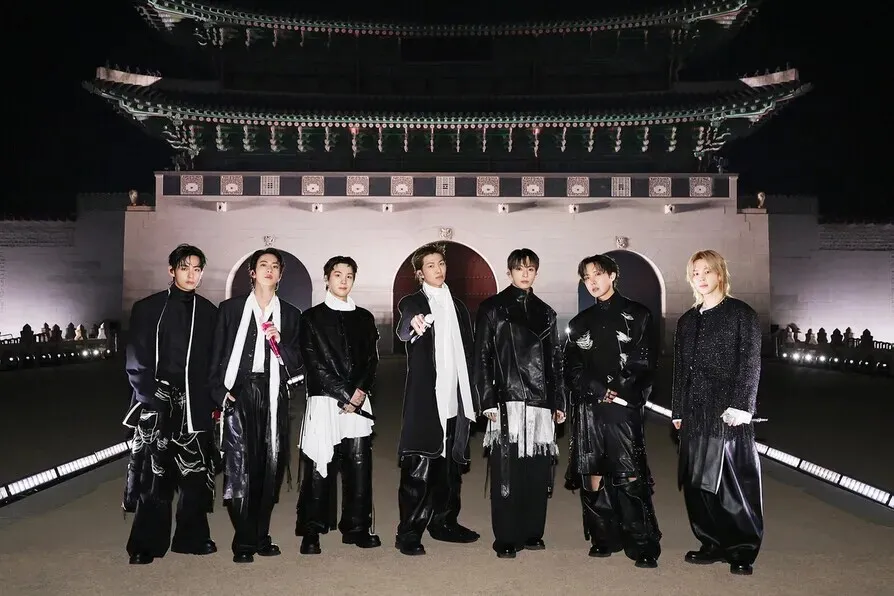
BTS stands in front of Gwanghwamun, the main gate of Gyeongbok Palace, during their comeback concert in Seoul’s Gwanghwamun Square on March 21, 2026. (courtesy BigHit Music, Netflix)
BTS has embarked on a new chapter.
The kick-off for this “BTS 2.0” era came with the performance “BTS Comeback Live: Arirang” at Seoul’s Gwanghwamun Square on Saturday. After the seven members arrived on the plaza over the same royal route walked by the Joseon kings of yore, their first number, “Body to Body,” included interpolations of the Korean folk song “Arirang” — distilling their comeback into one symbolic moment.
The energy at the venue was intense before the group took the stage. The 22,000 seats were packed with members of the “Army” fanbase who shouted out the names of group members with cheers of “BTS.” The entire Gwanghwamun area was lit up in purple from Army Bombs, the fans’ glowing light sticks.
As the lights over Gwanghwamun went out and the sounds of bells and trumpets rang out, the BTS members appeared to an eruption of cheers from the crowd. Lead vocalist RS shouted, “Hello, Seoul, we are back.”
This brief but powerful declaration announced the group’s first performance as a seven-member crew since “Yet to Come in Busan” in October 2022.
Fellow vocalist Jin recalled, “I can still remember asking you all to wait for us at the last concert in Busan.”
Suga, the group’s rapper, explained, “We wanted this [new] album to reflect our identity, which is why we chose ‘Arirang’ for the title.”
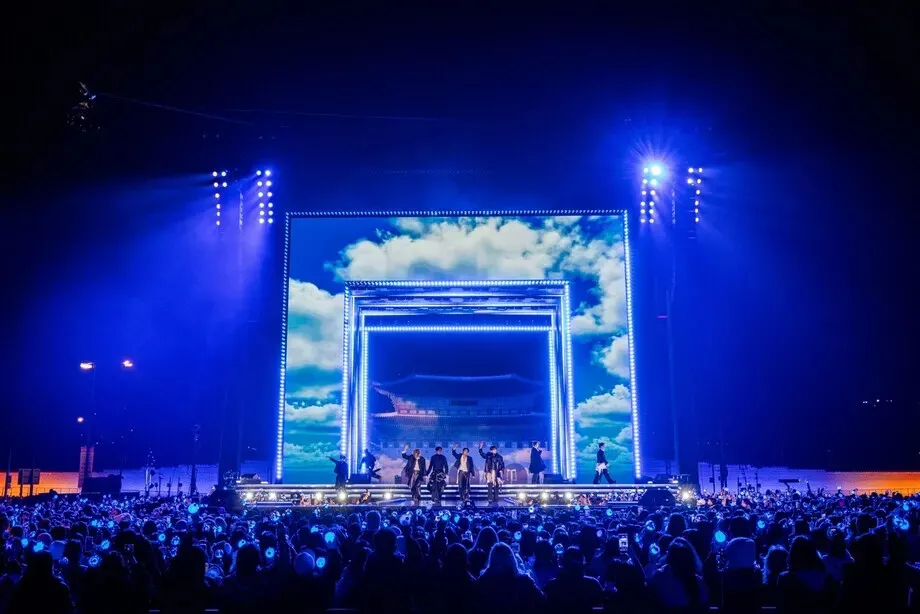
K-pop group BTS makes their return to the stage with their “BTS Comeback Live: Arirang” performance in Seoul’s Gwanghwamun Square on March 21, 2026. (courtesy BigHit Music, Netflix)
A day earlier, the group had released its fifth studio album, “Arirang.” Rather than retreading the global hit formula shown with tracks like their biggest single “Dynamite,” the 14 songs on the album showcase a more restrained sound, mature emotions, and symbols representative of Korea.
The folk song “Arirang” can be heard toward the end of the lead single “Body to Body,” while “No. 29,” which comes midway through the album as the sixth song, has only the sound of the Sacred Bell of King Seongdeok — also known as the Emille Bell — tolling for a minute and 30 seconds.
The market response was as intense as the wait had been long. Four million copies of the album were sold on the day of its release, while multiple tracks dominated all the top spots on various music charts. The daily “Global” chart on Spotify — the world’s biggest music streaming platform — had every track on the album occupying the top positions from one to 14.
Meanwhile, the YouTube video for “Swim,” the lead single, had over 47 million views as of 5 pm on Sunday, the third day after its release. The numbers showed BTS had lost none of its grip on the market.
But some critics suggested the pressure of releasing a comeback album after so long may have led to the group trying too hard.
“With BTS being expected and trying to perform so many roles all at once, the album gives the impression of being too scattershot in its direction,” said the music critic Kim Do-heon.
Music content strategist Jo Hye-rim said, “Maybe they felt too much pressure to share the ‘Arirang’ concept with the world, but it’s unfortunate that the characteristic BTS qualities seem to have been diluted.”
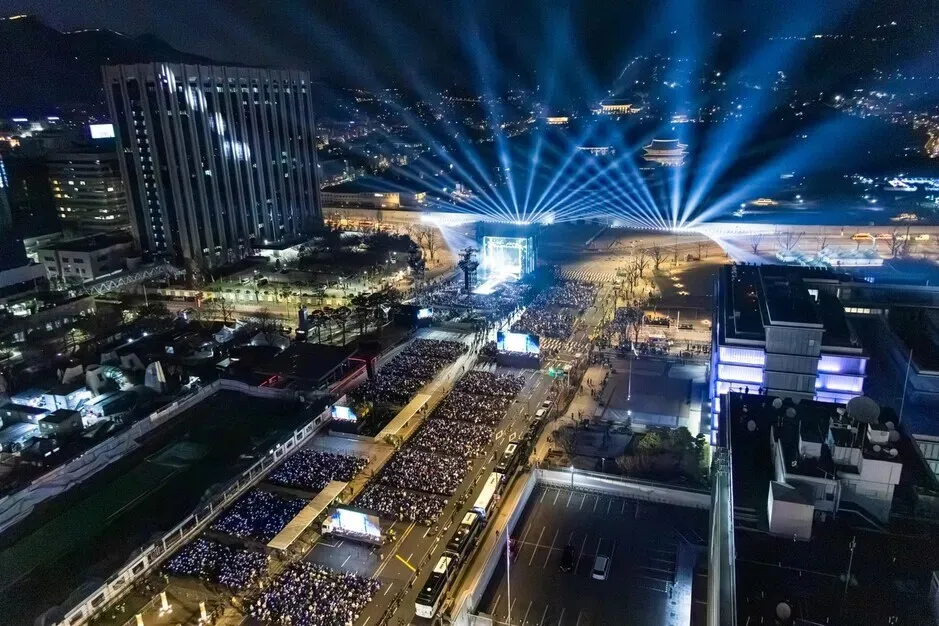
K-pop group BTS makes their return to the stage with their “BTS Comeback Live: Arirang” performance in Seoul’s Gwanghwamun Square on March 21, 2026. (courtesy BigHit Music, Netflix)
In the performance on Saturday, BTS focused on sharing the songs from the new album. For the opening number “Body to Body,” vocalists and performers from the National Gugak Center sang “Arirang” with the gate of Gwanghwamun forming a background to the main stage. That was followed up with performances of “Hooligan” and “2.0” from the new album.
After suffering an ankle injury during rehearsal, RM wasn’t able to crisscross the stage as freely as his fellow bandmates; instead, he rapped his parts from a stool or stood on his intact foot while other BTS members filled in.
During the hour-long concert, the group performed a total of 12 songs, including hits like “Butter” and “Dynamite.”
Saturday’s concert was beamed live to 190 countries on Netflix. The fact that Netflix went with BTS as the first individual musical act it streamed on its platform goes to show the global stature and sway that BTS enjoys.
The show was directed by Hamish Hamilton, a world-renowned director of live performances. The show endeavored to use Gwanghwamun, an icon of Korean traditional culture, as an element in the performance while turning downtown Seoul into one big amphitheater.
But the layout of Gwanghwamun Square and the adjoining Sejong-daero thoroughfare meant that seats, screens, speakers and the like broke up the space, putting a damper on what should have been a festive mood. Rather than the sort of energy and effervescence typically found in the wide open public square, the mood was one of stringent control.
“On the live stream, all you saw was the red Netflix logo against the dark background. You didn’t get the sense that this was Gwanghwamun, and the performance itself was underwhelming,” commented Lim Hee-yun, a music critic.
Jo, the music strategist, expressed disappointment, saying that the group “should have drawn a clearer connection between the historical background and significance of the locations of Gwanghwamun and Gyeongbok Palace and BTS’ comeback story.”

BTS greets the crowd at their comeback concert in Seoul’s Gwanghwamun Square on March 21, 2026. (courtesy BigHit Music, Netflix)
By Lee Jung-gook, staff reporter; Kim Min-je, staff reporter
Please direct questions or comments to [[email protected]]
‘ The preceding article may include information circulated by third parties ’
‘ Some details of this article were extracted from the following source english.hani.co.kr ’