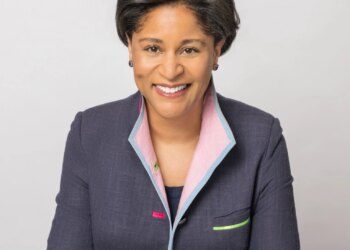
Carla Hool’s quest for the Virgin Mary led her around the Earth. But this was no religious pilgrimage. The veteran casting director was working with auteur Alejandro Monteverde on his upcoming biblical epic, “Zero A.D.”
“He wanted someone very, very special,” Hool says over Zoom from her Los Angeles home office. “We saw close to 3,000 girls.” The pair ultimately found their leading lady — relative newcomer Deva Cassel, daughter of Vincent Cassel and Monica Bellucci — in Italy. The film, which also stars Sam Worthington and Ben Mendelsohn, premieres later this year.
Specificity, not to mention authenticity and representation, have always been crucial to Hool. She came to the U.S. 19 years ago from her native Mexico City, where she’d done local casting on “Nacho Libre,” “Beverly Hills Chihuahua,” “Quantum of Solace” and more. In the interim, she’s edified creatives and executives on projects from “Narcos” to “Emilia Pérez” that Latinos aren’t interchangeable, that Mexicans and Dominicans look and sound different than Colombians and Chileans, and that those roles should be filled accordingly. “I would always get, ‘Who cares? We can’t hear it.’ I would reply, ‘No, but all the Latinos can!’”
Hool used to orchestrate in-person open calls in far-flung locales to match the perfect performer to each part. Now, as do most of her peers, she launches global searches using electronic casting resources like Spotlight in the U.K., Showcast in Australia and the Workbook in Latin America while also accessing social media, agents and managers. Self-tape auditions are solicited, with callbacks held via Zoom. Hool occasionally uses local casting pros for television, but rarely for film. “It fascinates me to discover new people,” she says.
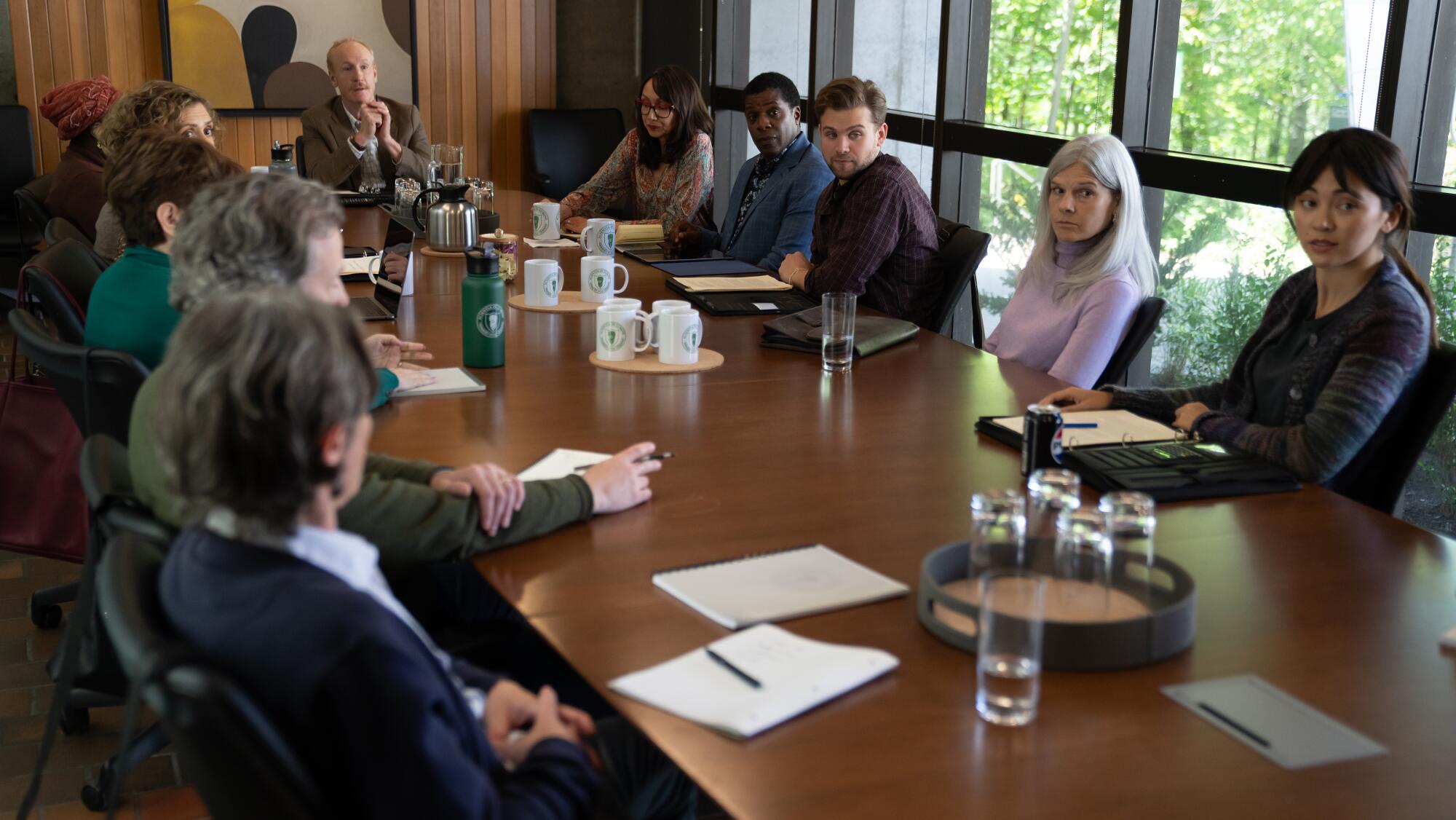
Casting director Meredith Tucker regularly relies on foreign colleagues for TV. She recently collaborated with Canadian pros John Buchan and Jason Knight to find local acting talent for “Vladimir,” which shot in Toronto.
Tucker has also served as Mike White’s casting director for all four seasons of “The White Lotus.” Not at liberty to discuss the upcoming, French Riviera-set fourth installment of the Emmy-winning series, she reveals she joined forces with Katie Doyle in Hawaii, Barbara Giordani and Francesco Vedovati in Italy and Non Jungmeier in Thailand for Seasons 1, 2 and 3, respectively. “I kind of let them do their thing,” says Tucker from New York City, admitting these experts know their local acting pool better than she does. White is also often already on location and skilled at selecting players. “He very much has an instinct for what he needs, what works, and what doesn’t work.”
A scene from “Vladimir.”
(Shane Mahood / Netflix)
Just as technology has removed physical barriers in casting, runaway production, co-productions and global streaming have erased borders for audiences. International viewers today crave more ethnically and culturally precise storytelling, and are less resistant to subtitles (see “Money Heist,” “Lupin,” “Shogun,” etc.).
For actors, the opportunities have multiplied exponentially. No longer do they need to be in New York City, Los Angeles or London to be seen — and hired. With one click, they can even vie for multiple projects in one day. “In an afternoon, I can watch 50, 60, 70 self-tapes,” says Armando Pizzuti from Rome. He assisted the Telsey Office (based in both New York City and L.A.) to find French and Italian cast members for Ryan Murphy’s “The Beauty,” then digitally combed Europe with collaborator Stefania Valestro to seek Asian actors for adventure series “Sandokan: The Pirate Prince,” filmed in Italy, standing in for 1800s Southeast Asia. “When I’m in the casting studio, I can probably meet only 20 actors per day.”
Despite the near-boundless possibilities afforded by today’s new tools, not everyone is enamored with the rarity of in-person sessions. “I’m just gonna put it out there,” says London’s Kharmel Cochrane, in Cannes to network this May. “I don’t like [self-tapes] at all, actually.” The casting director — who’s worked on Emerald Fennell’s “Saltburn” and “Wuthering Heights,” as well as on Kristoffer Borgli’s “The Drama,” among other titles — understands she’d need to embrace innovative methods more fully if she was busier in TV. But she also realizes that without remote auditions, working on Lena Dunham’s upcoming picture “Good Sex” would have been impossible. “I’ve got children. I’ve got a family,” she reveals. “That would have required several trips to the U.S. over six months.”
Tania Arana — a French-born casting director in Canada who routinely commutes between Montreal and Paris — employed a hybrid process to cast the upcoming family drama “Daudistan,” a feature shooting in Montreal and South Asia this fall. Posting casting notices at community centers and on social media, she sought both professional and non-professional Afghan men who speak Dari and live in Quebec, providing customized links through which hopefuls could submit a headshot and/or video. Once those called back were selected, she auditioned each in person alongside an interpreter, using improvisations based on the script.
“Body language is universal,” Arana tells me during a video interview conducted in her native French. “For me, certain things go beyond language comprehension. It’s more of an emotional understanding. It resonates deeply to see someone interpret a scene in a language one doesn’t understand. I think it’s 10 times more interesting and impactful.”
Whatever the road to get there, though, industry professionals agree that great results are what matter most. “As casting directors,” concludes Hool, “we need to be open to finding people anywhere.”
‘ The preceding article may include information circulated by third parties ’
‘ Some details of this article were extracted from the following source www.latimes.com ’