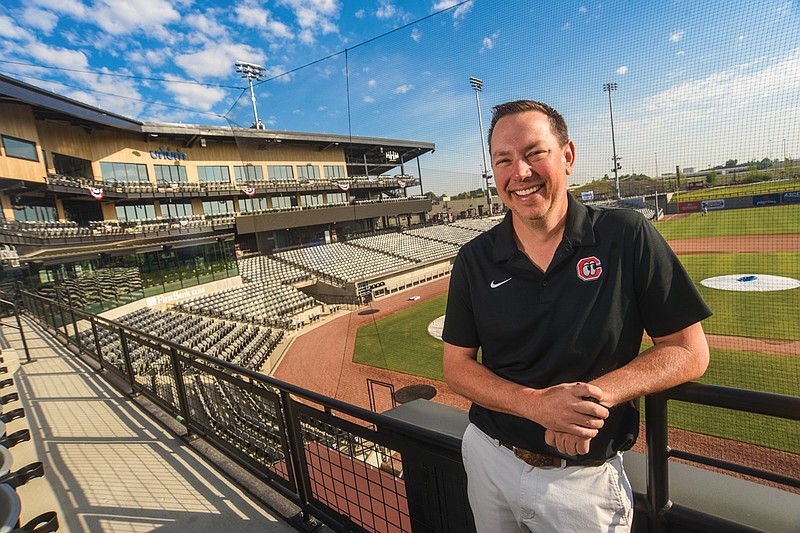
From large events to small, elegant to offbeat, entertainment in Chattanooga is a major economic driver.
This year, the opening of the new Erlanger Park baseball stadium in the South Broad District gives the Lookouts room to grow in ways AT&T Field couldn’t accommodate — literally and figuratively.
No longer hemmed in by Hawk Hill, the Lookouts envision concerts, weddings and other events at the park. Vice President Andrew Zito says it “needs to be a destination for Chattanooga for decades to come.”
The Lookouts are well-versed in identifying local bands for its pre-game Saturday Concert Series, which continues on from AT&T Field to Erlanger Park. But they have plans to host larger, standalone shows … eventually.
Who knows? Residents may someday head to the new ball park to enjoy a show by the Chattanooga Symphony & Orchestra.
That would be one to add to the list for CEO Susan Caminez, who said she still marvels at the opportunity to work with such talented musicians in her career. And that feeling — that sense of human connection and shared experience of making art in a room full of people — is central to the organization’s work and longevity.
Andrew Zito, Vice President of the Chattanooga Lookouts
What does the future of work look like in your industry? How is it different than it was five years ago?
We’re seeing a huge increase in technology in our space whether it’s sales platforms and customer relationship management (CRM) systems, whether it’s self-checkout systems, whether it’s fan engagement opportunities within the game and the incorporation of technology. It’s continuing to ramp up and it’s not going anywhere.
You’re seeing stadiums now doing facial recognition for entry. Your face is your ticket. We’re not there yet, but we have gone digital. Five years ago, we still had physical tickets. We are a cashless facility as well, so we have leaned much more into that space to help our operation run smoother and more effectively, but also the fan experience to be just a better day at the ballpark.
What’s something you’re feeling optimistic about right now?
The ballpark. What this facility is going to mean for our community. This is a transformational facility for our community. The opportunities are endless and only limited by our creativity.
I’m also super excited about the story of Chattanooga that we get to retell. These old buildings that we’re in — the bricks, the saw-cut concrete, the repurpose. This place employed 2,500 people in its heyday and we get to tell their story again and that’s really cool.
What keeps you up at night? What are the biggest challenges you’re facing with the new ballpark?
Making sure we put on a great experience every single day. This is a beautiful facility. It’s going to be world-class. People are going to come look at it. Making sure we keep it world-class, we keep it clean, we operate the way we should. And the experience is what people expect and deserve when they come in.
What new ideas or tools are you most excited about?
The ones that our staff haven’t come up with yet. I know that’s a silly answer, but we have 69 baseball games every year and just the creativity from the new people, the young people. Why don’t try this? Why don’t we try that? So, I’m most excited about the ones that I haven’t heard yet or someone that hasn’t worked in baseball brings to the table. This is going to be season fifteen (for me). You get into your own little zone, your own little world, so I’m excited about the ideas that are coming to the table that might not be there yet.
We don’t hire for their baseball acumen, we hire for the quality of the individual. And so people that want to be around here and want to be part of something bigger than themselves, that’s really what this is about.
How are you attracting and keeping talent? Are there any talent gaps?
Talent gaps, no. We’re selling tickets and hot dogs and providing great experiences. So, we fill our talent by finding quality people that want to be part of something bigger than themselves. We get to create experiences for our community and provide a platform for businesses big and small to share, to advocate, to advance. We just look for good people who want to be here. That’s how we find our talent.
We brought in, now, a full-time social media person. It’s the first time we’ve ever had that. For us right now, it’s striking while the iron is hot. We’ve got to create as much content as we can because we have a great story to tell. There are lots and lots of stories to tell, and we use that social media outlet because it’s that direct connection to people.
What investments are you making today that you expect will pay off in the next five to 10 years?
Well, we’ve built a baseball stadium. Obviously, that’s a huge investment. But we have built it for the future. One of the things with AT&T Field — it just didn’t stick up with the times. It was one of the last versions of that type of stadium and now we have built something more than a baseball stadium.
This is a community event venue and we have — I don’t want to say future-proofed — but we have thought about the future and how it’s going to be used over the next, not five to 10, but 20 to 30 to 50 years. This needs to be a destination for Chattanooga for decades to come and I feel like we have created a place that has the ability to grow and an ability to accommodate as we go forward.
What advice would you give a college student or someone trying to get started in your industry?
What I tell people all the time is to get out there and earn it. Go and put yourself out there. Get involved. Everyone graduating from UTC is going to have a UT in the top left corner, but what is your story to tell? What is the experience that you have created and gained and that is going to be a better foot in the door than any schooling? I want to know what you did and how you can craft and create who you are as a person. Go out and get involved. Be willing to do whatever it takes and want to make yourself and the people around you better.
Do you find yourself giving advice often?
All the time. People come in the door all the time. They want feedback, they want validation, they want counsel. And so the door is always open, and I try to provide help wherever I can.
The best, the most powerful thing that we have is when you see somebody grow. When you see the lightbulb go off, that is so fulfilling.
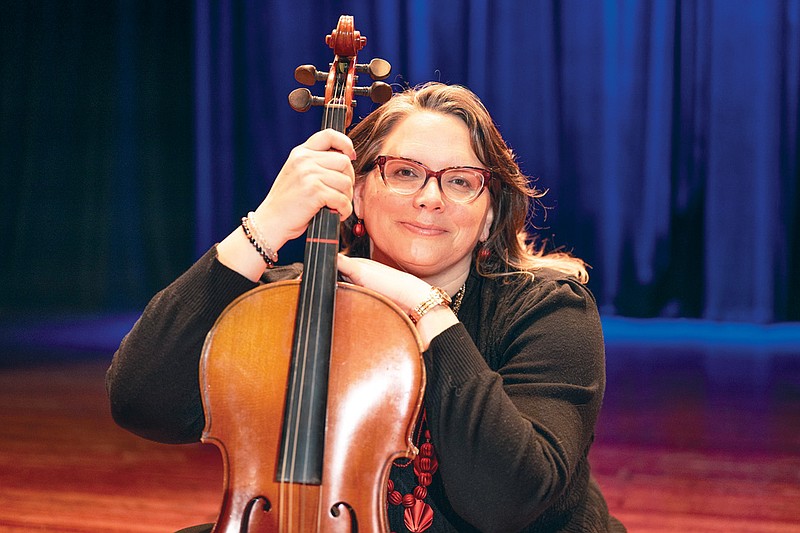
Susan Caminez, CEO of Chattanooga Symphony & Opera
What does “the future of work” look like in your industry right now? How is it different than it was five years ago?
Five years ago there were many barriers that kept us from being together. I believe our continued need for community and connectedness will drive the future of who we are as an organization. We’re starting to see that pattern now. Our audience numbers are higher than they were before the pandemic.
Does our exciting new music director, Ilya Ram, drive some of that? Certainly — and that combines with people’s need to experience, feel and connect now more than ever. Things are shifting. I think a renaissance is coming.
What’s something you’re feeling optimistic about right now?
Music gives me optimism. Every concert, I pinch myself at how amazing it is to be in a room full of our talented musicians and people desiring to experience the art we produce together. I feel optimistic that people will continue wanting to have those experiences, and we will continue to have audiences and support because of that.
What keeps you up at night? Biggest challenge?
Overall awareness of our extensive programming is probably our biggest challenge. The Chattanooga Symphony & Opera has served Chattanooga for over 93 years. Our orchestra is the largest professional performing arts organization in Chattanooga.
Many of our professional musicians who live here are teachers, private coaches, or also work in other professions that range from selling tiny homes to working at the library.
We consistently serve over 15,000 people outside of the concert hall through free community performances, educational programs and visits to senior living facilities or support groups. More than half of our programming is free, we offer student and music educator discounts to ticketed concerts, and we even offer free tickets through our library pass program.
Our biggest challenge is that many people don’t know that they have a professional orchestra in their city, and that there are multiple ways they can experience it. They don’t know that they can bring their kids to a Family Concert and see a storybook performed to live music, or bring their disabled family member to enjoy an Open Chord performance designed for the disabled community.
How is technology changing your industry?
Technology has helped make administrative processes easier, and our musicians can now turn the pages of their music with an iPad and a foot pedal, but we perform live. Yes, you can access amazing concerts from anywhere in the world through your phone, but it will never replace a live experience. That will always be the anchor that makes live orchestral music special.
What new ideas or tools are you most excited about?
I’m currently geeking out over QuickBooks Online, even though it seems to change its interface on a weekly basis. I’m also really excited to see more software created by arts professionals, like our new ticketing platform, CueBox. Ease of use and the ability to understand our needs have advanced very quickly in the past several years, and that makes our jobs a lot easier.
What skills will matter most over the next five years?
There are some aspects of technology that can be great, but I would like to think that real connection will matter the most — so gaining skills in human interaction will become important again. Creative collaboration, active learning and interpersonal skills will all make a huge difference in how we work.
We see it at the CSO in our Chattanooga Youth Symphony students, in how well the team-oriented orchestra environment builds their confidence and personal skills. Even in a rehearsal process with professional musicians, the trust and collaboration built over a week of working together lead to more mutual respect, understanding, and a desire to meet a common goal. I think those collaborative and personal skills will continue to become more important.
How are you attracting and keeping talent? Any talent gaps?
Our reputation precedes us, and Chattanooga is a great draw for talent. Guest artists love working with our orchestra, and they love Chattanooga. We are currently holding auditions for new musicians, so it’s a very exciting time for us.
Currently, more than half of our professional musicians live here because they love Chattanooga. This city is a great hub between many of the other surrounding orchestras, so it’s a great spot for some of our musicians who perform with multiple symphonies.
As for the administrative staff, we’re fortunate to have individuals with orchestra experience or a deep love of music, so they stay because they are driven by our mission. It’s a small admin team, but a strong one.
What investments are you making today that you expect will pay off in the next five to 10 years?
Right now we are refining all of our administrative processes from the ground up. This covers everything from processing invoices to onboarding new board members. When you have small teams and turnover, processes can be lost, and then the infrastructure has to be relearned. This will ensure that, no matter who holds a role, the organization continues to move forward smoothly.
It’s an extensive process, especially while also putting on over 100 events per season, but I know in the long run this will pay off. On the artistic side, Ilya is planning multi-year themes that will create an artistic thread running throughout all of our programming.
We have typically programmed one year at a time, but multi-year planning will allow us to pursue a larger pool of high-demand guest artists and give us the time needed to create successful, well-supported partnerships.
What advice would you give a college student or someone trying to get started your industry?
For arts administration in general, I would get as much exposure to Human Resources as possible. I worked in an HR department for a number of years, and the skills I learned then are skills I consistently use on a day-to-day basis as the head of an arts organization. For anyone specifically interested in orchestra administration, I would recommend taking advantage of as much as you can through the League of American Orchestras. It’s an incredible resource and a great network of amazing people.
‘ The preceding article may include information circulated by third parties ’
‘ Some details of this article were extracted from the following source www.timesfreepress.com ’