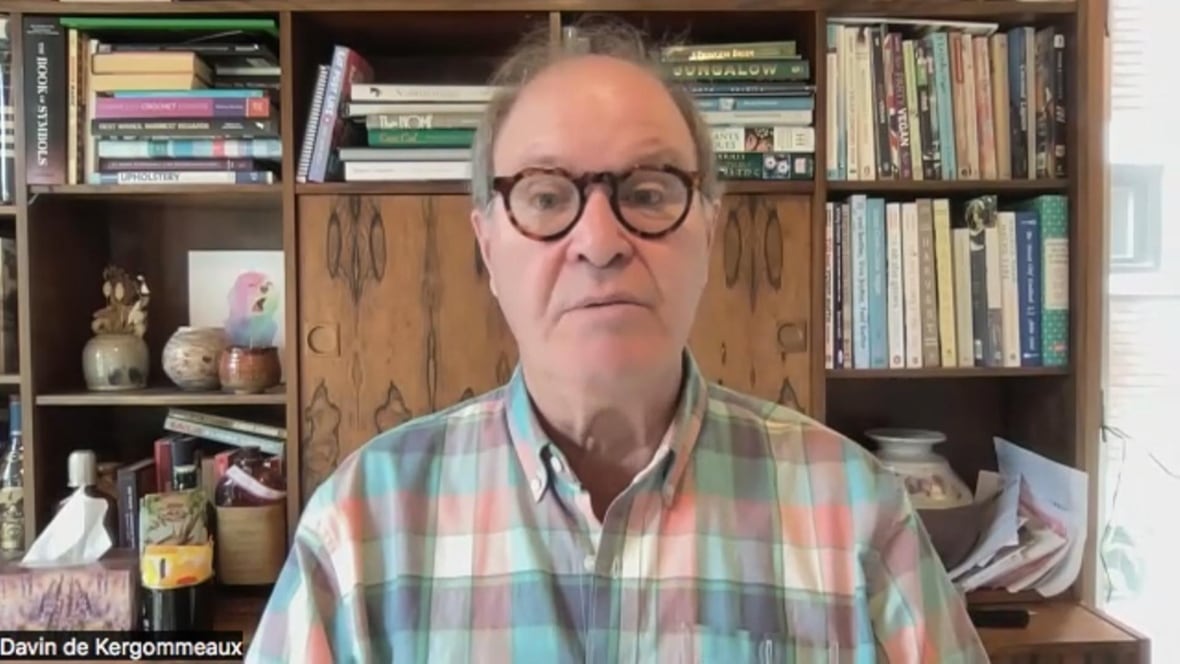
While the recent announcement that Diageo will soon close its longstanding Crown Royal bottling facility in Amherstburg, Ont., has shocked the region, one Canadian whisky expert says the move was a long time coming.
“Whisky in general is selling less right around the world,” said Davin de Kergommeaux, who has been researching whisky for 25 years. He is also the author of Canadian Whisky: The Portable Expert.
“People are drinking less alcohol, brown spirits. In fact, distilled spirits in general are not selling as well as they used to. Nobody’s meeting their targets.”
He said Diageo was already hit hard with their dwindling sales in Latin America, which was poorly handled by its CEO, rattling shareholders and forcing the company to slash costs.
Now with the closure of the Amherstburg plant, 160 unionized employees will be out of a job, which de Kergommeaux recognizes as an extremely difficult decision for a the company to make.
“This has nothing to do with tariffs….This is something that’s been in the works for three or four years,” said de Kergommeaux.
Crown Royal a top-selling whisky
Crown Royal remains one of Diageo’s strongest brands, says de Kergommeaux, but most of that demand is in the United States, where Crown Royal is the top-selling whisky.
“Remember, America is 10 times as big,” he said.
“When you go into a liquor store in some places in Texas, they are getting like three and four pallet loads of Crown Royal every week.”
So for Diageo, he says, keeping the Amherstburg plant is “nice to have” not a “must have.”
He says it makes business sense to ship the whisky closer to the market. That way, the company won’t be shipping glass or water across the border.

After generations of bottling the iconic Canadian whisky brand Crown Royal, the Amherstburg plant owned by Diageo will cease operations in February 2026. CBC’s Dalson Chen spoke with Unifor Local 200’s John D’Agnolo, who represents about 160 employees at the site, about the sudden announcement.
Canadian whisky will still stay in Canada
De Kergommeaux says Canadian whisky production is safe, but the bottling process isn’t, and that’s the work moving to the U.S.
While Diageo says Crown Royal whisky destined for Canadian and non-U.S. markets will continue to be made in Canada at a Quebec facility, the company is shifting “some bottling volume” to be closer to its many U.S. consumers.
The whisky will also continue to be mashed, distilled and aged in Canadian facilities in in Gimli, Man., and Valleyfield, Que.
De Kergommeaux said they cannot make Canadian whisky anywhere except in Canada, “otherwise it couldn’t be called Canadian whisky anymore.”
Mayor focusing on retaining jobs in region
Mayor Michael Prue of the Town of Amherstburg said the town is working with economic development agency Invest Windsor-Essex to come up with a solution for the job loss in the region, and the goal is either to save the plant or find another buyer for the building.
“Somebody will find a great use for this. It can be pharmaceuticals, it can be booze again, it can be literally anything manufacturing,” said Prue.
He said while it is upsetting that the plant is leaving, to some degree it is expected.
“It’s in their corporate or financial interest to do so. And you have to expect that,” said Prue.
Nonetheless, he didn’t see it coming, especially because of how much the town did for the company.
“Every year, we meet with them to see what else we can do to help them, to make sure they’re comfortable here, to make sure they stay here,” said De Kergommeaux.
“Generations have worked here, generations have retired from here or been pensioned from here. It is a mainstay,” said Prue.
Hope for reversal
Local union leaders have vowed to fight the decision, and Prue says all levels of government need to step up.
He believes Diageo’s reason to leave is tariff related and Conservative MP Chris Lewis even said he will take the matter to Ottawa.
But de Kergommeaux doesn’t believe the closure can be stopped.
“I’d say they’ve got maybe a one per cent chance of changing Diageo’s mind,” he said. “For right now, it is over.”
He said market conditions could eventually bring new life to Amherstburg one day.
“If demand goes up again, they’ll probably come back. You never know,” said de Kergommeaux.
‘ The preceding article may include information circulated by third parties ’
‘ Some details of this article were extracted from the following source www.cbc.ca ’