There’s a deep-seated belief, buried in the hearts and psyches of many Seattle music fans, that their favorite artists consistently pass over Seattle on tour.
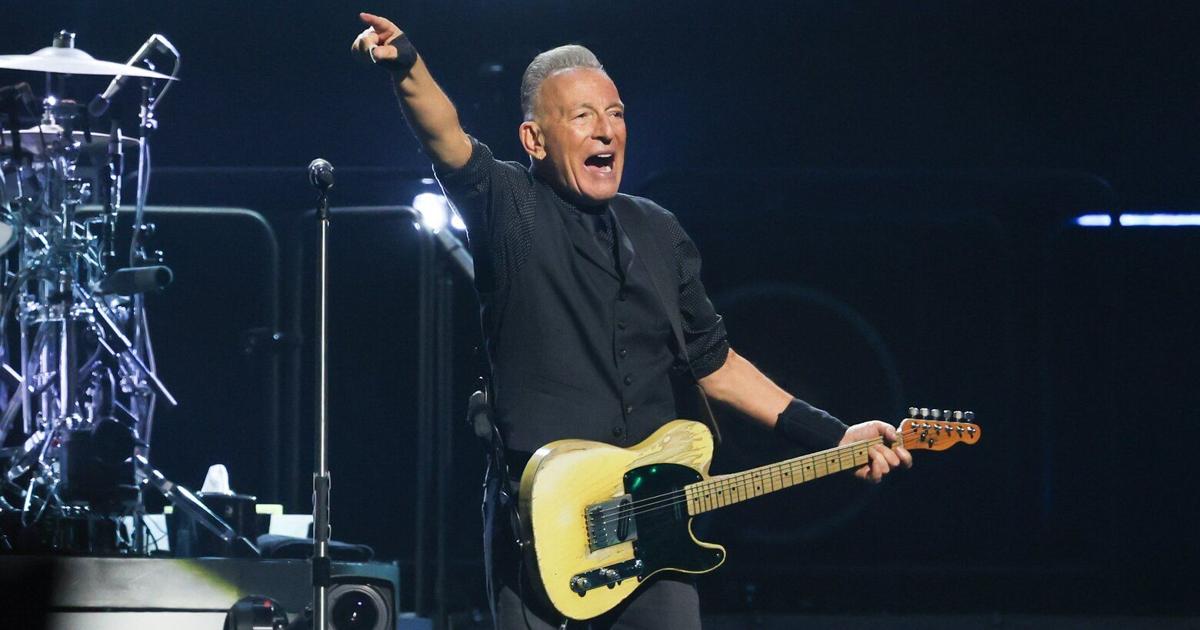
Truth or myth, these feelings flared up like grill grease at a Climate Pledge Arena concession stand this year when Bruce Springsteen and Bruno Mars announced high-profile tours that noticeably skipped Seattle, respectively hitting Portland and Vancouver, B.C., instead.
In both cases, fans flooded social media bemoaning Seattle’s tour-poster omission, appealing to the scheduling gods and speculating (with varying rationality) as to why the stars were not gracing our fair city.
Look, I’m no internet shrink. But seemingly wrapped among the comment section discourse were fears of inadequacy, as fans wondered: In the eyes of artists whose music we hold dear, is our town — the 13th largest media market in the United States, according to Nielsen — somehow an undesirable or difficult place to play?
Are we … unworthy?
“Every manager, agent and artist wants to play Seattle,” said Ali Hedrick, a longtime Seattle booking agent now based in New York. “They do not want to skip it. It’s going to be in their top markets in the whole country, so it’s not from a lack of desire to go to Seattle.”
Hedrick isn’t just viewing this through emerald-colored, Seattle-loving glasses. The music industry vet is a partner and agent at ROAM, which reportedly became the largest independent music booking agency in the world when Hedrick’s Arrival Artists and ATC Live merged last fall. Their forces combined, ROAM represents more than 800 artists zigzagging the globe, including The Lumineers, Jungle, Khruangbin and Mt. Joy.
As Hedrick knows from years of experience, building out a tour is akin to putting together a delicate, complex puzzle that takes many considerations into account to determine when and where an artist will play. Among them are things like production logistics, venue preference and availability, artist rest days and, of course, the all-important bottom line.
We should probably point out that Seattle “skips,” like we’ve seen with Springsteen and Mars’ latest runs, are the exception, not the norm. Even if some high-profile occurrences are forever burned into our minds, making it seem more common than they are. (Never forget the Ariana Grande uproar of 2019.)
Most of the major, expansive North American arena and stadium tours make their way to Seattle at some point, and for every ego-bruising Portland-to-Vancouver snub, there are several other tours that plot coveted opening or closing night shows in Washington.
Still, it does happen from time to time. So, what gives?
“There’s so much data and so many factors that could make all these decisions go in so many different ways,” Hedrick said.
Reps for Springsteen and Mars did not respond to questions about their current tour itineraries. But at a glance, there are several surface-level factors that could have kept them out of Seattle this time around.
Springsteen went geographically out of his way to launch his politicized “Land of Hope & Dreams American Tour” in Minneapolis before hauling across the west for an April 3 gig in Portland. The outspoken classic rock icon has had his black boots on the ground in the Midwestern city that became the front line of protests against the U.S. Immigration and Customs Enforcement operations that led to federal agents killing two Minneapolis residents.
As No Kings rallies were held across the country last month, three days before opening night of his tour, Springsteen performed his new protest anthem “Streets of Minneapolis” outside of Minnesota’s Capitol.
The last time the Boss played Seattle, just three years ago, he cranked up the volume for a raucous affair at Climate Pledge Arena — a venue with two pro hockey tenants playing condensed schedules this season during an Olympic year.
“If (artists) get larger and need to be playing in arenas, you’re competing with sports,” Hedrick said, speaking generally as she does not represent Springsteen or Mars. “Sometimes you rearrange your timing in order to hit these very specific, big-profile events that you’re going to be doing around the world. Then to fit in the actual headlining tour, sometimes you get locked into a certain time frame and it doesn’t fit with what’s available on the calendar.”
Between five Kraken home games the first half of April and the fact that the 76-year-old Springsteen typically has at least two off days between cities on this run, there were likely a limited number of dates in which a Seattle show might have worked.
While the good ol’ Tacoma Dome is right down the road, its share of the concert market has dwindled since the shinier Climate Pledge Arena opened in Washington’s most populous city — perhaps a sign of the South Sound barn’s waning appeal. (It’s worth noting that when Grande effectively told Washington “Thank U, Next” with that 2019 pass-over, KeyArena was closed as construction began on Climate Pledge Arena.)
While the sports schedule could have been a factor in Mars’ decision to bypass Lumen Field (the pop star’s likeliest Seattle venue) in between two October shows in the San Francisco 49ers’ stadium and a mammoth five-show run at Vancouver’s indoor BC Place, a more obvious deterrent is the Pacific Northwest weather.
“I wouldn’t want to go outdoors that late in the season in Seattle,” Hedrick said. “If you’re going to choose that time frame, you’re going to look up, like, 10 years of data on the weather on those specific dates.”
If that’s the case, most bands and agents haven’t liked what they’ve seen. The latest Lumen Field concert in recent memory was a 2023 date with Coldplay on Sept. 20 — a full month earlier than Mars’ Vancouver stand is slated to wrap.
Next door at the retractably roofed T-Mobile Park, the last October concert came on a chilly night in 2019, when The Who and a 48-member orchestra battled the ballpark’s echo-y environs. And even if Mars was willing to bundle up, the Mariners are hoping to make some “24K Magic” of their own with a deep playoff run that would seemingly prevent the old-soul showman from moving in for an entire week.
While Seattle fans might wince at the travel costs of going to see Mars north of the border, shacking up for a longer stretch in one city (an increasingly common practice) is likely a better deal for Mars , given how fans have demonstrated a willingness to travel to see their favorite artists. As any fan who’s walked past the dozens of semitrucks parked outside a Lumen Field concert might imagine, hauling around the massive staging, lighting, sound and 60-foot prop snakes of a full-blown stadium show is no small (or cheap) undertaking.
“It’s very expensive to move a show around,” Hedrick said. “It’s going to save them so much money sticking to one spot and playing (five) nights.”
In situations when it might be a toss-up between two cities, an artist might simply choose the one in which they can get the best deal, as offers from competing promoters in each market might vary considerably, Hedrick said. (Depending on how the deal is structured, artists might receive a guaranteed fee or a percentage of the ticket sales.)
“Promoters, generally speaking, are making their money on food and drink,” Hedrick said. “The ticket sales are paying for the room, the rent, the vans — the cost of the concert to put it on. There is some profit in the tickets, too, that they do make. But if there’s a lot of competition in a certain city and maybe AEG is kicking Live Nation’s (butt) or Live Nation is kicking AEG’s (butt), the other promoter might over-offer to start getting more shows.”
Fine print financials aside, one of the leading theories as to why artists supposedly leave out Seattle is our far-flung coordinates in the Upper Left. According to Hedrick, in certain situations, there might be some truth to that.
“Artists, generally speaking, don’t like to be on the road longer than three weeks to a month tops,” Hedrick said. “Sometimes if they’re flying into New York to do the whole country, to get up to Seattle, Portland and Vancouver is really rough and almost impossible to fit it all in.”
Perhaps ironically, the geographic isolation that is said to have incubated the grunge scene, which made Seattle a musical hotbed in the ’90s, might also keep some touring artists away at times.
Seattle might not be a can’t-skip city like New York or Los Angeles. But it’s hardly the tour-map afterthought some fans think it is.
“There’s a lot of times on some of my tours that I might have to skip Texas — kind of a similar reason, you have a limited amount of time — or Minneapolis,” Hedrick said. “It just depends. … And these artists that are touring the world, like say a Springsteen, it’s not a battle for North America. It’s a battle for the world.”
‘ The preceding article may include information circulated by third parties ’
‘ Some details of this article were extracted from the following source www.yakimaherald.com ’