Key Points
Ellen Burstyn’s career in Hollywood got off to a fast start, racking up dozens of television credits.
She realized while making a movie with Debbie Reynolds that she was on the wrong career track.
After studying at the Actors Studio, Burstyn became one of the most celebrated movie stars of the ‘70s.
Ellen Burstyn was a rising commodity in Hollywood during the early 1960s, but there was a specific moment when she realized that she wasn’t progressing into the kind of career she wanted — and that moment just so happened to involve legendary star Debbie Reynolds.
After making her first television appearance in the New York-based Kraft Television Theatre in 1958, the same year she made her Broadway debut, Burstyn — at the time going by the stage name Ellen McRae —made the trek to Hollywood and guested on some of the biggest TV shows of the day, including Dr. Kildare, 77 Sunset Strip, Gunsmoke, Perry Mason, and Wagon Train.
In 1964, she landed her first role in a feature film, putting her in the ring with the heavyweights. In the Vincente Minnelli-directed Goodbye Charlie, she appeared with Tony Curtis, Walter Matthau, Pat Boone, Reynolds, and — in a cameo appearance playing himself — Michael Jackson (no, not that Michael Jackson, this one). That same year, she’d also appear in a beach movie called For Those Who Think Young with James Darren and Nancy Sinatra, but it was while filming a scene in Goodbye Charlie that she had an epiphany.
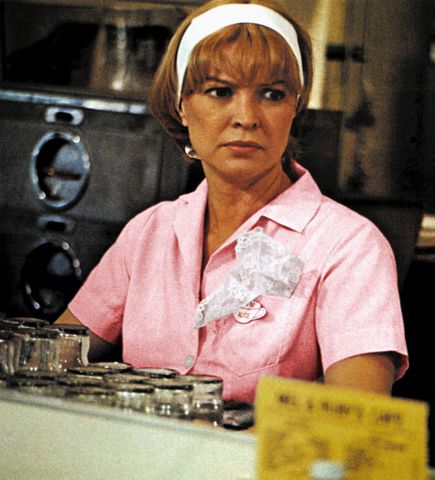
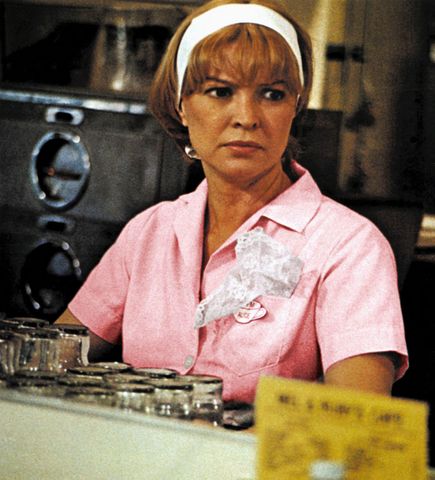
Ellen Burstyn in ‘Alice Doesn’t Live Here Anymore’Credit: Alamy
“I was sitting on the set, and I said, ‘Well, this is the big time. 20th Century Fox. Technicolor, starring Debbie Reynolds and Walter Matthau and Tony Curtis, and I’m co-starring. Next, I’ll have Debbie Reynolds’ part,’” Burstyn told Criterion. “And a voice in my head went, ‘I don’t want it.’ Seriously, just like that. And I closed up my whole Hollywood life and moved back to New York and went to Lee Strasberg, literally to learn how to act.”
She joined the Actors Studio, and while continuing to appear on television throughout the late-’60s — briefly a regular on the daytime soap opera The Doctors — she honed her craft.
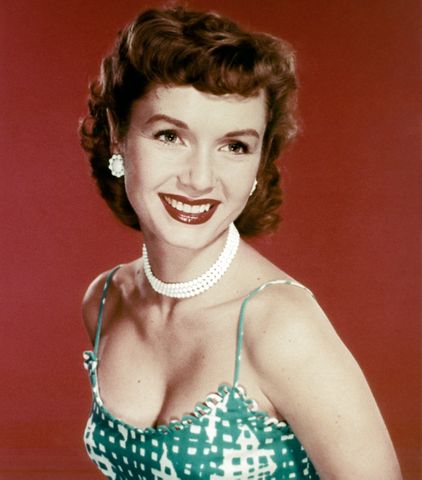
Debbie ReynoldsCredit: Alamy
“What I learned with Lee was how to be present, because that’s a good starting place to then build character. Instead of if you’re already trying to be a character as you walk in the door. It’s learning how to be present. That’s what I learned from him,” she explained.
She added that, while many people have the misconception that method acting means you have to become the character, it’s actually more about training “sense memory.” “Method acting is training the senses to respond to imaginary circumstances,” the Interstellar star said.
Of course, upon returning to the big screen in the 1970s, Burstyn (now credited under her then-married name, a moniker that has far outlasted the marriage) would carve out a niche in the New Hollywood movement, using her Actors Studio training in some of the most iconic movies of the decade, including the grim The Last Picture Show, the horrifying blockbuster The Exorcist, and the seminal, Martin Scorsese-directed dramedy Alice Doesn’t Live Here Anymore, for which she would win the Academy Award for Best Actress.
“The whole experience making that film was freeing, because Marty had such a creative process. He rehearsed every scene the night before he was going to shoot the next day, and that rehearsal was always very loose, and very often the script got enhanced,” Burstyn related.
Get your daily dose of entertainment news, celebrity updates, and what to watch with our EW Dispatch newsletter.
Bustyn, now 93, has remained a film, television, and stage mainstay, and she’ll soon appear with Taika Waititi in Place to Be, which has yet to announce a release date. The Requiem for a Dream actress also reprised her role as Chris McNeil in the 2023 film Exorcist: Believer and appeared on the series The First Lady as Sara Roosevelt in 2022.
Watch the full Criterion interview with Burstyn below.
Read the original article on Entertainment Weekly
‘ The preceding article may include information circulated by third parties ’
‘ Some details of this article were extracted from the following source www.aol.com ’