
- Tension: We crave originality in entertainment while rewarding the familiar with our attention and dollars.
- Noise: Nostalgic reboots and franchise extensions are celebrated as innovation when they represent creative stagnation.
- Direct Message: True marketing breakthroughs require the courage to create culture rather than merely recycle it.
To learn more about our editorial approach, explore The Direct Message methodology.
Somewhere around 2019, I noticed something shift in the entertainment marketing landscape. The campaigns stopped trying to surprise us. Instead, they started mining our memories. A streaming service would announce a sequel to a beloved 1980s film, and the marketing would lean entirely on recognition rather than revelation. The strategy was simple: remind people of what they already loved, then promise more of the same.
This approach worked spectacularly well, at least by conventional metrics. Engagement soared. Pre-release buzz hit record levels. Opening weekends delivered blockbuster numbers. But something essential was lost in the transaction. The campaigns that once introduced us to entirely new worlds began functioning as sophisticated nostalgia delivery systems. During my time working with tech companies in the Bay Area, I watched entertainment marketing shift from creating demand for the unknown to exploiting attachment to the known. The industry had discovered a formula, and like any successful formula, it became inescapable.
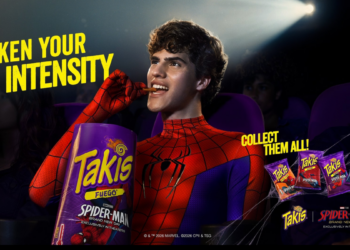
Today, the entertainment marketing playbook reads like a greatest hits compilation. Legacy sequels. Universe expansions. Character revivals. IP acquisitions marketed through the lens of childhood memory. The question worth asking is whether this represents the natural evolution of a maturing industry or the beginning of creative exhaustion disguised as strategic brilliance.
The Comfort of the Recognizable
There exists a fundamental contradiction at the heart of modern entertainment consumption. Audiences claim to want fresh stories and original perspectives. Survey data consistently shows that consumers express fatigue with sequels and reboots. Yet their viewing habits tell a different story entirely. According to research from Parrot Analytics, franchise content and IP-based properties dominate streaming platform demand metrics, often by significant margins over original programming.
This gap between stated preference and revealed preference creates a peculiar incentive structure for marketers. Why invest in the uncertain work of building awareness for something genuinely new when proven properties arrive with built-in audiences? The behavioral psychology here is well-documented. Familiarity breeds comfort, and comfort reduces the cognitive effort required to make a viewing decision. In an era of infinite entertainment options, the familiar becomes a cognitive shortcut.
What I’ve found analyzing consumer behavior data is that this pattern accelerates under conditions of stress and uncertainty. When the external world feels chaotic, audiences retreat toward entertainment that feels safe. Marketers recognized this tendency and responded by turning nostalgia into a core strategy rather than an occasional tactic. The result is an industry that increasingly speaks in references rather than revelations.
The tension deepens when we examine what audiences actually remember about the entertainment that shaped them. The films, shows, and cultural moments that became beloved were rarely safe bets when they first appeared. They succeeded because they offered something unexpected. The marketing campaigns that launched them had to do the difficult work of creating desire for experiences that audiences couldn’t yet imagine wanting. That creative risk has become increasingly rare.
When Recycling Masquerades as Innovation
The entertainment trade press celebrates each new franchise extension as a strategic triumph. Studio executives speak of “expanding the universe” and “honoring the legacy” while shareholders applaud reliable returns on established intellectual property. This framing obscures a simpler reality: the industry has become deeply risk-averse, and marketing has adapted to justify that aversion.
Consider how entertainment marketing language has evolved. Terms like “reimagining” and “continuing the story” perform rhetorical work that makes repetition sound like creativity. A McKinsey analysis of entertainment industry trends noted that major studios have dramatically shifted investment toward proven properties, with original content receiving proportionally less marketing support even when it demonstrates strong potential.
The conventional wisdom suggests this represents smart business practice. Why gamble on the unknown when the known performs reliably? But this logic contains a hidden assumption: that past performance guarantees future results. The entertainment graveyard is filled with franchise extensions that failed precisely because audiences eventually recognized the diminishing returns of familiarity. Marketing nostalgia works until it doesn’t, and predicting when audiences will tire of the formula remains impossible.
Meanwhile, the campaigns themselves have grown predictable. The trailer that opens with a familiar musical cue. The poster featuring a recognizable silhouette. The social media strategy built around anniversary commemorations and cast reunions. These tactics generate reliable short-term engagement while contributing to a longer-term flattening of cultural creativity. Each successful nostalgia campaign makes the next original property harder to launch.
The Path Beyond Self-Reference
Marketing that borrows from the past can succeed commercially while failing culturally. The brands and properties that endure are those willing to risk creating something worth remembering rather than simply reminding us of what we already remember.
This insight challenges the prevailing logic of entertainment marketing, which prioritizes measurable short-term outcomes over harder-to-quantify cultural contribution. Yet the evidence suggests that the most valuable entertainment properties emerged from campaigns willing to introduce audiences to genuinely unfamiliar experiences.
Creating Culture Rather Than Mining It
The alternative to perpetual self-reference requires accepting a different relationship with risk. Marketing original entertainment properties demands more creative effort, longer timelines, and tolerance for uncertainty. It means building awareness from foundations rather than activating pre-existing emotional attachments. This work is harder, more expensive, and less predictable. It also represents the only sustainable path forward.
Research from the USC Annenberg School for Communication suggests that audiences develop deeper long-term attachment to properties they discovered rather than properties they recognized. The marketing challenge becomes creating conditions for discovery rather than triggering recognition. This shift demands different skills, different metrics, and different patience from stakeholders.
Some entertainment marketers have begun experimenting with approaches that prioritize cultural creation over cultural extraction. These campaigns invest in building worlds rather than exploiting existing ones. They introduce audiences to unfamiliar perspectives rather than confirming familiar ones. They accept that initial engagement might be lower in exchange for deeper eventual connection. The results remain mixed, but the direction points toward a more sustainable creative ecosystem.
The California tech industry offers a useful parallel. The most valuable technology companies didn’t achieve their positions by copying what already existed. They created products and categories that audiences didn’t know they wanted until the products existed. The marketing that launched those products had to do the generative work of creating desire rather than the extractive work of exploiting it. Entertainment marketing faces a similar choice.
What remains unclear is whether the industry possesses the collective will to make that choice. The nostalgia formula continues to generate returns, even as those returns show signs of diminishing. The pressure to deliver quarterly results makes long-term creative investment difficult to justify. The skills required to market original properties have atrophied through disuse. Yet the alternative is an industry that increasingly speaks only to itself, recycling the same references until audiences stop responding entirely.
The entertainment marketers who will define the next era are those willing to accept the harder assignment: introducing audiences to experiences worth remembering rather than reminding them of experiences they’ve already had. This work requires confidence that new cultural touchstones can be created, that audiences remain capable of embracing the unfamiliar, and that marketing can serve as a creative force rather than a nostalgic one. The question is whether enough marketers will choose that path before the formula exhausts itself completely.
‘ The preceding article may include information circulated by third parties ’
‘ Some details of this article were extracted from the following source dmnews.com ’