Who are we without our families?
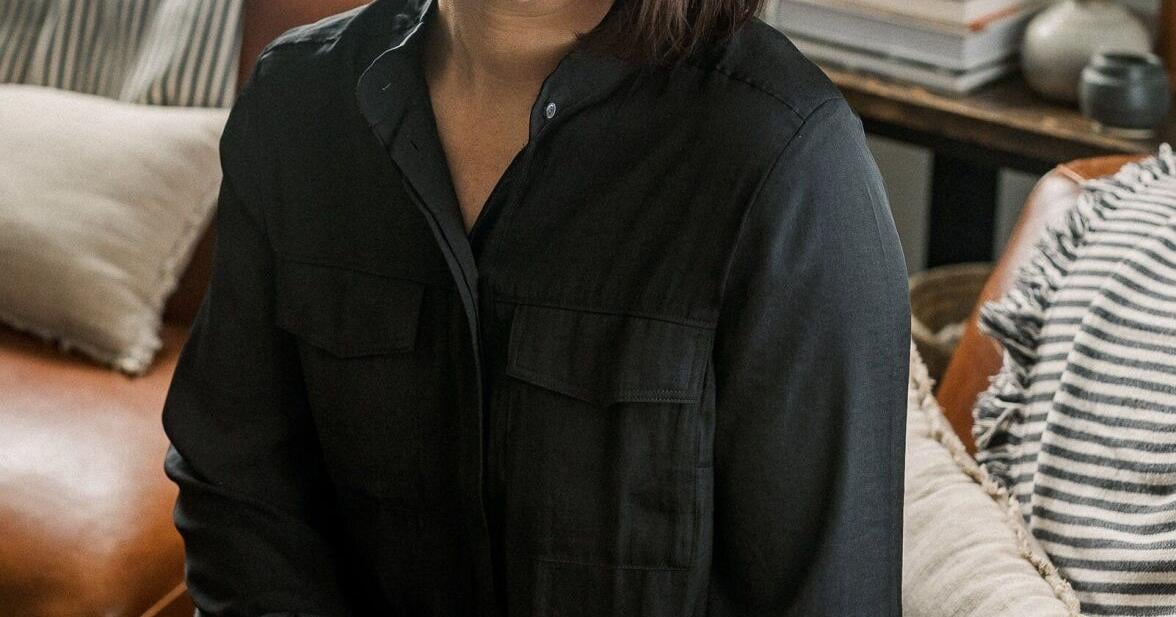
Tacoma editor and writer Jenny Bartoy poses this fundamental question in the introduction of “No Contact: Writers on Estrangement” (out April 28 from Catapult). The book, which Bartoy edited, collects 32 different perspectives on family dynamics and moves between memoir, fiction and poetry.
Each essay approaches the subject of estrangement through a different lens. “No Contact” is what Bartoy, who has published work in The Seattle Times, calls a “chorus of voices” that highlights both how unique and universal estrangement can be.
Bartoy cut ties with her father two decades ago. During that time, her search for resources to help guide the breakup came up empty. It was a confusing, difficult experience. There was seemingly no help beyond advice to rekindle the relationship with her father.
“Hint: I was the problem,” she writes in the book’s introduction. “But from where I stood, reconciliation did not seem feasible … I had to find my own way.”
That search would eventually lead Bartoy to edit this anthology. For years, she kept a list of books and articles that touched on the topic of estrangement. As Bartoy reached out to writers she had come across in her research, the book began to take shape. Instead of writing about her own story, “No Contact” became a type of community that Bartoy said she felt well-suited to help foster.
“I’m an editor,” she said. “That’s my job, and it just felt much more natural to shape a story.”
Many of the stories in “No Contact” come out of the Northwest. Bartoy’s anthology features pieces from local authors, including Kristen Millares Young, Jane Wong, Mattilda Bernstein Sycamore, Oslyn Serratos and Gabriela Denise Frank.
Young’s piece recalls a chance encounter with her father after years of not seeing one another. Sycamore’s essay examines the complex relationship between her and her grandmother. “Why are you wasting your talent, she would say to me, over and over,” Sycamore writes, “for the last twenty years of her life, as we talked less and less.”
Frank’s, “ESTR NGEMENT,” is one of the more affecting pieces in the collection. The essay, written in visceral second person, recalls a childhood home dominated by a person who yelled, whose “fuse burned quick.” Frank’s narrator works to separate from this parent figure, but the process of letting go doesn’t end there — ” … you let go over, then over, then over.”
By the time you finish the essay, you don’t realize how form and function are melding. In the author’s note, Frank writes that the essay is a lipogram and has excluded words that contain the letter “A.” The piece, she writes, is “an exercise in writing around what’s estranged for me; father, dad, family.”
Cheryl Strayed, the Portland-based author of the bestselling memoir “Wild,” ends the collection with an adapted version of her “Dear Sugar” column. The reader asks whether it was right to end her relationship with an abusive father. Strayed answers by reflecting on her own father and finally getting to a place of healing where “ … you recognize entirely that you will thrive not in spite of your losses and sorrows, but because of them.”
Part of the challenge in editing “No Contact” was ordering and organizing 32 different voices on the same topic. But Bartoy’s vision of creating space for a new type of conversation around estrangement guided the process.
“I wanted to push back against this trope of reconciliation being inevitable and desired,” she said. The heavy focus on parents voicing their discontent, Bartoy added, left little space for adult children or other family members to explain and express their side of the story.
Family members are estranged for all kinds of reasons, Bartoy said. Her approach with “No Contact” was to represent as many of them as possible. She also aimed to cover different degrees of estrangement (“no contact, low contact, intermittent contact”) and vary the type of family relationship featured in the piece (parents in addition to “siblings, cousins, grandparents”).
One story Bartoy couldn’t find was one written with humor. “That was just a no-go,” she said. Instead of humor providing a break from the emotional weight of estrangement, Bartoy focused on varying the length and emotional weight of pieces, as well as including flash poetry and experimental pieces that “give some distance to the topic.”
When Bartoy put out a call for submissions, she got more than 200 responses. The reaction to the “No Contact” project proved that people were “hungry for this conversation,” Bartoy said. Estrangement is ongoing and often changing. It’s a form of grief, she said. But working on something like “No Contact” has created a new community for the featured writers. Bartoy and the contributors have become friends after working together.
“And it’s a deep friendship because it’s rooted in something so difficult and personal, and seeing each other, seeing the hard truth of what we’ve all lived through,” Bartoy said.
Estrangement is not a new phenomenon. Bartoy said she sees the rising discourse on estrangement and rejects the idea that it’s a crisis or epidemic unique to this moment. To her, what’s changing is how people are engaging with it.
“It’s become OK to talk about it,” she said. “And because it’s become OK to talk about it, people are learning about what estrangement is, what dysfunctional families look like, and how to set boundaries. And so, it’s become a conversation.”
‘ The preceding article may include information circulated by third parties ’
‘ Some details of this article were extracted from the following source www.yakimaherald.com ’