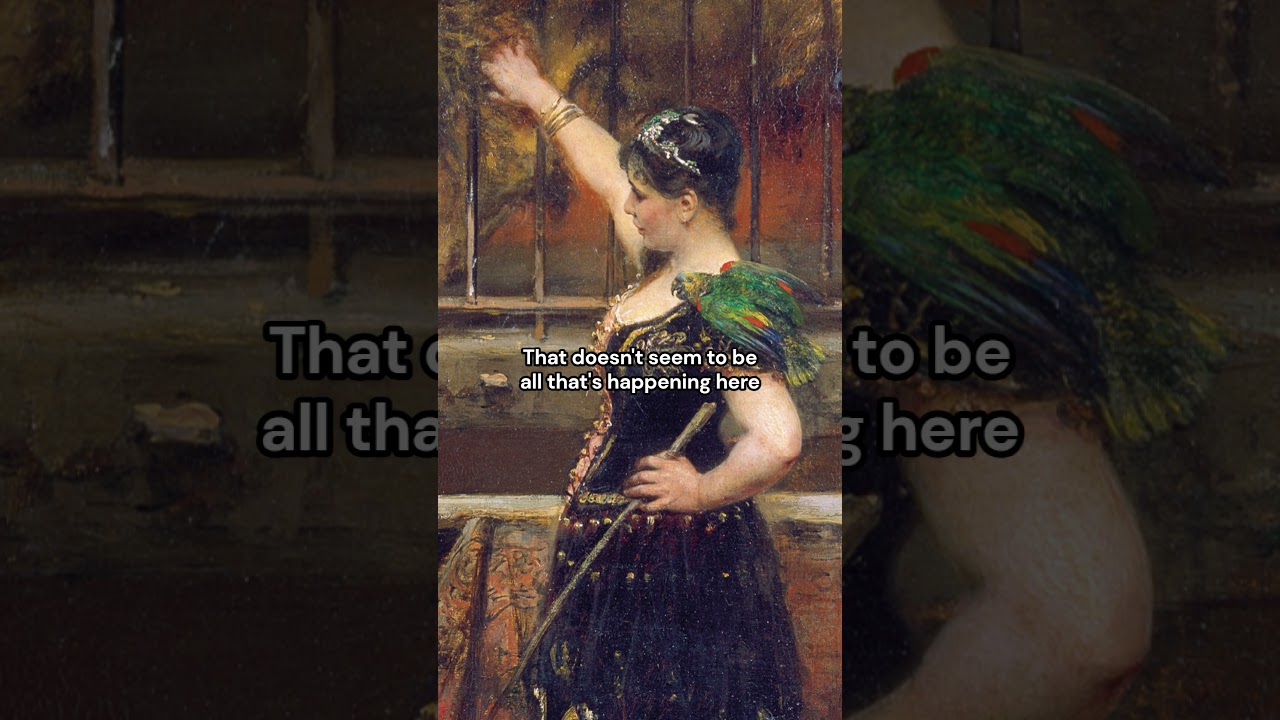
Paul Friedrich Meyerheim’s Jealous Lioness (1885–1890) stages a scene of circus spectacle: a costumed woman reaches her hand toward a caged lion, while beside him a lioness snarls and bares her teeth. At first glance, the image plays into the melodrama suggested by the title, An animal tamer winning the lion’s affection while the lioness reacts with envy. The performer stands poised and confident, parrot on her shoulder, the picture of human mastery over beasts. But beneath the theatrical surface, the bars of the cage and the lions’ strained gestures betray a harsher reality.
Seen through the lens of the cruelty circuses inflicted on animals, the painting becomes less about jealousy and more about survival under trauma. The lion’s outstretched paw looks less like devotion than a desperate grasp for gentleness in a life of confinement, while the lioness’s bared teeth feel less like envy than a defensive shield against further harm. Both responses—one reaching out, the other lashing out—speak to the same wound. What Meyerheim may have intended as drama instead reads, to modern eyes, as a study in how captivity fractures even the most powerful creatures into different forms of longing and resistance.
Video Source