Peruse musical instruments, household objects, Johnny Horton’s gold record for “Battle of New Orleans,” Hank Williams Jr.’s shirt and more. Outside the museum is an equally state-of-the-art amphitheater that has hosted concerts by country music legends.
The museum is located seemingly in the middle of nowhere in the Rebel State Historic Site in Marthaville, about 20 miles directly west of Natchitoches.
Instead of turning toward Natchitoches once you exit Interstate 49, you turn the opposite way. The grounds feature a picnic area and two short nature trails. Check out the schedule for live performances of both local and national artists, and the popular annual fiddling championship. There is a small entrance fee.
Free for seniors and kids 12 and under. — Robin Miller.
Delta Music Museum
218 Louisiana Ave., Ferriday
Exhibits at the Delta Music Museum in Ferriday, La. showcase the history of various genres, including rock, blues and country.
The Delta Music Museum is located in downtown Ferriday and is free to the public.
The museum holds the distinction as the first Louisiana location marked with a Mississippi Blues Trail designation. The museum currently showcases 29 artists from musical genres of blues, soul, gospel and country.
During the 1950s, these genres would converge in the delta to create the new sound of rock ‘n’ roll and rockabilly music. The space also includes a theater called “The Arcade,” a landmark movie theater converted into a 250-person performance hall available for rent.
Visit the museum Thursday through Saturday from 9 a.m. to 4 p.m. — Margaret DeLaney.
Frogmore Plantation and Gins
11656 U.S. 84, Ferriday
Cotton was considered “king” in Louisiana primarily during the 19th century and early 20th century, especially flourishing between approximately 1820 and 1930. During this time, cotton was the dominant crop in the northern part of the state and formed the backbone of the regional economy.
Historical cotton and plantation culture are the stories told at Frogmore Plantation. An 1800-acre working cotton plantation, Frogmore has 19 restored antebellum structures that date from the early 1800s.
Along with the history of the early Natchez planters and their slaves, the tour includes a rare Smithsonian-quality steam cotton gin and then contrasts the historical methods with modern-day planting, harvesting and computerized ginning of cotton.
The tour begins upon arrival and is fully guided through eight historical buildings. The guides tell of the evolution of change beginning in the 1790s through the war that created the lifestyle called sharecropping.

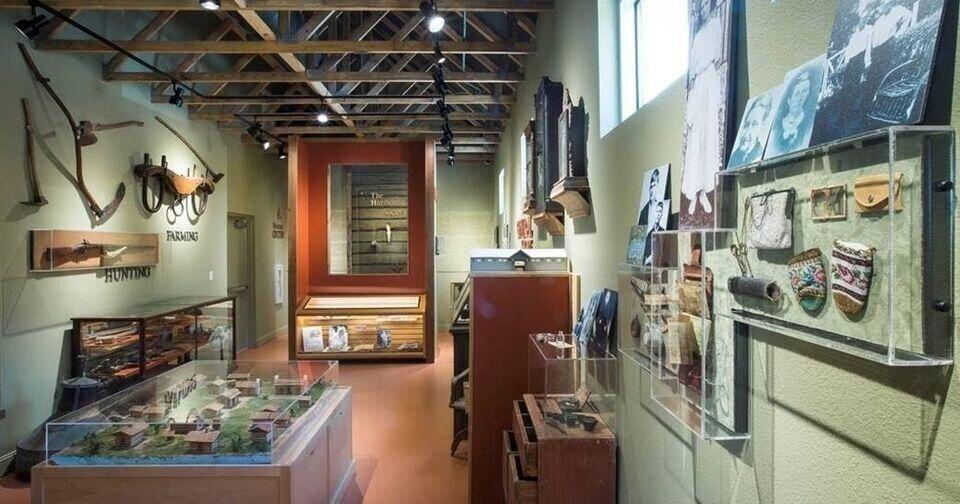
The Germantown Colony Museum displays a set of preserved silkworms, along with their raw silk, with information on the worms’ lifespan. Colonists once spun silk and used it to create silk garments.
As of 2025, approximately 110,000 acres of cotton are planted in the state of Louisiana, which is reported as the smallest cotton crop on record for the state and represents about a 30% decline from the previous year. — John Ballance.
The Germantown Colony and Museum
200 Museum Road, Minden
Germantown was the earliest religious communal settlement in Louisiana. It was founded in 1836 by Germans, adherents to ideas of religious leader Maximilian Ludwig (1788-1834), the “Count of Leon”, and it lasted as a commune until 1871.
Its founding was led by Elisa Leon, the “Countess of Leon”, widow of Maximilian Ludwig. In the colony, all property was owned in common and observance of religious principles was required. Though the colony was not very large — only about 35 people — it worked together and prospered.
Germantown once had numerous houses, barns, stores and shops, as well as a kitchen-dining hall and a “bachelor’s hall.” The historic buildings are mostly gone. The listing included just two contributing buildings: Countess Leon’s home and the kitchen-dining hall, both built of hewn logs with dovetailing at their corners.
The kitchen-dining hall has a dry-walled stone cellar and an adjacent frame shack. Many windows have been replaced, and none of the porches are original.
These surviving historic buildings, and sympathetic rustic others, still “convey in their crude and primitive character something of the lifestyle of the Germantown settlers.”
The site, several miles off U.S. 79 and about 9 miles north of Interstate 20, continues to be operated as a museum. — Robin Miller.

The Germantown Colony Museum stands on the spot where the colony thrived outside of Minden and includes original cabins that belonged to the commune’s residents.
Shreveport Water Works Museum
142 N. Common St., Shreveport
The McNeill Street Water Treatment Plant was constructed in 1887 as the original water works for the City of Shreveport.
It was the second water works built in Louisiana and one of the first in the post-Civil War South. As the last known steam-powered municipal water treatment plant in the United States, its steam engines were finally retired in 1980. The site is now a national historic landmark.
The Shreveport Water Works Museum is open from 10 a.m. until 4 p.m. Tuesday through Saturday and from noon through 4 p.m. on Sunday — Jan Risher.
‘ The preceding article may include information circulated by third parties ’
‘ Some details of this article were extracted from the following source www.nola.com ’