Article content
As funding pressures force schools to choose between essential programs, new national data suggests that cutting music class could come at a real human cost, especially for students in small rural schools.
Advertisement 2

Article content
A new survey from MusiCounts, Canada’s music education charity, found that 86% of Canadians believe music education benefits children and should be delivered equitably to all schools, yet many classrooms are being asked to do more with less.
Article content
Recommended Videos
Article content
The consequences of that shortage are deeply felt in rural Manitoba, where access to band, choir, or instrument programs can be slim to nonexistent. But this fall, one tiny school near Morris is proving just how transformative a music program can be when the right tools arrive.
A Colony Classroom Comes Alive With Ukuleles
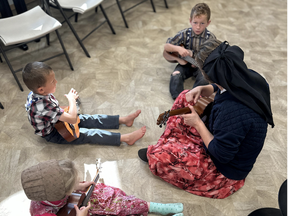
At Albright School on the Oak Bluff Hutterite Colony, 34 students began learning their first chords together, some plucking brand-new guitars, others strumming ukuleles for the first time.

The Winnipeg Sun’s Daily Headline News
Article content
Advertisement 3
Article content
“We’ve always had students eager to learn,” teacher Jessica Maendel said. “The heartbreaking part was having to tell them we simply didn’t have enough instruments.”
That changed when Albright became one of 85 under-resourced schools across Canada selected to receive part of MusiCounts’ record $1.1 million investment in classroom instruments.
“Last year we had a guitar program,” Maendel explained. “But only kids with a guitar at home could participate. It meant interested students were left on the sidelines.”
This fall, nobody was sidelined.
Music as Mental Health Support, Not a Luxury
The joy unfolding at Albright echoes what Canadians say they value most about music in schools. According to the MusiCounts-Harris Poll survey, nearly two-thirds (60%) of Canadians believe that actively making music has a greater impact on mental well-being than listening to it. Over half (56%) associate music education directly with improved mental health, a finding increasingly relevant in communities where students may not have access to formal counselling services.
Advertisement 4
Article content
“Music classrooms are the beating heart of any school,” said Kristy Fletcher, President of MusiCounts. “When students build connections and express themselves through music, we’re giving them tools to thrive both in and outside the classroom.”
The Need Is Growing and Outpaces Support
While the survey highlights Canadians’ overwhelming support for music education, it also exposes how precarious programs are nationwide. MusiCounts can only support about one in five schools that apply, and 20% of applicants report having no annual funding at all for music.
The demand is especially high in places where enrollment is small and transportation options are few, a familiar challenge for Manitoba’s rural and northern schools.
Advertisement 5
Article content
“Students in big cities may take band class for granted,” Maendel said. “For us, having instruments at all is life-changing.”
With Giving Tuesday approaching on December 2, MusiCounts is urging Canadians to help strengthen music programs where they are needed most.
To learn more about MusiCounts or to donate in support of music education, visit musicounts.ca
— Steven Sukkau is a Local Journalism Initiative reporter who works out of the Winnipeg Sun. The Local Journalism Initiative is funded by the Government of Canada.
Have thoughts on what’s going on in Winnipeg, Manitoba, Canada, or across the world? Send us a letter to the editor at [email protected].
Article content
‘ The preceding article may include information circulated by third parties ’
‘ Some details of this article were extracted from the following source winnipegsun.com ’