The eight feature film adaptations of the Harry Potter book series earned nearly $8 billion at the global box office and exactly zero Academy Awards.
Yes, for all of the brilliant craftwork in the production designer and special effects, a musical score originated by John Williams, a murderers’ row of awards-laden British actors, and six nominations, actual Oscars turned out to be as elusive as the Golden Snitch for the Warner Bros. productions released between 2001 and 2011.
More from Gold Derby
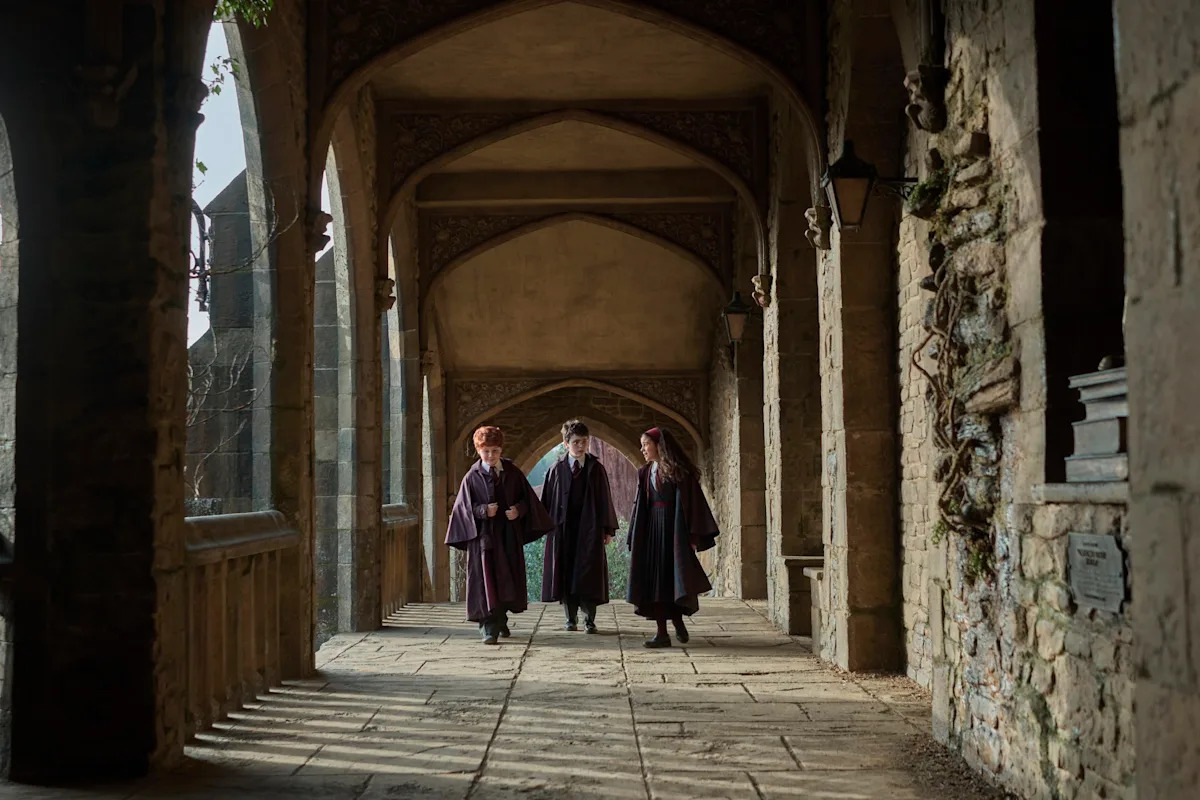
But now, the inhabitants of the wizarding world are headed for premium cable, where fantasy adaptations like Game of Thrones have found massive awards success. HBO finally unveiled the first teaser trailer for the first season of its hyped television adaptation of J.K. Rowling’s books, titled after the British edition of Book 1, Harry Potter and the Philosopher’s Stone. Like the feature film adaptations before it, the series appears to have the premium production quality and formidable cast of British (and one notable American) actors that would expectedly bring awards attention.
Could the Emmys wind up being kinder to Harry Potter than the Oscars?
At the time of its initial release in 2001, Harry Potter and the Sorcerer’s Stone represented a breakthrough for fantasy storytelling in popular cinema, but as it related to the Oscars, there was One Big Problem.
The Lord of the Rings: The Fellowship of the Ring hit theaters weeks after Harry first enrolled in Hogwarts and received a much warmer reception from the Academy, earning 13 nominations — including Best Picture, Director, Adapted Screenplay, and Supporting Actor for Ian McKellen — to Sorcerer’s Stone‘s three. The first of Peter Jackson’s J.R.R. Tolkien adaptations presented too direct of a comparison for Academy members, and against Fellowship, Sorcerer’s Stone looked like “kids stuff” (even if Williams’ score and the production design from Stuart Craig and Stephenie McMillen were undeniable).
The first Potter film set a template that the Oscars largely followed through subsequent installments. They tossed most of the series one or two craft nominations each time out — blanking Chamber of Secrets and Order of the Phoenix all together — until the final installment, The Deathly Hallows — Part 2, rallied back to where the series started, with three nods.
The trend was the same nomination pattern that The Lord of the Rings followed (a dip in nods for the middle with more acclaim reserved for the beginning and the end) spread across eight movies, rather than three, but the differences between the receptions the two series received was clear. The Academy respected the craft on display in the Potter movies, but they were never serious contenders.
Fifteen years later, the media landscape looks rather different in some ways and exactly the same in others. In 2026, massive amounts of money is being spent on adaptations of the works of Tolkien and Rowling, but the conversations around the properties has shifted.
Prime Video’s The Lord of the Rings: The Rings of Power represented one of the biggest purchases of intellectual property in recent memory, but the two seasons of the series have struggled to make an impact culturally. Season 1 scraped together six nominations at the Creative Arts Emmys, but that total sank to just one for the second season.
In the case of Potter, its television adaptation will be pulling from pre-existing and well-known plots, something that The Rings of Power only had in the broadest of strokes. And then there’s the J.K. Rowling of it all.
The Potter films weren’t able to convert box-office success into Oscars back when the Scottish-born author was a rags-to-literally-the-richest-person-in-the-U.K. story and a modern patron saint of getting kids to read. Today, her presence in the culture is that of a supervillain, bankrolling campaigns to take away the rights of trans men and women in the U.K. and ostentatiously celebrating when she has succeeded.
Even at this extremely early juncture in the life cycle of the upcoming series (let’s talk again once screeners are out), the primary question faced by anyone engaging with Potter — be it potential viewers or the creatives behind the show — is whether such involvement is even moral. That sort of quandary as the starting point of a conversation around watching a series — or voting for it at the Emmys, no less — certainly doesn’t seem like a recipe for success.
Then again, according to HBO, 277 million people watched the teaser for Harry Potter and the Philosopher’s Stone within the first 48 hours of its release. Maybe there’s magic to be mined from the property yet.
Best of Gold Derby
Sign up for Gold Derby’s Newsletter. For the latest news, follow us on Facebook, Twitter, and Instagram.
‘ The preceding article may include information circulated by third parties ’
‘ Some details of this article were extracted from the following source www.yahoo.com ’