“At first glance,” thinks Eleanor, the anxious millennial protagonist from Seattle author Kim Fu’s new novel, “The Valley of Vengeful Ghosts” (out March 3 from Tin House), “she thought it was a logging clear-cut, a vast trapezoid of razed land… The total surgical annihilation was stunning, an environmentalist’s nightmare — the ground scraped clean of the ancient trees and everything that had sheltered within, sterile as salted earth.”
This “vast trapezoid” is an unfinished housing development in the fictional Pacific Northwest town of Bering Rock, on the outskirts of a major city that Fu calls “Seattle, but in a dream.” Eleanor, the star of the book, has recently lost her mother. Alone for the first time in her life, struggling to navigate adulthood and her career as a therapist, she uses her inheritance to buy a house in the exurbs, honoring her mom’s final wish. Then the rain starts, triggering a downward spiral for which Eleanor and her new home are equally unprepared.
Fu’s previous work, the short story collection “Lesser Known Monsters of the 21st Century,” took home the Washington State Book Award for fiction in 2023 and was named a finalist for the horror-centric Shirley Jackson Awards. Fu’s new novel veers similarly into horror and psychological instability. But in “The Valley of Vengeful Ghosts,” the chief scare is terrifically on point: buying a home.
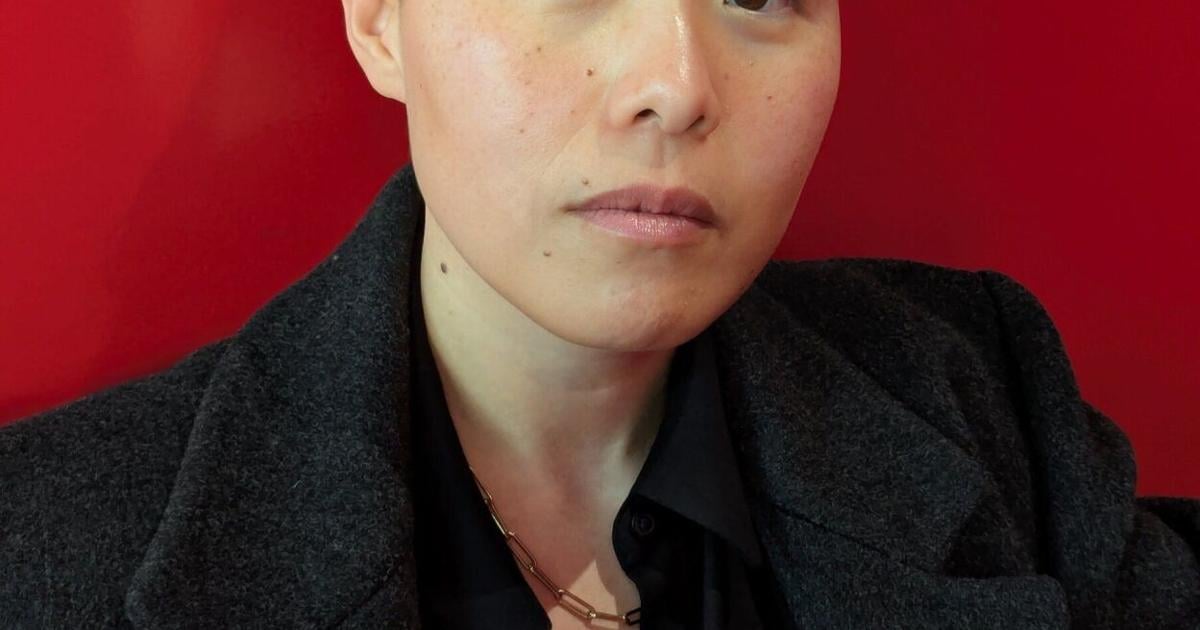
The Seattle Times sat down with Fu to chat about their new novel shortly before its publication. This interview has been edited for length and clarity.
This book is right in the middle of a few genres, but we get a tremendous cliffhanger in the prologue. “If only, that first day Eleanor saw the house, she’d hesitated longer… If only she’d never come at all.” This line feels like the discovery of a body in a thriller. How did the prologue fit into your plotting and commercial positioning?
I love when people tell me they went into this book not expecting it to be horror. Like, they thought it was straight literary fiction, and then were surprised by how scary it is. I’m worried about the opposite experience, disappointing readers of the horror genre who are disappointed by how not scary it is. I had a bookseller refer to it as “dip your pinkie toe in horror,” which I appreciate.
Eleanor is struggling on a few different fronts here. That said, is homebuying the real horror at the heart of this book? Does that reflect your own lived experience in the Northwest?
I live in a town house unit, and in 2022, there were windstorms that revealed how poorly constructed my home was. All this water started coming in through the doors and windows, and then simultaneously and seemingly unrelatedly, the second-floor piping began pouring into the floor and the ceiling below. And then our water heater had problems. It flooded in three different ways. As far as the buying process goes for Eleanor, it’s sort of hyperbolic, but only slightly. Houses are bought and sold in 20 minutes around here, and you’re fighting with companies or people buying in cash. It’s the source of a lot of turmoil.
Eleanor is not the world’s greatest therapist, especially considering the chaos in her own life. What’s your experience with the practitioner’s side of therapy? And how did you position Eleanor’s clients to contribute to the larger plot and themes of this book?
I did my undergrad in psychology, so becoming a clinician was always kind of the road not taken. I have experience in those classes, labs and research. I’ve also been in therapy. For the purpose of this book, I did research on YouTube and talked with providers about their experiences with online platforms. That was eye-opening. Eleanor is a pretty bad therapist. But I also feel like she’s the victim of a lot of systems and circumstances, and she didn’t have to be this way. Some of it is the nature of online therapy platforms.
As for the clients, they’re victims of the same systems as Eleanor, but it manifests in really different ways. They’re also incredibly lonely and isolated people, even though they have spouses and jobs. What comes out in therapy is that they’re struggling for the same reasons as Eleanor. It’s the same lack of community that results in their behaviors.
Eleanor has a dependent and, at times, combative relationship with domestic contractors in this book. Is that a reflection on her personality? On the nature of contracting? On your own experience?
I think the world is set up these days so that our best interests do not often align with other people’s. And that’s very difficult. You don’t want to distrust people. You want to assume the best in people. You want to assume that everyone is behaving and acting in good faith. It’s very unpleasant to go through life suspicious of everybody or thinking that people are trying to scam you. But in a lot of situations, you have no choice.
I don’t think Kurt (the contractor who works on Eleanor’s house) is a bad guy. He’s out for his own best interests. He’s a shrewd businessman, and you can’t fault him. I do think he’s a little surprised at Eleanor’s naiveté. He wants the best for her, but he’s just a person that’s looking out for himself. As for the locksmith (who helps when Eleanor’s door gets stuck), that interaction highlights how frightening locksmiths are, particularly to women living alone. It reveals the fiction of vulnerability, how secure you actually are. Eleanor is geographically and emotionally isolated in her house. It’s like, no one could hear you scream.
Part of this book resembles the kind of story that you might call a “descent into madness.” What are some other films or novels you enjoy of this sort?
“Earthlings” by Sayaka Murata, “Bitter Orange” by Claire Fuller and “Helpmeet” by Naben Ruthnum. In all of them, you end up in a horror novel and did not begin in one. And the escalation is slow until it isn’t.
‘ The preceding article may include information circulated by third parties ’
‘ Some details of this article were extracted from the following source www.yakimaherald.com ’