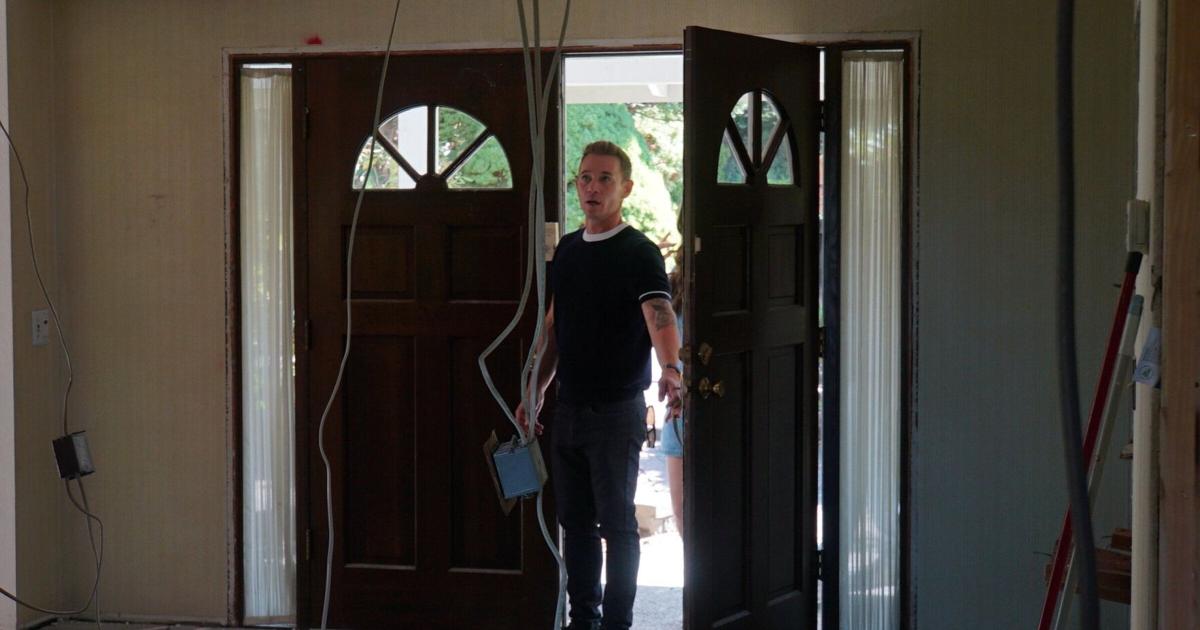
For the second season of A&E’s Seattle-set “Million Dollar Zombie Flips” (11 a.m. Saturday), investor James Dainard encountered a new horror in one of the derelict “zombie” homes he and his team bring back to usable life.
“I always think that I’ve seen it all, and then I see more,” Dainard says, pointing to “the mold house” in Kenmore as this year’s worst of the worst. “I had never seen so many spiders, but the spiders were covered in mold. They all died from the mold. It was cobwebs with hundreds of little moldy spiders.”
Dainard defines a “zombie house” as one where, instead of addressing a problem, the owners just shut the door and walked away. Dainard tries to bring those houses back up to livable condition, but he acknowledges there’s some controversy about flipping real estate.
“A lot of people have bad thoughts about flippers, and I think there’s right ways to do it and wrong ways to do it,” Dainard says. “We buy homes that are not habitable. We’re providing housing. We’re able to fix these homes that most people don’t think are fixable.”
Dainard says what he does is different from hedge funds that buy tract homes across Middle America.
“That is taking away housing because they’re buying, like, carpet and paint jobs,” he says. “We don’t buy any of that just because, honestly, I can’t figure out how to make money on those anyways, because homeowners will naturally usually out-pay you. But hedge funds, obviously, have a lot deeper pockets. I don’t think it’s really the flippers [who are the issue]. I think it’s the big hedge funds that buy rental properties.”
Dainard says he usually tries to preserve what’s special about a home architecturally, or even its setting.
“We have a house [this season] that was on a really big lot that typically they’re gonna knock over and pack, like, five cottages into, which people are very fatigued of in Seattle,” he says. “But we got to make this big half-acre lot with a huge backyard and really salvage that house.”
In each episode of “Million Dollar Zombie Flips,” Dainard and his teammates — project manager Ryan Burgess and broker/designer Megan Halter — work with a different flipper to rehabilitate a property. The flipper manages the work based on Dainard’s plan using Dainard’s cash. Dainard and the flipper split the profit after the rehabbed house is sold.
In the Season 2 premiere, the focus is on a two-bedroom, two-bath Ravenna home built in 1918 with “a grandma chic vibe,” per Halter. They turn the home into a four-bedroom, but not before encountering a crumbling foundation.
In addition to homes in Kenmore and Ravenna, this season Dainard works with flippers to renovate homes in Edmonds, Kirkland, Renton, Bellevue, Haller Lake and Wedgwood.
Episode 2 features a fire-damaged Renton house built in 2004 and a contractor who tries to replace legitimate trusses with two-by-fours.
But it’s the third episode, airing April 25, that’s most meaningful to Dainard, as he renovates a home once occupied by his grandparents.
“That was probably the hardest house I’ve ever had to renovate, because you don’t [usually] get those emotional ties when you’re renovating a house, and it was like a flood of it coming in,” Dainard says. “I couldn’t even watch it get demoed. I had to leave.”
Another episode, currently scheduled to air May 23, features a property originally designed by Pacific Northwest architect Wendell Lovett.
“It’s in a neighborhood called Hilltop, which is in Bellevue … and it’s basically 40 midcentury homes done by numerous different famous architects,” Dainard says.
A tree hit the house and the owners planned to tear it down, but after growing fatigued by a three-year permitting effort, the owners opted to sell.
“I was actually extremely excited, because having this house torn down would have been a piece of art just getting wrecked,” Dainard says. “It’s not your standard flip, because it’s more of a restoration rather than a renovation, because you want to keep that architectural integrity, and it’s very hard to do. It’s more expensive, and it definitely takes a lot more time and thought to do.
“We’re trying to keep every little detail, not only for the buyers, but also I’m a big midcentury fan,” Dainard says. “That is my favorite architecture. And I can definitely say I’ve ruined some of them back in my early career, because when you’re in your 20s, you’re like, ‘OK, I have this budget,’ and you don’t really know design. Anytime I get a midcentury house now, it’s my way of restoring them the correct way.”
This new season of “Million Dollar Zombie Flips” filmed July through December last year with 10 homes in various stages of construction over that five-month period.
“We almost have to get them done faster than we normally do, because you have dual pressure” from the projects themselves as well as the TV show’s production schedule, Dainard says. “But overall, the job sites ran very similar to how we do them normally, except for now we have a bunch of cameras following us around and we have to sometimes stop and repeat ourselves.”
Ah, yes, the occasional second-take necessity on unscripted TV series is a real thing.
Dainard says fronting a TV show offered “a huge learning curve” in Season 1.
“I did feel a lot more natural in Season 2,” he says. “The first season you’re getting your bearings. You have to learn how to talk out loud. Whatever’s going on in my brain, I have to announce it. That felt weird in Season 1, like, I’m talking to myself all the time. Season 2 was a lot easier.”
‘ The preceding article may include information circulated by third parties ’
‘ Some details of this article were extracted from the following source www.yakimaherald.com ’