It’s a cold September morning for the remaining hosts of late night TV.
ABC has “indefinitely” suspended “Jimmy Kimmel Live!” following comments host Jimmy Kimmel made about the arrest made in the fatal shooting of conservative podcaster Charlie Kirk.
Disney-owned ABC said on Wednesday, Sept. 17, that it will stop airing “Kimmel” after President Trump-appointed head of the Federal Communications Commission expressed ire at the host’s comments and broadcaster Nexstar announced intentions not to air the show. “‘Jimmy Kimmel Live’ will be pre-empted indefinitely,” a spokesperson for ABC said to USA TODAY in a statement.
It’s a shocking and unprecedented development in the world of late night, in the TV industry at large and the country itself. In its 91 year history the FCC has routinely reserved its moderation of broadcast TV to regulating lewd or profane content. For the long history of late night TV, from Johnny Carson to Jay Leno to Kimmel and his current fellows, hosts have had free reign to say what they want on any topic, no matter how controversial or political.
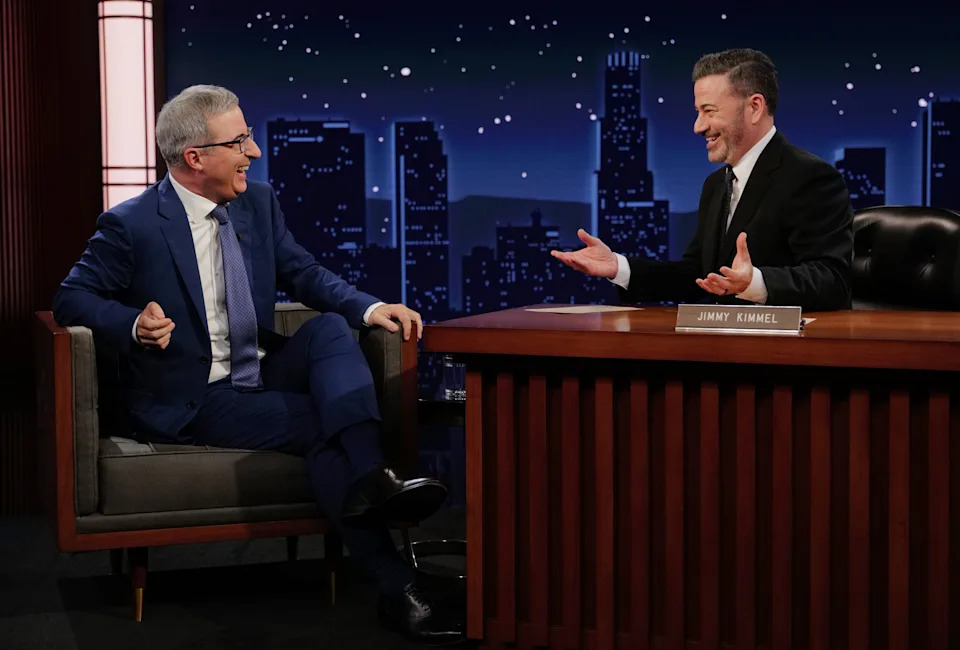
Jimmy Kimmel on a recent episode of “Jimmy Kimmel Live!”
Except maybe not anymore. Earlier this year CBS announced that it was canceling “The Late Show with Stephen Colbert” after the 2025-2026 TV season, ostensibly because of finances, although Trump and conservatives celebrated. Immediately following ABC’s decision to preempt Kimmel, Trump posted on his Truth Social platform in delight, further calling on NBC to cancel the remaining two broadcast late night hosts: Jimmy Fallon and Seth Meyers.
How did we get to a place where the president of the United States is potentially influencing who gets to crack what jokes at 11:35 p.m. on weeknights? What does ABC’s quick pulling of “Kimmel” mean for the future of a genre already desperately imperiled by a changing media world? And what does it mean for the ability of comedians and entertainers to exercise their right to free speech and to speak truth to power?
Why did ABC really pull ‘Jimmy Kimmel Live!’ off the air?
During his Monday, Sept. 15 episode, Kimmel said the following: “We hit some new lows over the weekend with the MAGA gang desperately trying to characterize this kid who murdered Charlie Kirk as anything other than one of them and doing everything they can to score political points from it.” The man who shot Kirk has been identified as 22-year-old Tyler Robinson, whose mother has said that, despite being raised in a conservative home, his politics had lurched left in recent years.
Brendan Carr, the chairman of the FCC, seemingly threatened ABC, Disney and Kimmel over this short comment. “This is a very, very serious issue right now for Disney. We can do this the easy way or the hard way,” Carr said on a YouTube episode of commentator Benny Johnson’s show on Sept. 17. “There’s calls for Kimmel to be fired,” he added. “I think you could certainly see a path forward for suspension over this.”
Following Carr’s words, Nexstar Media Group Inc. said it would stop airing “Kimmel” on its 32 ABC affiliates. Nexstar is currently seeking regulatory approval from the Trump administration for a merger, just like CBS’s parent company Paramount was when it announced Colbert’s cancelation (it has since gotten that approval to be bought by Skydance). Nexstar is seeking to buy broadcaster TEGNA in deal worth a reported $6.2 billion, according to the Associated Press.

Stephen Colbert (L) and Jimmy Kimmel present the award for lead actress in a comedy series during the 71st Emmy Awards at the Microsoft Theater on Sep 22, 2019.
So was it about Kimmel’s comments offending viewers, or offending the head of the FCC?
“For the FCC to crack down on speech that does not involve curse words or extremely lewd language and instead requires viewers to make political inferences is certainly unprecedented. We know the president has hated Kimmel and wanted him off the air and now he got his wish,” entertainment and media law attorney Camron Dowlatshahi said in an email to USA TODAY.
Opinions and speech about Kirk’s killing have proven particularly volatile across American culture in the past week. Washington Post opinion columnist Karen Attiah claimed she was fired after posting Kirk’s own words on social media site Bluesky. MSNBC said it severed ties with its analyst Matthew Dowd after he said on-air that Kirk had pushed hate speech in his public life and “hateful thoughts lead to hateful words, which then lead to hateful actions.” Less high profile employees of other companies have been fired or placed on leave for their public comments on Kirk. Perhaps it was only a matter of time until someone from Hollywood joined that list.
Is late night TV officially over?
Once upon a time Jonny Carson lulled America to sleep with wit and panache every night from the stage of “The Tonight Show” on NBC, watched by millions and respected by nearly all.
Those days are decidely over. For years broadcast late night TV comedians have seen declining audiences, leaned more toward political humor over cultural takes and struggled to adapt to a modern media landscape where streaming services, YouTube and TikTok compete with traditional TV viewing.
There is an argument to be made that we are coming to a natural conclusion to a genre of TV that was once appointment viewing. In addition to Colbert’s cancelation, CBS recently ended its 12:30 a.m. series “After Midnight” when host Taylor Tomlinson decided to leave in favor of her standup career. NBC’s “Late Night with Seth Meyers” recently axed its live, in-studio band as a cost-cutting measure. “Tonight Show” went from five nights a week to four in 2024, joining the other late-night shows. Conan O’Brien, who briefly inherited the “Tonight Show” throne, has moved from decades of traditional late night TV on NBC and later TBS to the low-fi world of podcasting. Samantha Bee’s TBS talk show was also canceled in 2022.
But there’s a difference between natural attrition and the guillotine. Ratings are low but not dire. Costs are high but not insurmountable. YouTube views for Fallon’s stunts are down but still in the millions. With the support of their networks, Fallon, Meyers, Kimmel, Colbert could go on as long as the hosts were willing to keep writing jokes. “The Daily Show” on Comedy Central, “Last Week Tonight with John Oliver” on HBO and “Gutfeld” on Fox News (a distinctly conservative show) are still happily chugging along.
But that requires executives’ support, and it’s unclear in this moment in cultural history if anyone has the will to stand up to vociferous politicians or antsy shareholders.
Fallon, Meyers and Colbert will have all eyes on their Sept. 18 shows, which typically record in the afternoon before their late night air times. Their reaction to Kimmel’s suspension will help shape what their fellow comedians and celebrities do next as the second Trump administration continues to impact Hollywood far more than anyone ever anticipated.
Contributing: Anthony Robledo
This article originally appeared on USA TODAY: Kimmel is off the air and late night TV might be annihilated
‘ The preceding article may include information circulated by third parties ’
‘ Some details of this article were extracted from the following source www.yahoo.com ’