Country music titan Kenny Chesney’s explicit refusal to leverage his massive stadium tours for political messaging has ignited a polarized debate across American media networks, exposing deep fractures regarding the civic responsibilities of global celebrities in an increasingly volatile political climate.
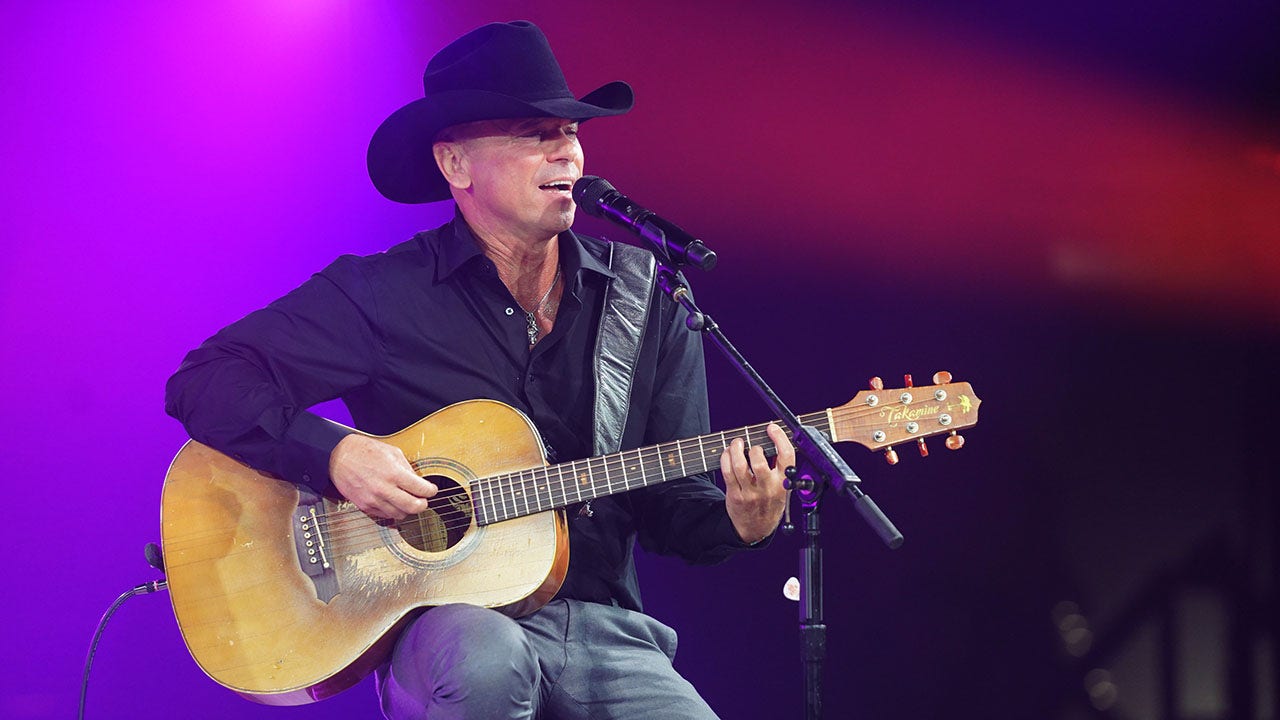
The controversy stems from Chesney’s recent appearance on the “Club Random” podcast hosted by political commentator Bill Maher. During the interview, the 58-year-old musician, who commands one of the most lucrative touring empires in the United States, categorically rejected the expectation that entertainers must direct their audiences’ electoral decisions. The ensuing clash on daytime television highlights a cultural landscape where public figures face immense pressure to declare partisan allegiances.
The ‘Club Random’ Revelation
Speaking to Maher on Monday, Chesney articulated a philosophy centered on escapism rather than activism. He noted that his “No Shoes Nation” fanbase encompasses a vast spectrum of ideological beliefs, and argued that weaponizing his platform would betray the fundamental purpose of his concerts.
“I’ve never saw it to be my place to use my stage or platform, no matter where I’m playing, to tell people how to think or how to vote,” Chesney stated during the broadcast. “Like, they get that everywhere else, everywhere, on every device, every network. They’re there as an escape from all that stuff.”
The musician’s stance represents a significant deviation from the contemporary Hollywood and music industry consensus, which increasingly views political silence not as neutrality, but as complicity. By positioning his concerts as a sanctuary from the 24/7 news cycle, Chesney triggered an immediate backlash from commentators who argue that such neutrality is an unacceptable luxury.
A Divided Panel on ‘The View’
The repercussions of Chesney’s statements were immediately felt on ABC’s “The View,” where the show’s co-hosts engaged in a heated debate over the moral obligations of wealth and influence. The panel, which serves as a highly influential barometer for American cultural politics, split sharply along generational and ideological lines.
Co-host Joy Behar aggressively criticized the concept of celebrity neutrality, utilizing rock legend Bruce Springsteen—who has actively campaigned against former President Donald Trump—as the gold standard for artistic responsibility. “Springsteen walks the walk. He talks about politics. He is a great talent. He can afford it,” Behar argued. “If you can afford it, you certainly should speak up. It’s an American obligation in a certain way.”
Conversely, co-host Sara Haines defended Chesney’s right to maintain a non-partisan space. Acknowledging the relentless nature of modern political consumption, Haines argued for the necessity of cultural reprieve. “I like to be able check out of something and not have it be politics,” she countered. “It is a 24/7 news cycle. It’s all I consume. I need comedy, I need music.”
The Global Burden of the Platform
The debate surrounding Chesney is far from a uniquely American phenomenon. The tension between artistic escapism and political duty resonates powerfully across the global entertainment industry, particularly in Africa where the stakes of political engagement are often a matter of life and death.
In Nigeria, the global dominance of Afrobeats has placed immense pressure on megastars like Burna Boy and Davido to address systemic corruption and state violence. During the #EndSARS protests, the silence or perceived delay of certain artists in condemning police brutality led to massive public boycotts. Unlike Chesney, who fears alienating ticket buyers, African artists often face the threat of state retaliation, censorship, or physical harm if they cross powerful political lines.
Similarly, in Uganda, the transition of pop star Bobi Wine from entertainer to the primary opposition leader against President Yoweri Museveni demonstrates the absolute extreme of celebrity politicization. In such environments, the concept of a concert existing as a “neutral escape” is frequently viewed as an endorsement of the oppressive status quo.
The Economics of Apathy
At its core, Chesney’s decision is deeply intertwined with the economics of stadium country music. His audience demographics bridge the rural-urban divide, encompassing conservative heartland voters and liberal coastal fans. Taking a definitive political stance guarantees the alienation of a significant percentage of a consumer base that generates hundreds of millions in touring revenue.
The argument on “The View” ultimately distills down to the definition of privilege. Critics argue that the ability to “tune out” politics is an inherent privilege unavailable to marginalized communities whose daily existence is dictated by legislative outcomes. Defenders counter that demanding political conformity from musicians reduces art to propaganda.
As the 2026 electoral cycle accelerates, the pressure on public figures will only intensify. Kenny Chesney’s refusal to participate in the political machine has ironically forced a national conversation, proving that in the modern era, even the choice to remain silent is a profoundly political act.
‘ The preceding article may include information circulated by third parties ’
‘ Some details of this article were extracted from the following source streamlinefeed.co.ke ’