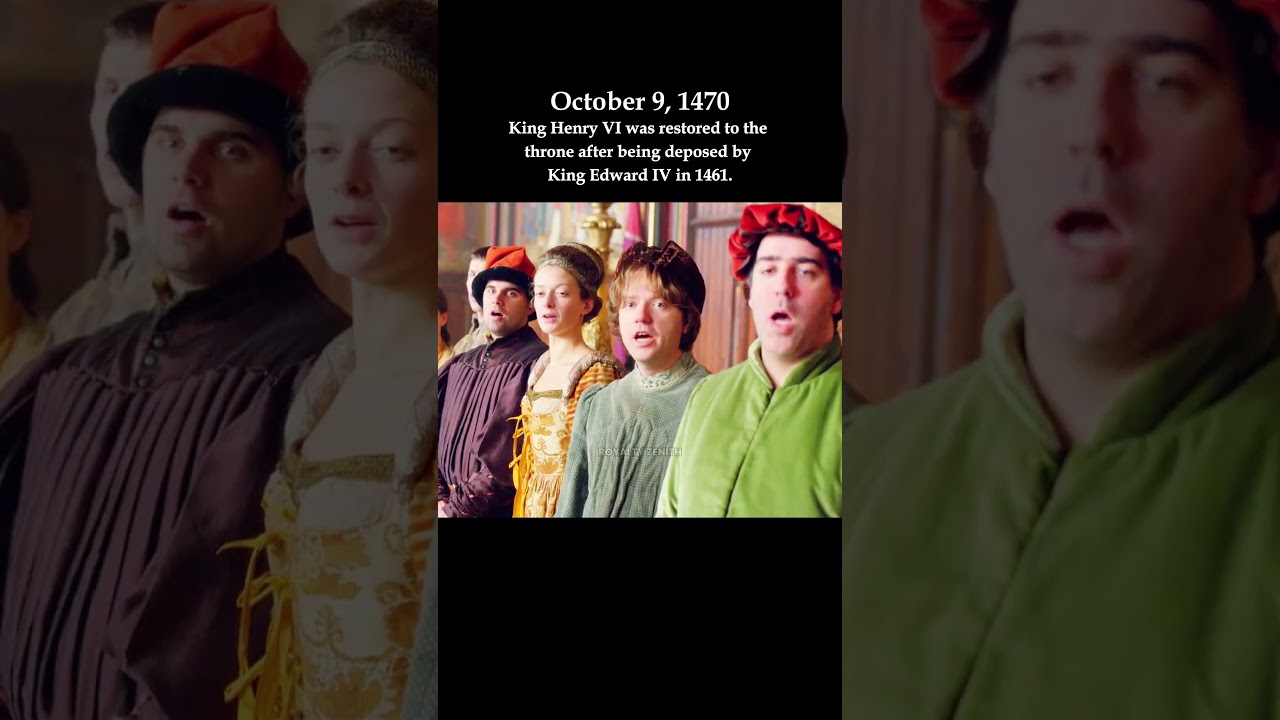
In October 1470, the fragile Henry VI was briefly restored to the throne in an event known as the “Readeption.” This restoration was not the result of Henry’s own leadership, but rather a desperate political maneuver by the Earl of Warwick, who plucked the bewildered king from his imprisonment in the Tower of London. Henry’s second reign was a ghostly affair; the King was described as a shadow of his former self, often appearing in public as a silent figurehead while Warwick held the true reins of power. His return to the crown proved tragically short-lived, lasting only until the following spring when his Yorkist rival, Edward IV, returned to England to reclaim his kingdom.
The end for Henry came swiftly following the total collapse of the Lancastrian cause at the Battle of Tewkesbury. Returned once more to the Tower of London, Henry VI died on the night of May 21, 1471. While the official Yorkist narrative claimed the King had passed away from “pure melancholy” upon hearing of the death of his son, few contemporaries believed it. It is widely accepted by modern historians that Henry was murdered on the orders of Edward IV to permanently extinguish the Lancastrian threat. When his remains were exhumed centuries later, evidence of a fractured skull and blood-matted hair confirmed a violent end, marking the grim conclusion to one of the most turbulent lives in English royal history.
Video Source