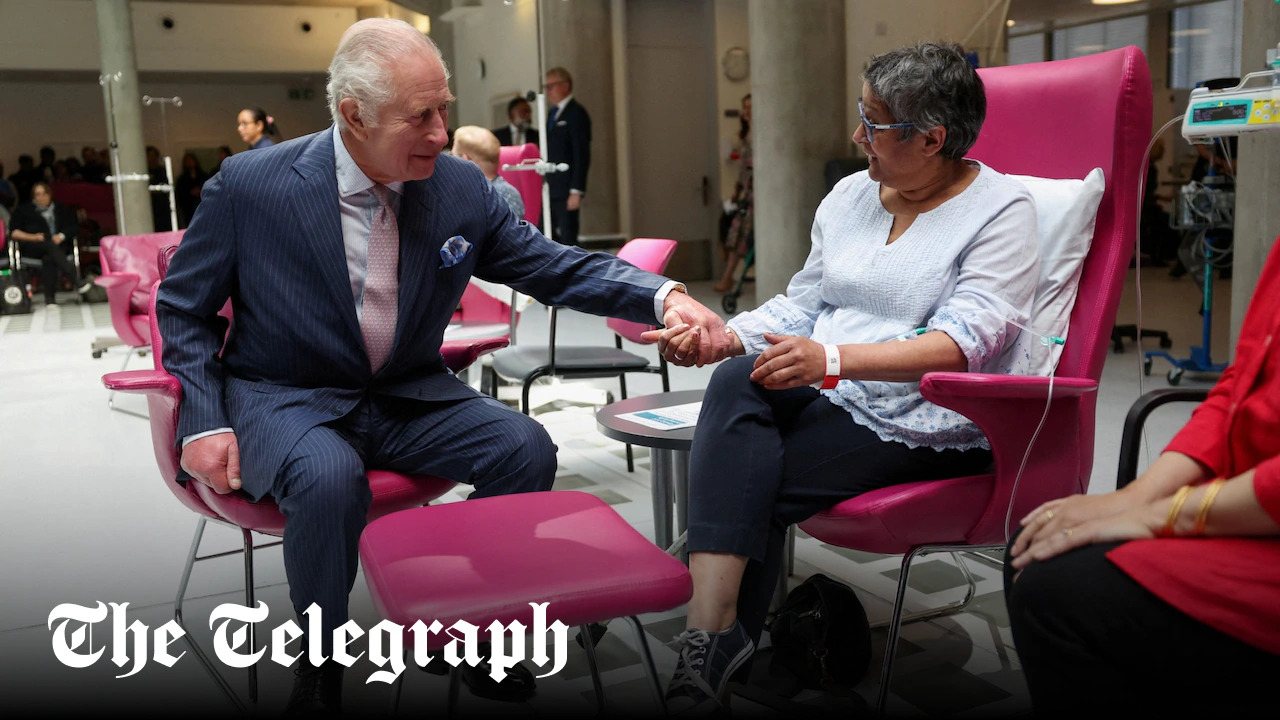
It is surprising, on a royal engagement nowadays, if someone doesn’t try to hug the King.
In a few short years, the monarch – sovereign, head of state, head of Commonwealth and defender of faith – has gone from untouchable “quasi-deity” in the public imagination to almost one of us.
King Charles III, who was diagnosed with cancer nearly two years ago and has been enduring weekly treatment ever since, has become more human than any king or queen before him and changed the Crown forever.
His message, filmed two weeks ago, was long and detailed. He urged people to take up screening for early detection, gave “most heartfelt thanks” to those caring for cancer patients, and asked for Christmas prayers for those still in the trenches of treatment.
The language was modern – his “cancer journey” – and clear: people think tests are “frightening, embarrassing or uncomfortable”, he said, but are later always “glad they took part”.
The address, which was trailed with a casual snippet of film showing him sitting down and getting comfortable in front of the camera, was filmed for Channel 4, where anti-monarchy sentiment stretches to an “alternative Christmas speech” every year.
His message was paternal, delivered as if a concerned father or grandfather was trying to convince a hesitant relative.
He has learnt first-hand how early detection can make all the difference and wants to pass it on.
‘ The preceding article may include information circulated by third parties ’
‘ Some details of this article were extracted from the following source www.telegraph.co.uk ’