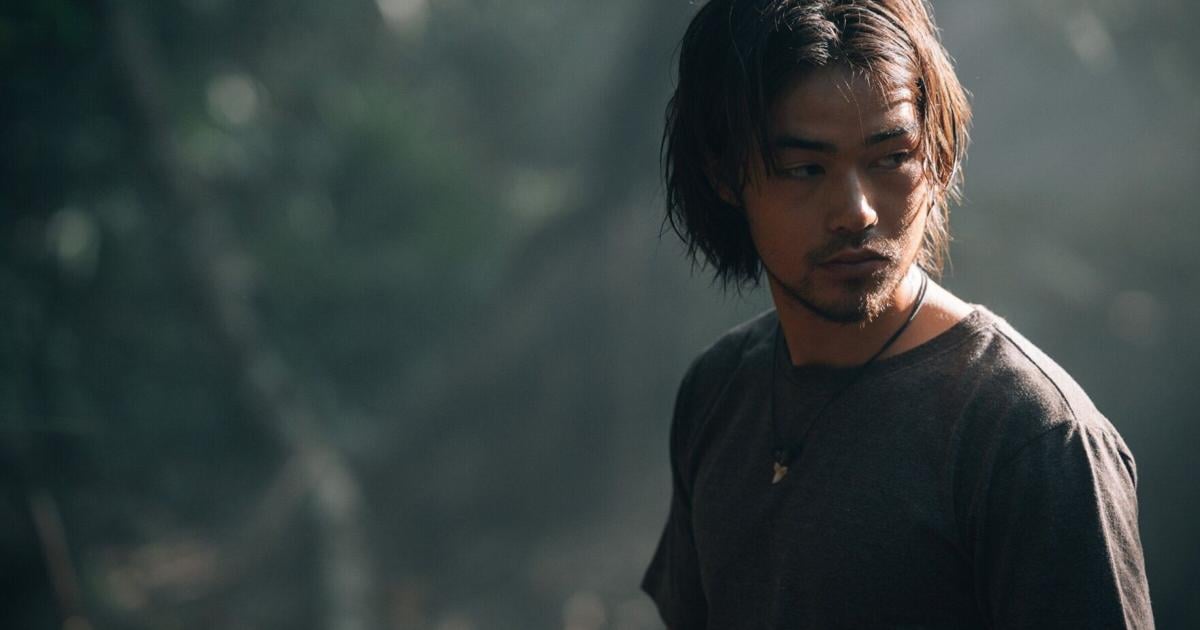
In 2018, John Allen Chau, the outdoors lover-turned-missionary who grew up in Vancouver, Wash., was killed at age 26 trying to evangelize the largely uncontacted Indigenous people of India’s North Sentinel Island. Since then, he has become a figure of global fascination, the posthumous subject of numerous articles, a 2023 National Geographic documentary and, now, the narrative feature “Last Days.” Directed by Justin Lin of the “Fast & Furious” franchise, it’s a dramatized retelling of the tragic story that’s, in part, about Chau’s life growing up in Washington before culminating in the final days that led to his death.
The film, set to release Oct. 23 at area theaters, also attempts to be a study of Chau himself. Drawing from the Outside magazine article “The Last Days of John Allen Chau” by acclaimed journalist and writer Alex Perry, “Last Days” explores how Chau lived in addition to how he died. For Perry, who consulted on the film, Chau was someone who came out of a specific religious and regional context. He was similar to another well-known Pacific Northwest missionary, Portland-born and -raised Jim Elliot, who was also killed when attempting to evangelize an isolated group of Indigenous people in Ecuador, and someone whom Chau lived in the long shadow of growing up. As Perry began to look more into Chau’s life, he discovered a crossover that extended to a shared passion for the outdoors.
“John grew up not so far away from where Jim Elliot’s house was,” Perry said. “That whole thing was a real revelation to me. The idea that there was a part of the missionary, Christian, evangelical world that was hiking bros and adventure sports guys and rock climbers and mountain climbers. It fused everything that the Northwest is famous for with evangelical Christianity.”
In his research, Perry discovered that North Sentinel Island was considered to be the greatest challenge in the Christian missionary world, not unlike scaling the highest mountain. It was often spoken about akin to extreme sports, Perry said, and the island’s allure — that it was the greatest risk a missionary could take — was what ultimately drew Chau in.
“I set myself the task to get into John’s mindset,” Perry said, recounting how this critical outdoors element gave him an entry point to answer the lingering questions he had. “What is the mindset of someone who would do something that’s got a very good chance of killing them? It’s very similar to writing a piece about a mountaineer who has fallen off a big mountain.”
Before he attempted to climb his mountain, Chau learned of missionary work as a kid at Vancouver Christian High School. It was there where, according to The New York Times, Chau first encountered Joshua Project, the missionary website that would reshape his short life. It introduced him to this kind of missionary work and the Sentinelese people, instilling in him a desire to go to their island. After graduating, Chau attended a “missionary boot camp” that he used to further prepare for what would be an ultimately fatal trip to North Sentinel Island.
The film received mixed reviews when it premiered at this year’s Sundance Film Festival — with some critics arguing it was structured more like an adventure film and that it ultimately didn’t have the depth this tragic story needed — but Perry feels “Last Days” is fair and nuanced. He said he had many conversations with writer Ben Ripley as he wrote the script, later visiting the set and being consulted on the edit. He said a new cut, which was made after the premiere and includes new footage, is “way improved.”
“This is not a true story. It’s embellished and there are fictional parts of it, but there is enough in there that I felt it’s a fair representation of it.”
‘ The preceding article may include information circulated by third parties ’
‘ Some details of this article were extracted from the following source www.yakimaherald.com ’