“‘Night, Mother” is a heartbreaking story on the realities of familial dysfunction, depression and suicide, framing these important topics in a way that feels real and grounded to audiences.
“‘Night, Mother,” written by Marsha Norman and directed by Heather Issacks, opened on Oct. 7 at the Studio Theater in the Music and Dramatic Arts building, marking the start of the LSU School of Theatre’s 2025-2026 Lab Show season. The 1983 play follows Thelma Cate and her adult daughter, Jessie, over the course of a single evening after Jessie reveals her plans to commit suicide later that night.
The whole show is essentially one long conversation between mother and daughter. With no breaks between scenes and no intermission, the audience truly feels immersed in the raw dialogue happening on stage.
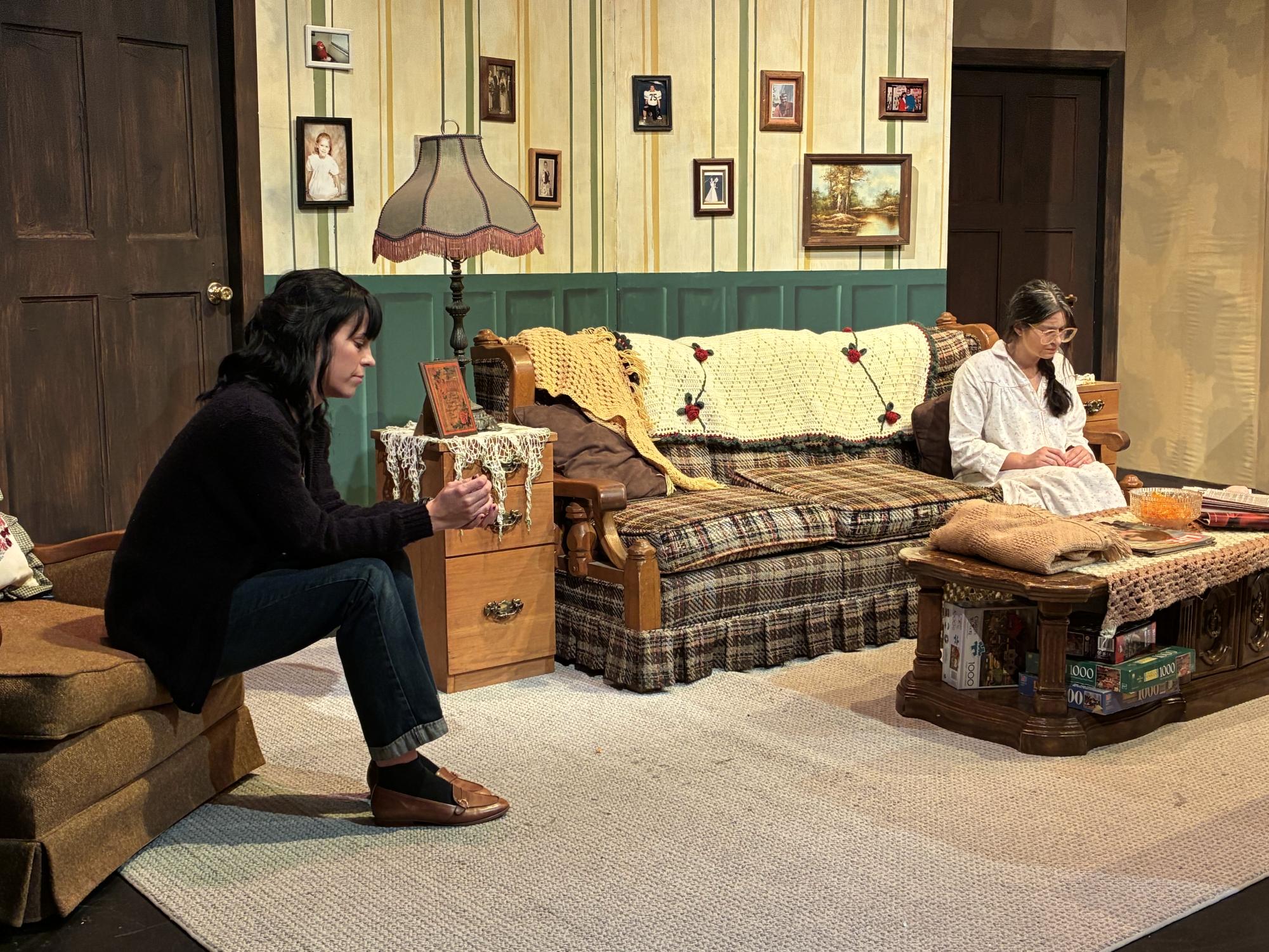
The set further immerses the audience into the story. Trifold walls with vintage-patterned wallpaper, family photos hung everywhere, a plaid couch draped in crochet afghans and a rotary phone sitting alone on a side table all help to transport the audience to the 1980s.
The attention to detail in this production is impressive, to say the least. While cleaning out her mother’s fridge in one scene, Jessie pulls out a mostly-empty bottle of ketchup and a jar of pickles. In another scene, Jessie roots through the cabinet under the sink, exposing a miscellaneous collection of Clorox wipes, plastic bags and other such supplies. The set feels lived-in, like the production team took a real house and dropped it in the middle of the Studio Theater.
Even more convincing are the excellent performances given by both actresses. The chemistry between sophomore Abigail Fursetzer as Thelma and senior Avery Di Gangi as Jessie is believable, and the anger, grief and love between the characters is palpable.
It is clear from the start that their relationship is dysfunctional, which spurs a lot of the conflict during the show. This dynamic, though complicated, is one many people can relate to when it comes to their own familial relationships.
“Thelma is a woman who has been through a lot in her life,” Fursetzer said. “She has a complicated relationship with her daughter, but at the end of the day, she loves and cares about her with all her heart and just wants the best for her.”
What makes their conversation so compelling is how grounded it feels. Many of us have seen dramatic depictions of suicide and depression in media (“13 Reasons Why” is an infamous example), and society talks about these topics as if they are shameful and taboo.
In “‘Night, Mother,” Jessie is not consumed by grief and shame, but instead is calm and resolute in the face of her death. She does not make her decision impulsively, but rather weighs the idea for years. She is sad, yes, but mostly tired. Life has nothing left to give her.
This is not to say that Jessie’s decision is any less tragic — on the contrary, it is important to have these varying depictions of depression in the media to bring awareness to how it can manifest in different ways in the real world. Like any disease or mental illness, people can exhibit the symptoms of depression differently, so having this story framed as a simple conversation between a mother and a daughter is a necessary change of pace.
The play’s main pitfall is in the repetitiveness of the script. Like any emotional conversation, beating a dead horse is inevitable, but it does at times feel like one is watching the same scene two or three times, especially at the beginning of the show.
Much of the script in these early scenes follows a basic formula: Thelma asks Jessie her reasons for committing suicide, Jessie deflects by listing the housework that has to be done or inquiring about an old family friend, Thelma reiterates her question and Jessie finally answers. This same pattern of ask, deflect, ask, answer makes up the majority of the initial conversation. The script would have benefitted from building on Thelma’s initial shock and confusion rather than having the two characters immediately launch into an emotional tug-of-war.
Despite this, the majority of the dialogue feels sincere and natural, and it brings up valuable topics like the importance of communication and the harmful impact of secrets between loved ones — a message worthy of heeding.
“I hope audiences learn never to take a moment to say ‘I love you’ to someone for granted,” said Fursetzer.
If you or a loved one are struggling with depression, please don’t hesitate to call the National Suicide Hotline or take advantage of LSU campus resources, which can be found on the Student Health Center website.
‘ The preceding article may include information circulated by third parties ’
‘ Some details of this article were extracted from the following source lsureveille.com ’