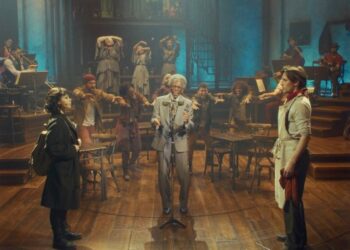
Before his tragic death due to drowning while on vacation in Costa Rica this summer, “Cosby Show” alum Malcolm-Jamal Warner opened up about the iconic sitcom that ran from 1984 to 1992.
The late actor, who was 54 when he died, was interviewed for the two-part HBO documentary “Seen & Heard,” which premiered Sept. 9 and 10.
The documentary, executive produced by Issa Rae, follows the past, present and future of Black talent and Black programming on television.
The first episode, “Seen,” debuted on the platform Sept. 9 at 9 p.m. ET, while the second episode, “Heard,” premieres today at the same time.
Per People, in a segment focused on “The Cosby Show,” Warner opened up about how a stark, early interaction with Bill Cosby influenced his acting on the show.
“When I auditioned for ‘Cosby,’ I was 13,” Warner recalled, who played the only Huxtable son, Theo. “I’d been watching, you know, ‘Diff’rent Strokes’ and watching these kids on television be smart alecks and what have you. That’s what my acting had been influenced by.”
When he auditioned for the part, he thought it went well — initially.
“I mean, I killed in the room. I was getting the laughs, and I’m 13, I’m killing in the room. And I finished my audition, and everybody was smiling, except Mr. Cosby, and he looked at me, and he said, ‘Would you really talk to your father like that?’ And I said, ‘No.’ He said, ‘Well, I don’t want to see that on this show.’”
Warner also remembered how Cosby fought with executives over the tone of the show because he wanted the sitcom to remain authentic to his vision.
“Mr. Cosby made certain that everyone was acutely aware ‘The Cosby Show’ was his brainchild,” Warner explained. “But then you have these other creatives, you know, there’s a network producer, writers, you know, studio coming in, trying to tell him how to do his show, and every step of the way, Mr. Cosby had to stop them and remind them that’s not the show that we’re doing.”
This was a fight Cosby constantly found himself ingratiated in but won every time.
“I watched him do that from year one to year eight,” he added. “That battle never, never stopped, until the show stopped.”
But to Warner, the constant battle was well worth the warfare because the impact the show had on fans was indescribable.
“I was getting tens of thousands of letters from people who were saying, ‘Thank you. Thank you for the show. We are the Huxtables,’ and you know, and the show obviously got criticized for not being Black enough, not being a real depiction of the black experience,” he said in the documentary.
If you purchase a product or register for an account through a link on our site, we may receive compensation. By using this site, you consent to our User Agreement and agree that your clicks, interactions, and personal information may be collected, recorded, and/or stored by us and social media and other third-party partners in accordance with our Privacy Policy.
‘ The preceding article may include information circulated by third parties ’
‘ Some details of this article were extracted from the following source www.pennlive.com ’