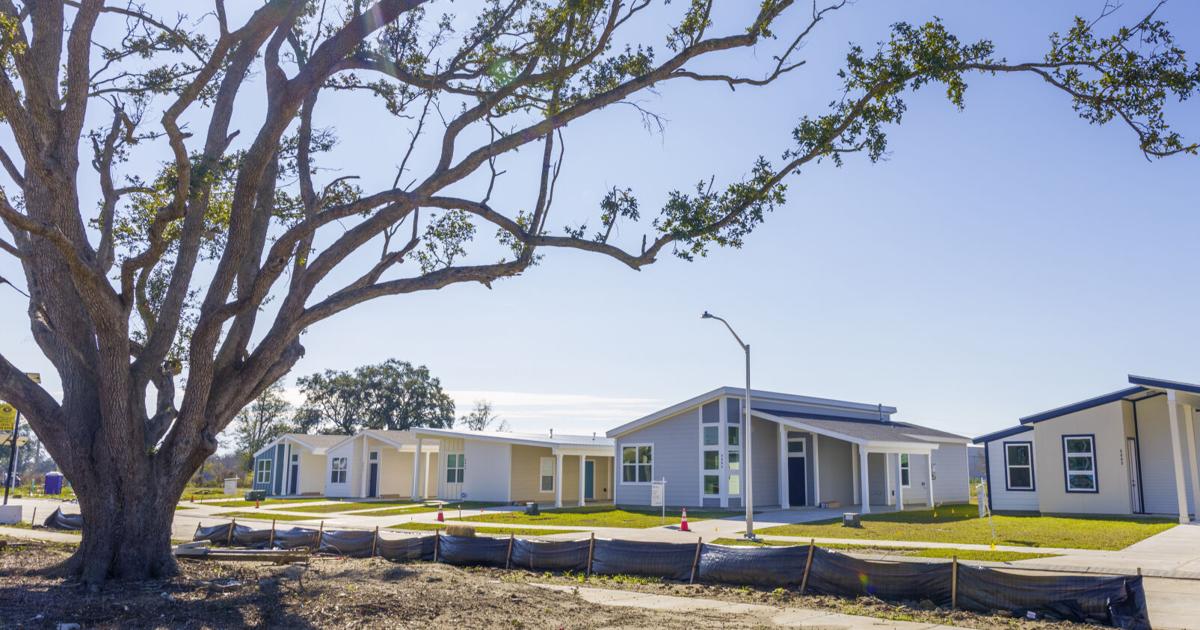
Habitat for Humanity is shattering its national model with the development of Rising Oaks subdivision in Terrytown.
For 50 years, that successful model included repairing existing homes and building new ones in established neighborhoods. The physical work was done through partnerships among the low-income families who were to be the recipients of the homes, volunteers and donors to create homes that were simple, decent, affordable and of no particular architectural pedigree.
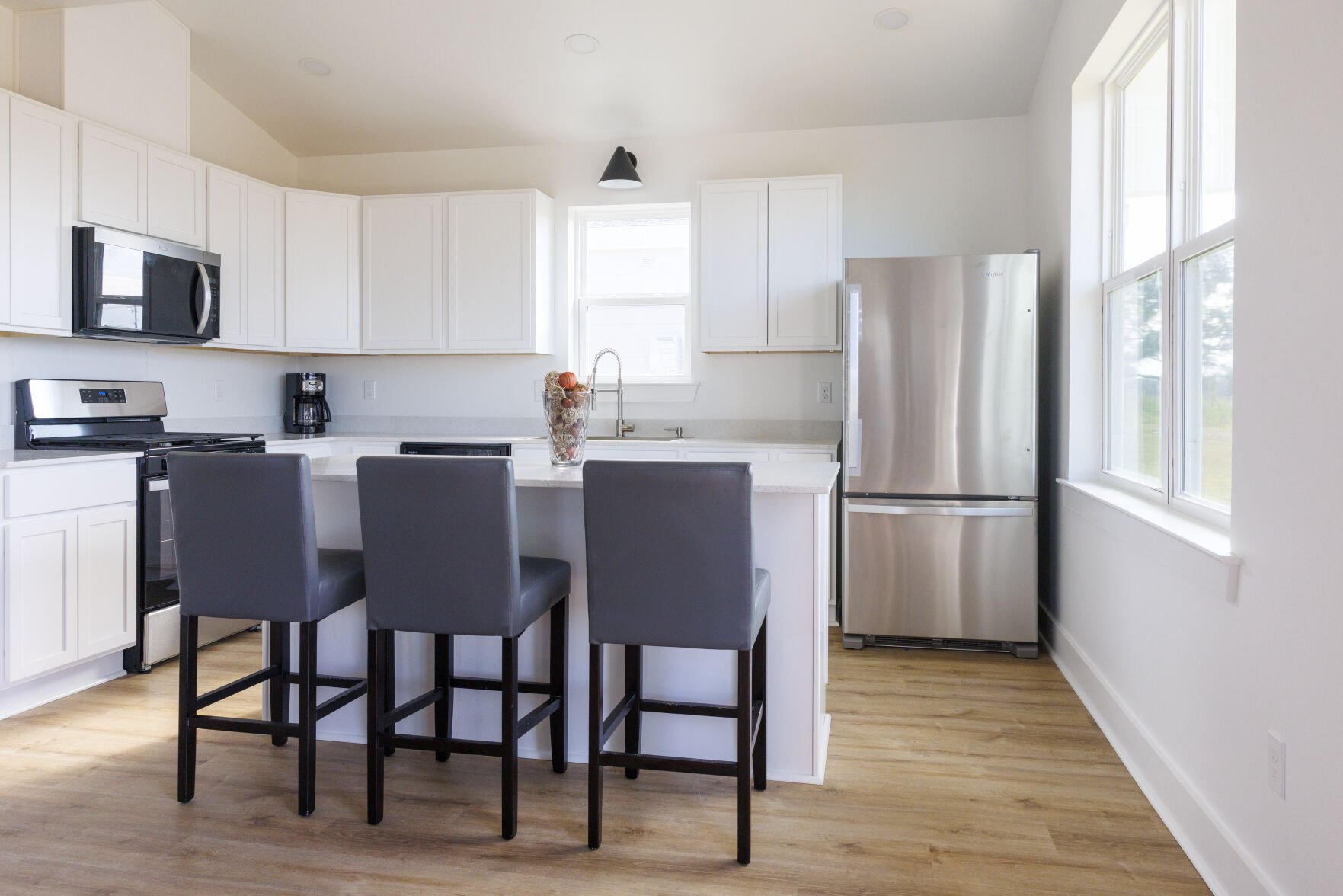
The new development incorporated vaulted ceilings, large plate-glass windows to provide a visual connection to the outdoors and, in keeping with contemporary lifestyles, open-concept living spaces overlook either the front or rear yards of the homes.
They were financed through zero-interest or low-interest mortgages and a revolving fund. Participants were empowered through financial education and homeownership skills, rather than charity.
For Rising Oaks, however, the organization spent a year in planning and acquisition before breaking ground on the large-scale project of over 150 workforce homes in 2023. Rising Oaks is Habitat’s largest development and its first fully developed community. Its look will be different as well, with a midcentury modern aesthetic that will help integrate the new neighborhood into the existing Terrytown landscape.
“This is housing to serve the missing middle,” said Marguerite Oestreicher, executive director of New Orleans Area Habitat for Humanity. “This is for families that make too much money to qualify for subsidies or support and not enough to break the cycle of renting.”
The 44-acre parcel of land on which the development is taking shape was once Plantation Golf and Country Club. The site was chosen to target essential workers, such as teachers and nurses, by placing them near their workplaces on the West Bank.
Homes in Habitat for Humanity’s Rising Oaks neighborhood in Terrytown include clerestory windows or vertically stacked sidelight windows to underscore the midcentury aesthetic.
Upon the estimated completion in 2028-29, Rising Oaks will include parks, playgrounds, walking trails, a labyrinth, fitness areas and mixed-use retail, creating a walkable, complete, self-sustaining, eco-friendly neighborhood.
Phase one of the development comprises one- and two-bedroom homes geared toward seniors ages 55 and older. The second phase will be marketed to larger families with children. Several generations could conceivably live in the same neighborhood.
Infrastructure for phase one has been finalized. Seven houses have been completed, and two are under construction. The sale of the first home was inked the day before Christmas 2025.
The start-to-end build-out for each home takes three to four months.
Marguerite Oestreicher, executive director of the New Orleans Area Habitat for Humanity, says homes in the Rising Oaks neighborhood will begin at $190,000 for a one bedroom and rise to $310,000 for a four-bedroom home.
Oestreicher tapped the Gretna architectural firm of Garrity and Accardo to design the homes, which range from one bedroom/one bath (766 square feet) to four bedrooms/two bath (1,670 square feet) configurations. Prices begin at $190,000 for a one bedroom and rise to $310,000 for a four-bedroom home.
“Since its inception, we have talked about the goals for this project,” Oestreicher said. “People with more modest household budgets deserve green spaces and good design.”
“If you drive through Rising Oaks and squint your eyes, you could feasibly believe you are in old Terrytown,” said Brady Garrity, a lifelong resident of nearby Gretna and the principal architect for the project.

The homes are being built to advanced Fortified Gold storm resistance standards, including deep pilings, hurricane straps, multiple water barriers within the roofing systems and high impact-resistant windows.
Old Terrytown was developed by Paul Kapelow in 1960 as Jefferson Parish’s first planned suburb. Kapelow named the development for his young daughter, Terry, and the neighborhood’s main thoroughfare, Carol Sue Avenue, for another daughter.
The developer packed the 6,000 midcentury modern homes with cutting-edge amenities, such as central heating and air conditioning, and grouped plumbing in a single wall for efficiency. The neighborhood was part of a West Bank housing boom that followed the 1958 completion of the Greater New Orleans Bridge, allowing for timely travel between the east and west banks.
In the new development, Garrity incorporated vaulted ceilings, large plate-glass windows to provide a visual connection to the outdoors and attached carports to mimic the design aesthetics of the early 1960s. In keeping with contemporary lifestyles, Garrity oriented the open-concept living spaces to overlook either the front or rear yards of the homes.

Carports and varied roof lines are midcentury modern design elements.
The contemporary incarnation of the Brady Bunch-era flush, glazed entry doors with thin vertical glass insets and, where possible, clerestory windows or vertically stacked sidelight windows, underscores the midcentury aesthetic.
“I loved the concept of doing something nice in this area that has a real feel for the existing neighborhood,” Garrity said. “They wanted a community of starter homes with real amenities. This is different than a developer-driven neighborhood. They really stuck their necks out to do this.
“The top priority for Habitat was Gold standard hurricane fortification. This hindered some of the design choices I would have made regarding window size and shape purely on aesthetic grounds that would have tied the properties more strongly to the midcentury modern style.”
The homes are being built to advanced Fortified Gold storm-resistance standards, including deep pilings, hurricane straps, multiple water barriers within the roofing systems and high-impact-resistant windows.

A hallway that runs through the house includes closet space.
The ceilings are insulated with open-cell spray foam, and the walls with recycled denim insulation, primarily from Cotton Inc.’s Blue Jeans Go Green program, which transforms old jeans into eco-friendly building insulation, diverting textile waste from landfills and creating sound and thermal barriers.
Green spaces have been designed for stormwater management and flood mitigation. These factors translate into lower insurance costs, making homeownership more accessible.
“The hold-downs in these places are at the corners, and they root into the foundation. These places are literally anchored into their foundations,” Garrity said.
Visual appeal was a goal as well.
“We bounced back and forth, modulating things where we could cut costs while still offering amenities in the floor plans,’ he said. “We did not want to make shoeboxes. One of our workarounds was an obsessive attention to detail about trim to achieve the look we want while keeping costs in check.”
“Brady and his team went to extraordinary lengths to meet all of our design goals while keeping the project within budget,” Oestreicher said. “They added as many aspirational features as possible. They were full partners in this, not just vendors.”
‘ The preceding article may include information circulated by third parties ’
‘ Some details of this article were extracted from the following source www.nola.com ’