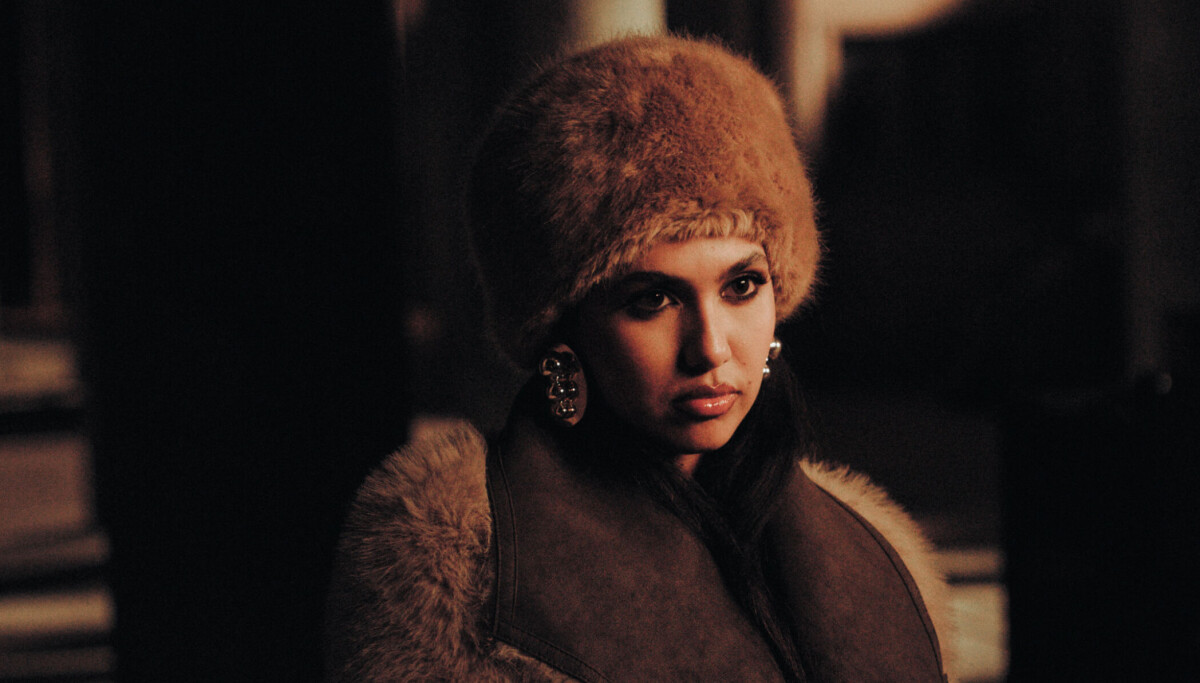
On a football pitch laid out with red rugs, Moroccan superstar Manal returns after her maternity leave, stepping into a new era with this message: she will make no more time for people who don’t deserve it.
“They played the game and lost, we gave ’em a red card/ Oh, what a shame/ They’re dead and gone/ They’re dying of spite,” she sings in Darija over the syncopated beats and energetic melodies of raï. “We’ve got class, we’ve got style/ And anyone who messes up gets a red card.”
Manal is not only addressing “the haters,” she’s warning everyone: the music industry, friends, and even family. In the West, one might label such a song “unapologetic.” In North Africa, where family is, in Manal’s words, “almost worshipped,” it’s controversial to say the least.
Manal is no stranger to controversy. In her decade-long career — which started from asking friends to help her upload covers to YouTube (because her internet connection wasn’t strong enough) to racking up over a million views in under a week — she has always used her music as a platform to address societal taboos.
Since her early days in rap songs like “Taj” or her powerful COLORSxSTUDIOS performance of “3ARI,” Manal has made a name for herself as the woman who breaks boundaries in Morocco’s music scene and beyond. Telling people that they don’t have to give their time to those who take advantage of their trust is no different.
After taking a break from music to settle into her new role as a mother, Manal got back into the studio in July. “I had some issues to settle with people I knew back then, and that’s what inspired me to write ‘Carta Rouge,’” she tells OkayAfrica. “As a mother, I don’t have the patience to keep the wrong people in my life.”
“Carta Rouge” continues Manal’s exploration of raï, a genre that continuously tops Maghrebi charts even though it was historically frowned upon as unsophisticated. “Raï is a whole world,” she says and chuckles. “You have music and you have raï.”
She didn’t grow up listening to raï and only discovered her love for it in the past two years. Since then, she has listened to the likes of Cheb Mami, Cheikha Rimitti, Cheb Hasni, and Cheb Khalid every single day.
“People loved raï, but they didn’t own the fact that they loved it. Now it’s easier to say that they love raï and nobody’s going to judge,” explains Manal.
“It represents me. The instruments of raï have a rebellious vibe,” she continues. “But the majority of raï artists talk about heartbreak and love. I think it’s interesting to write raï [music] in different subjects.”
Manal’s first step into owning and working with her culture was the transition from writing songs in French and English to embracing her native Darija, the Moroccan dialect. “You can say anything in English, but trying to say the same thing in Darija is a challenge,” she laughs. “We have a lot of kh and q, and these don’t really sound nice.”
Growing up in Morocco, it felt natural to write in French, the country’s second language. Watching MTV and other American TV channels, all her favorite artists were singing in English and French – Rihanna, Beyoncé, and Celine Dion.
“One day I woke up and realized that I have a responsibility to put my language first,” she says. “I need to be proud of being Moroccan, but it was very hard, because I didn’t know how to write songs in Arabic.”
Manal received help and guidance from an interesting mix of people: her mother, herself a painter and writer who guided her in all her first songs, as well as rappers like Shayfeen and El Grande Toto, who are now leading Morocco’s rising music scene alongside Manal.
“I’m super proud of the Moroccan scene. We have amazing artists in all genres,” she says. “Ten years ago, we didn’t have many artists from our generation, and nobody had nothing to lose, which was fun.”
It was harder back then, because of weak internet and simple technology. “My brother would film me, and it was so tricky to connect the camera with the laptop,” she remembers with a laugh. “I wouldn’t trade it for anything, because that’s what makes us tough today.”
However, society and the music industry have not evolved as rapidly when it comes to topics around patriarchy and women’s rights, which means that Manal’s work is far from done.
“As a woman in the Arab World, you’ll get judged even for breathing,” she says. “But as women, we have a superpower: emotional intelligence. It’s what makes us empathetic and helps me write my songs.”
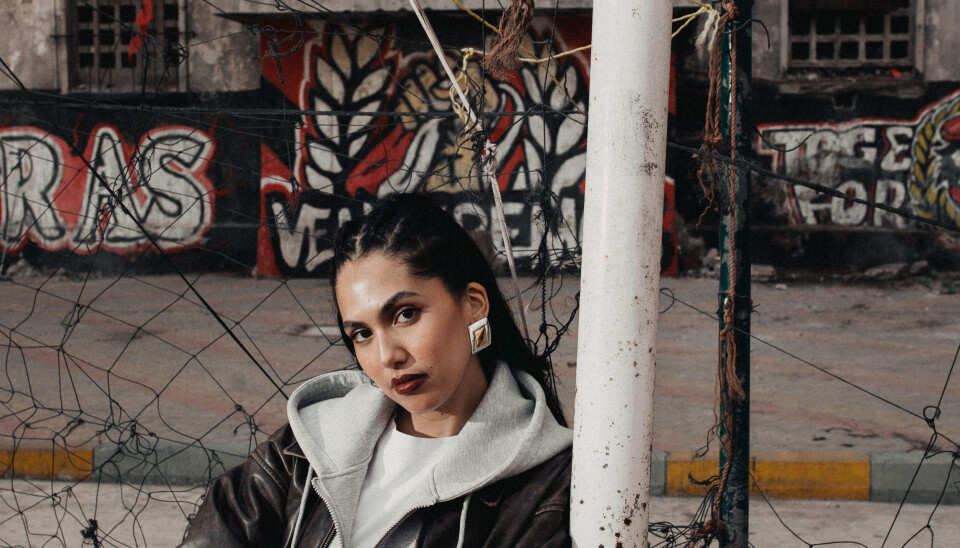
Manal continues to collect inspiration from conversations with women everywhere, learning about their circumstances and perspectives. Bringing these stories to the fore is more important than the music itself. “Unfortunately, people don’t want to hear about the pain and lives of women,” she says. “They prefer [entertainment].”
Now that she has a daughter, Manal has no intention of slowing down her mission to tackle taboo subjects and make them visible for the world to see, whether it wants to or not.
If anything, having a baby has made her more aware of the art she wants to make and the people she works with. Manal is gearing up to release a string of singles, fueled by a new energy she’s tapping into. Will this energy be difficult to maintain while raising a child?
“It feels less stressful, because I have more to focus on than [just] music,” she says. “When I released my other songs, I was always checking what was happening, but now I have more things to think about. When you have children, it’s easier to find a balance in life, because they remind you of real life and what really matters.”
For Manal, what really matters is her child, the lives of women, and the contribution her music and passion can make to both.
‘ The preceding article may include information circulated by third parties ’
‘ Some details of this article were extracted from the following source www.okayafrica.com ’