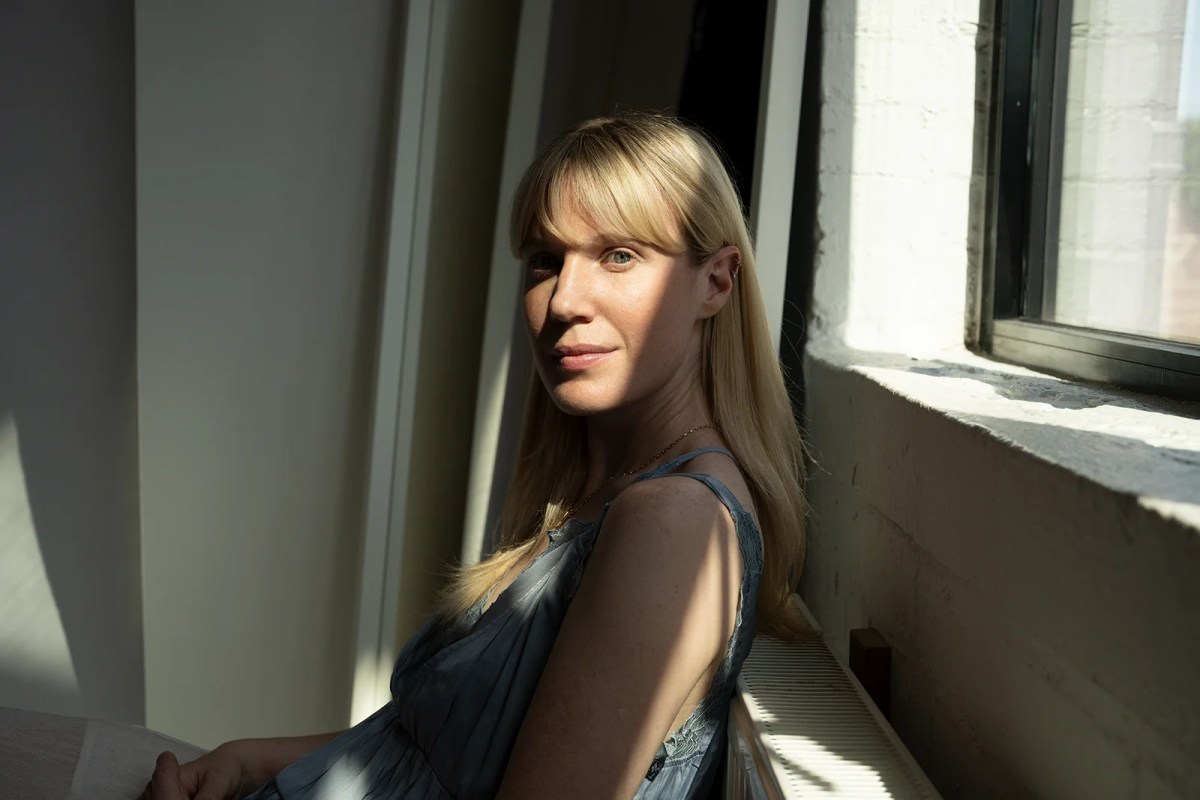
Composer Kloyd is on the rise with the release of her latest album, New Love. Having already made a name for herself, we sat down with the artist to find out more about her methods
Kate Lloyd, better known as Kloyd, is one of the most important up-and-coming producers to hit the scene in recent times. Her sound, a complex yet easy listen, is filled with depth and cloud-touching moments that permeate the room.
In 2024, the composer released her debut EP, Chapters, and later, Hourglass, featuring some of the most talented vocalists we’ve heard in a while. These vibrant choices led to a series of extraordinary singles, including a remix project. Today, she releases her long-awaited third record, New Love. Following in the footsteps of an imaginative body of work, her celestial track record continues.
Kloyd seems like an obvious choice for your artistic persona. Did you consider other pseudonyms?
“Ha yeah you know it’s one of those that I have questioned keeping. My
friends have called me Kloyd as a nickname for years so when I started to
release music, I figured I would just roll with that. I’ve floated different artist
name ideas and I find they’re already in use or it’s just too deep into the
project now to switch up. One thing I do like about it is that it’s definitely an
alter ego to myself.”
Your upcoming album, New Love, will be released on 26 June. What was
the guiding philosophy behind the project?
“For a long time I was quite heartbroken and low prior to making this record. I
was struggling with feeling like I wasn’t enough and that love was out of
reach.Over time, I started to shift my mindset and changed my negative lens.
Around the time I began writing New Love, I also met someone and found I
was opening up to love again, although with a lot of fear and hesitation. The
record is about the journey of that. It’s still melancholic in places and weary in
parts, but it reflects when I started to feel a bit more open to beauty and
romance again which I hope provides some kind of light comfort to those who
are or have endured the same battles.”
When did production on the album begin, and how long was the overall process?
“There are fragments and track ideas that I’d started maybe a year before
conception but it was properly born around two years ago. That’s when I
had the title of it written down and knew what it was I was setting myself
out to make. It was a very all encompassing process. There’s a lot of
tracks that didn’t make the cut, especially in the earlier days of producing
it. I was still very much in this weird space between feeling low and then
feeling more positive in life so I had to be a bit ruthless with myself in terms
of not straying into the dark too much. Far From Us is one of those tracks
that I was making in the earlier days of New Love, which is definitely one of
the most melancholic, it has this sense of longing. It was around summer
last year that the final 8 tracks were solidified and I spent another few
months getting them to a place I felt happy with.”
The pacing of every one of your tracks is incredible; it keeps listeners
engaged, and there’s a sense of movement and journey within each track. Can you walk us through your blueprint for composing?
“Wow thank you that’s such a nice compliment! I’d probably say a lot of that
comes from the drum production which helps to create that movement.
Keeping it textured and fluid. I remember watching Rusko’s producer
masterclass years ago and he said something about if you have the drums
grooving just completely on their own then that’s a good tune already
which is something I have tried to embody into my own work. I play around
a lot with sound design so reversing stuff everywhere, foley grabs that
become percussive, all sorts just to send the music into an atmosphere
that makes it come alive. I think I have a tendency for a track to unfold compositionally as it goes on. I get carried away with it. It’s like I approach each
one with an emotional message and then everything I lay down melodically
is what I’m feeling in those moments. In Nothing Could’ve Made Me, it just
suddenly switches up into that fairgroundish piano / flute part which was
me conveying this sense of freedom and fun and a big ‘whatever’ to the
people who had hurt me in the past.”
What part of your setup is non-negotiable, and why?
“Probably my Nord, I’ve grown to get so much out of it now in terms of
melodic sounds, they’ve become kind of staple to my sound for now.”
Hourglass feels sonically different from what we’ve heard from New
Love. What changed between then and now? Was it inspiration or something else?
“Yeah a mixture of things. I think more so that I grew a bit more confident by
New Love in following my own intuition. I barely sent any of it out for
feedback until it was pretty much done and if anyone did give me
unsolicited feedback, I disregarded a lot of it – (not to be rude) I just wanted
to trust myself in what I was doing without any external input this time
round. I definitely leant into more of my wider influences too and kept the
production more so in the box. Høurglass still has some of that trip hop
feeling to it but I was also in a very different place when I made that EP. I
was looking at the world with a different lens.”
Are there any limitations you face in the lab, and do they push you to be more creative?
“For sure, I’d say one is that I’m not a singer and I like to incorporate vocals
in my work. So I’m hearing all these ideas and I can’t get them down
straight away which is probably why I sample a lot of vocals instead so I
quickly hear some form of a vocal in the track, which then often ends up
staying there as it kind of works. Same with playing guitar, I don’t play one
but I use that sound all the time ha! I really wanted an amped guitar sound
and because I don’t have an electric guitar or play one.. I manipulated my
Nord enough to try emulate the sound of one which ended up sounding not
much like one but also created a weird distortion that I was like ok, yeah
this is interesting. I ended up using that on a few of tracks on New Love.”
How late do you stay up perfecting a track, and which song gives you
sleepless nights?
“Not as late these days as I used to. I enjoy my sleep too
much! But yeah, I can lose many hours arranging tracks. Arranging is a
real head scratcher for me. Far From Us was probably the most head
scratcher one. The first drafts of it are very different to how I finished it, I
reworked that a few times. Was challenging to get it how I wanted it but I’m
happy with how it turned out!”
Are there any instruments, plugins, or hardware that have changed the way you compose?
“Not to harp on about it but my Nord – this record was the first time I
experimented with it and pushed as much as I can get out of it. You can
manipulate sounds so much that are built into it, it’s actually a great synth if
you want it to be! It helped me to keep compositional limitations so the
music sounded sonically on par. Also the prophet bass in the Arturia suite.
I can often start with just drums and when I add that bass, it automatically
grounds the tune into a direction I love. It’s very subby and deep so any
melodic layers I start adding will usually start to feel light in contrast to
what’s happening in the drums and bass.”
Your work is emotionally impactful, yet technically exact. How do you balance your sound to feel so complete?
“Oh, thank you! I think making music that feels honest and human is really
important to me, even though it’s electronic. I try to channel as much of the
inward feelings I have into the music. With the production, I’m not aiming
for perfection; it’s raw and a bit odd in places, and that’s intentional. I think
I’m just making creative decisions that are bringing those emotions to life –
but ensuring it still travels and feels like a song, holding its own narrative.”
How important is curating a tracklist to you, and how do you approach sequencing?
“Yeah, really important! The sentiment runs throughout New Love and the
opener and closer tell a story, but I’d say it’s not a track-by-track record
where it unravels as a direct journey, so to speak, but the arc within it is
definitely purposeful, which came together in ordering quite quickly.”
Who is your most trusted critic, and what’s the best piece of advice they’ve given you?
“My mate Cal. He doesn’t make much music but he could if he wanted to.
He’s one of those people who’s a natural creative and just gets it. He has
two! He says “churn them out like Calibre”. We’re both big fans of him and
his discography is extensive. And he also says “think like Ainsley Harriott”.
Minimal ingredients.. so aiming to keep your sound sources simple!”
You’ve got a string of shows coming up. What can listeners expect from a
live Kloyd performance, and how do you prepare?
“I want the productions to feel alive and immersive. Live drums, vocals and
me. Preparation will be lots of rehearsals so I can be present at the shows
and calming myself if I can, I get nervous going on stage.”
‘ The preceding article may include information circulated by third parties ’
‘ Some details of this article were extracted from the following source stanisland.com ’