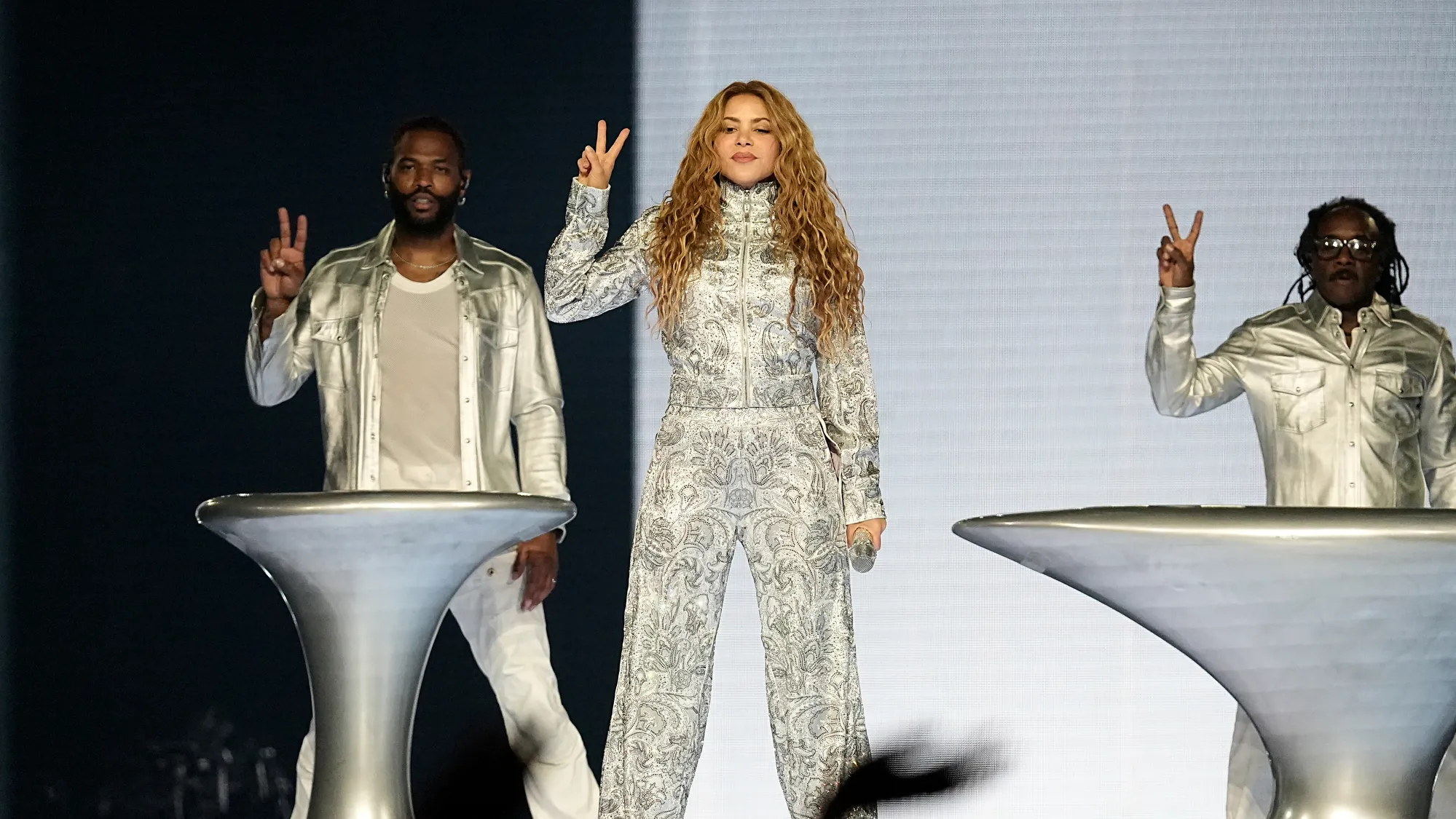

Watch Shakira bring hip-shaking fun to Acrisure Arena concert
Colombian superstar Shakira brought plenty of energy and howling to Acrisure Arena on Wednesday, June 17. Reporter Ema Sasic breaks down the show.
At Newport Classical, we are in the final days of preparation for our annual summer Music Festival, which runs from July 2 through July 19 and brings over 30 concerts to our City-by-the-Sea, featuring musicians who regularly perform in the world’s great concert halls. Whether you are a longtime patron who joins us summer after summer or you are brand new to classical music, we look forward to welcoming you. The iconic locations for these performances really cannot be matched, and we are grateful to be able to present unforgettable concerts throughout the area at The Breakers, The Elms, Castle Hill Inn, Blithewold Mansion, Rosecliff Mansion, Redwood Library and Athenæum, and more.
One aspect of Newport Classical’s work which is especially showcased during the Music Festival is our commitment to classical music as music for today. Classical music’s roots are deep, but it is a living legacy. Composers writing in this genre are just as active now as they were in centuries past. During the Music Festival, you can hear recently written and brand new music alongside classics by composers whose names we all know, like Bach, Beethoven, and Brahms. Each summer, Newport Classical also commissions a new piece especially for the Music Festival, ensuring that we are supporting the creation of new work by today’s composers.
This summer, there are three performances I’m particularly looking forward to which really illustrate today’s classical music. On July 5 at The Breakers, the Parker Quartet, praised for its “exceptional virtuosity and imaginative interpretation” by The Washington Post, will perform Strange Beloved Land, written for them by composer Paul Wiancko. Paul composed this evocative piece in 2013 as a tribute to his father, who had recently died. It’s inspired by a documentary that Paul’s father made about his visits to Romania.
The powerhouse trio of friends violinist Stella Chen, violist Matthew Lipman and cellist Brannon Cho will perform Portuguese composer Andreia Pinto-Correia’s Cantares at The Breakers on July 8. This piece was also written specifically for these instrumentalists, and the idea for it originated with research being done by the composer’s mother on a Portuguese scholar, Carolina Michaëlis. Cantares are Portuguese folk chants, and in
this work Andreia has created an imagined collection of cantares, each featuring a distinctly different type of chant.
On July 9 at The Breakers, Newport Classical will present the regional premiere of Goddess//Insect by Vivian Fung, which we have co-commissioned alongside a group of other nationally recognized concert presenters including Emerald City Music, Music@Menlo, Constellations Chamber Concerts, and the Chamber Music Society of Lincoln Center in New York City. I had the pleasure of watching a livestream of the New York premiere at Lincoln Center, where I began my career, and it is truly stunning. Composed for violinist Kristin Lee and Sandbox Percussion, Vivian has envisioned it as a virtuosic violin concerto with percussion ensemble. Their performance together is electric.
I caught up with Vivian to ask her more about her new piece and learned a lot about her approach to composing. I hope many of you will join us in July to experience this timely music alongside music from many of the eras of this living art form.
Oliver Inteeworn: You’ve said that Goddess//Insect is inspired by the idea of the God-Bug Syndrome. What is the God-Bug Syndrome and how does your piece communicate it?
Vivian Fung: Goddess//Insect originates from the concept of God-Bug Syndrome, where an inflated sense of self-importance serves as a defense mechanism against profound feelings of worthlessness. In the current state of our world, we are confronted with these conflicting emotions, making this work a reflection of our tumultuous and chaotic times. This piece delves into the diverse sounds associated with the term, incorporating the sounds of small critters against soaring violin lines, an improvisational section that is more dance-like and free, and chromatic lines and rustling textures to evoke the scurrying of insects.
Oliver Inteeworn: You’ve mentioned there being “an inherent theatricality” to Goddess//Insect and that you were invested in the “spatial possibilities” of the work. Tell us more about that.
Vivian Fung: The performance commences with the majority of the performers dispersed throughout the hall, creating the “Arachnid Procession.” Ian and Terry perform with bowed chorales submerged in water, Victor with a bowed flexatone, and Kristin enters discreetly. All performers embody an otherworldly sound, as one audience member at the world premiere mentioned that it gave him goose bumps. They gradually walk towards the stage, where the work truly unfolds. The effect is a surround sound experience without the need for a sound system!
Oliver Inteeworn: You’ve worked with and composed for the featured violinist, Kristin Lee, in the past. How did you collaborate before and what strikes you about her approach to your music?
Vivian Fung: I have written a number of works for Kristin, starting with my Violin Concerto No. 1 in 2011. We have collaborated now for over 15 years and have known each other for about 20 years. She was originally a student in my theory class when I was teaching at Juilliard and we have remained close ever since. Kristin is a brilliant artist whom I trust with my work. She is unafraid of trying new ways of playing and performing, and I love that she really shows a virtuosic and intense side in this work. I have gotten to know her playing through the years, and she and I have this unspoken understanding of what works.
Oliver Inteeworn: Tell us about working with Sandbox Percussion. Did anything surprising happen as you worked with them to create and workshop this piece?
Vivian Fung: Sandbox and I had a rare extended workshop period in which we traded emails back and forth for the initial phase, and then had a few days together in their studio experimenting with finding the right sounds. My sound world is specific but also unusual. We found many household objects that worked for the piece, including a mailing FedEx tube in the “Goddess Inner Circle” section, different shakers – homemade and market-bought, car parts, and homemade wooden slats from Home Depot. The sound world we created is so special and unique!
Oliver Inteeworn: Finally, it’s a common misconception that classical music is mainly historical, written by composers from previous eras. As a composer working today, could you comment on classical music as a living art form? What are some ways the music you create relates to and reflects our modern world?
Vivian Fung: In my opinion, the terms used are somewhat limiting. I identify more closely with the roles of a musical anthropologist or a musical humanist. Composers serve as documenters of the world around us, providing a voice to emotions that cannot be articulated through speech. Our societal role is of utmost significance, as we possess the unique ability to connect individuals in ways that are unparalleled in other art forms. Music stands as both the most abstract and the most direct art form, enabling us to access and express profound emotions that transcend verbal communication.
Oliver Inteeworn is the Executive Director of Newport Classical. His column appears monthly in The Newport Daily News and on newportri.com. Tickets and more information about Newport Classical can be found at www.newportclassical.org.
‘ The preceding article may include information circulated by third parties ’
‘ Some details of this article were extracted from the following source www.newportri.com ’