HONOLULU — “Gnaw-sed. GNAW-SED? NAY-sed.”
Michael Yadao, an enthusiastic man who found himself in a new position and an unfamiliar place on Thursday, chewed on a couple options to pronounce the acronym for the project that for years has dominated discussion at monthly Stadium Authority meetings — the New Aloha Stadium Entertainment District.
The Downtown Honolulu gathering was the first (and supposedly last) such board meeting off the Halawa footprint of shuttered Aloha Stadium, which is now fortified by dust screens and fencing in advance of its piece-by-piece demolition. The board is setting up temporary work trailers in the Lower Halawa Lot to use for meetings starting in February, officials said.
Yadao, a longtime former board member with a construction background and an affable demeanor, introduced his blueprint to the proceedings by having more stadium staff present their areas of expertise, in conjunction with like-minded board members, than was customary of his predecessors.
Then, on the fourth floor of the Leiopapa A Kamehameha State Office Tower, Yadao opened a box of manapuas and held one in his right hand, and paid homage to a signature football call of the late, legendary sportscaster Jim Leahey.
“We are a manapua away from this being done,” he said in a manner akin to Leahey estimating a close measurement to a first-down marker. In Yadao’s case, he referred to the signing of agreements for outstanding areas of negotiation between state officials and development team Aloha Halawa District Partners — a master development agreement for the considerable non-stadium components of the 98-acre, mixed-use site, a reciprocal easement agreement and a ground lease for the non-stadium areas.
Those three items are closely intertwined and are expected to be announced as one. Officials said an “aggressive” timeline for agreements on contract framework is the start of February and signings could occur in late February.
“We have made significant, significant progress in the last couple of weeks getting us to a place where we and AHDP can sign these contracts,” said Yadao, who added he could not go into specifics for legal reasons.
Underscoring his passion for the project, the Damien alumnus Yadao wore a vintage Aloha Stadium polo shirt, recognizable on ushers and other stadium staff for much of its five-decade history, branded with logos of various tenants like the NFL, University of Hawaii, Hawaii Islanders, the Oahu Interscholastic Association and more.
Meanwhile, AHDP’s heavy machinery for demolition is expected on site on Feb. 14, and an on-site blessing with VIPs has been tentatively arranged for Feb. 17. Full dismantling “really commences in March,” Yadao said.
The overall target date for completion for a 22,500-seat venue, paid for with $400 million of state money and a to-be-determined sum from AHDP, remains March of 2029.
Near the end of the meeting, there were two noteworthy personnel moves.
In an expected procedure, Yadao was upgraded from deputy stadium manager to interim stadium manager via the board’s unanimous vote, putting him in the position last occupied by Chris Sadayasu.
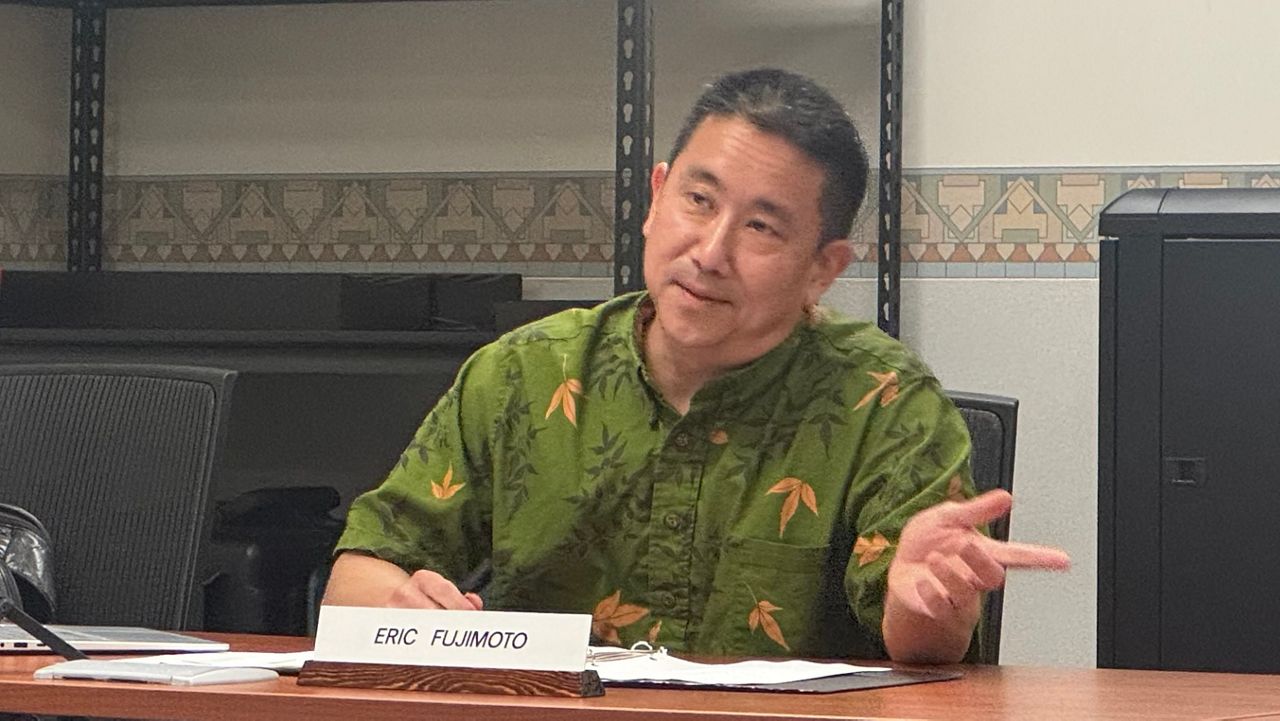
In addition, Stadium Authority chair Eric Fujimoto announced he would relinquish the chair’s role and revert to standard board membership.
“Aloha Stadium has always had a special place in my heart,” said Fujimoto, an Aiea resident who succeeded Brennon Morioka as chair last July. He thanked stadium staff and current and former board members for their support.
Eric Fujimoto, who became Stadium Authority board chair in July 2025, stepped back into a standard board role on Thursday. (Spectrum News/Brian McInnis)
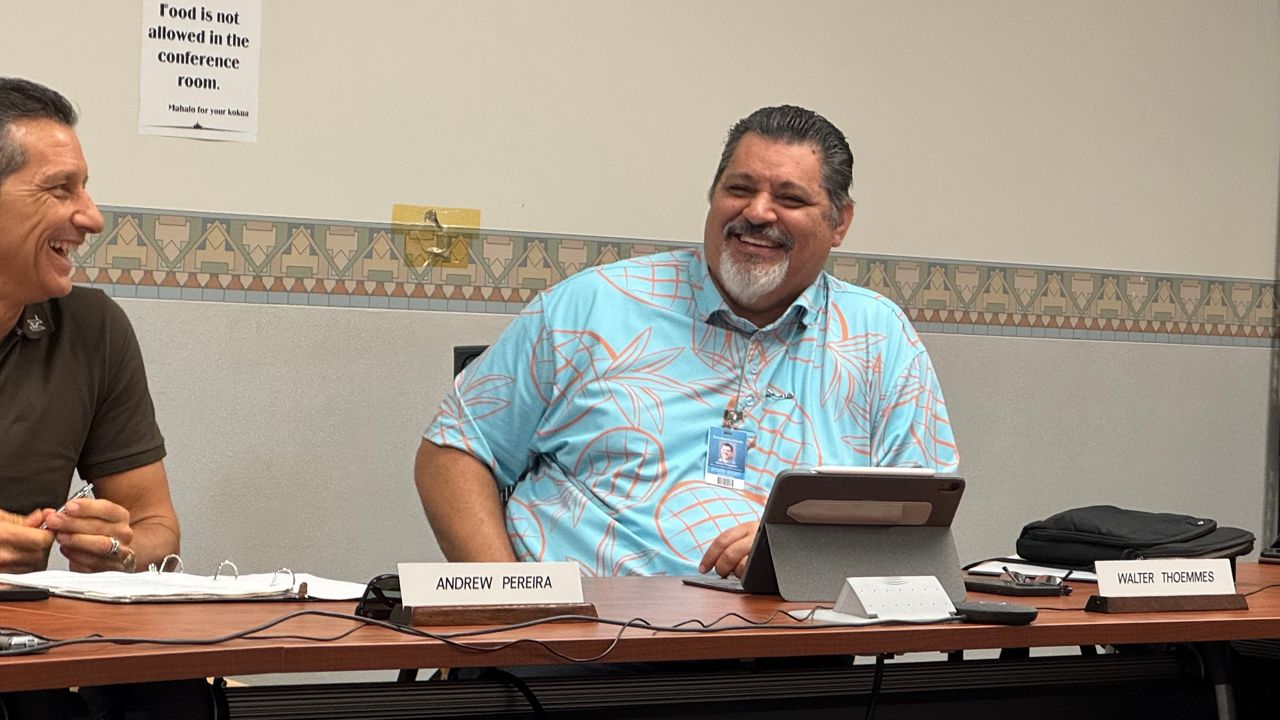
Walter Thoemmes, middle, was unanimously voted to be the new Stadium Authority chair after he was nominated by vice chair Andrew Pereira, left. (Spectrum News/Brian McInnis)
Vice chair Andrew Pereira credited Fujimoto for applying his “financial acumen” in negotiations that led to the signings of the contracts between the state and AHDP on the stadium construction and demolition and its ground lease. Pereira then nominated board member Walter Thoemmes, the managing director of Kamehameha Schools Commercial Real Estate, to succeed him. Thoemmes, who did not speak at the meeting, was approved unanimously.
“Having Walter in this seat at this time, is perfect,” Yadao said. “This came from Eric — ‘hey, you’ve exhausted my skill set. Now we need somebody else.’ I’m blown away by how … Eric volunteered to do that.” He noted Thoemmes has experience working with Stanford Carr, the de facto leader of AHDP.
State Sen. Glenn Wakai, whose district includes the Halawa site, said he will attempt to promote a handful of measures to aid the project during the current legislative session: getting the Aloha Stadium budget ceiling raised so that $49.5 million in previously approved money can enter the stadium’s coffers; revisiting a casino possibility in the “Aloha Live!” district surrounding the stadium; revisit naming rights for the stadium which could convey upward of $1 million per year; and getting a law passed for digital signage.
Brian McInnis covers the state’s sports scene for Spectrum News Hawaii. He can be reached at brian.mcinnis@charter.com.
‘ The preceding article may include information circulated by third parties ’
‘ Some details of this article were extracted from the following source spectrumlocalnews.com ’