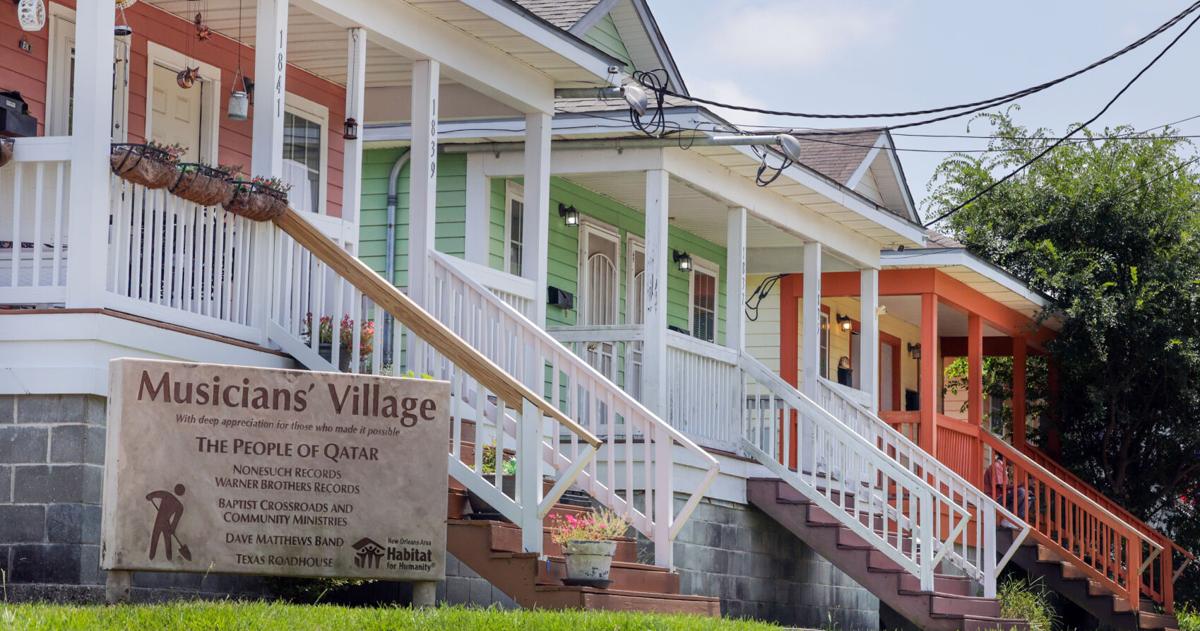
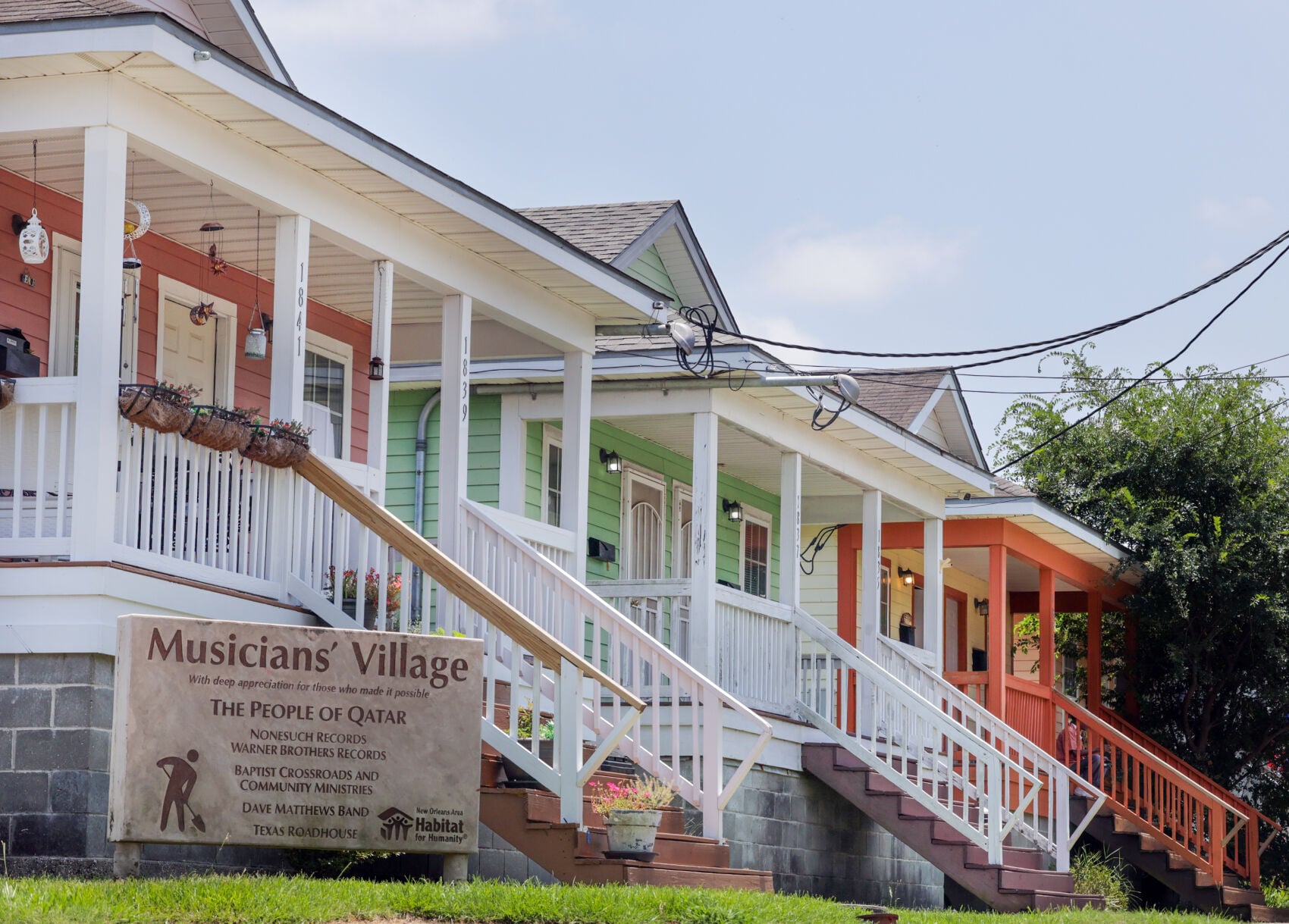
Habitat for Humanity homes in Musicians’ Village in 2024.
New Orleans Area Habitat for Humanity leaders say the organization sold its Musicians’ Village rental properties culture bearers had been renting at a reduced rate because the nonprofit couldn’t afford major maintenance upgrades on its rentals.
The four houses, or eight rental units, were part of a larger $1.7 million sale of 32 properties across the city by the New Orleans independent affiliate of Habitat to Sam Madi of Metairie-based Stable Housing LLC. Twenty of the units were doubles, totaling 52 total rental units.
Homeowners in Musicians’ Village are not affected by the sale.
Madi recently sent letters to village renters informing them that their rents would in some cases triple from between $300 to $400 a month to between $1,100 to $1,200, with hikes kicking in Jan. 1 and full increases taking effect in March.
NOAHH Executive Director Marguerite Oestreicher said Habitat was “deeply subsidizing” the eight rental units in Musicians’ Village through its general operating fund. She also said she was aware Madi would be raising the rents because “that is not a viable business model for a for-profit business.”
She said Madi told Habitat leaders he planned to introduce himself to tenants and let them know rents would be increasing and that he was willing to work with them. But no safeguards were put into place by Habitat to protect the current Musicians’ Village tenants nor any other tenants.
“He operates in the space of affordable rental, and he’s like, ‘No, we understand, and we’ll work with people, and we’ll figure out terms that can work for them,’” Oestreicher said. “So everybody moved forward with it.”
Oestreicher said the sale of the rentals was part of a decision the New Orleans affiliate made to stop operating rentals and put their resources toward building affordable fortified homes meant for ownership.
Habitat doesn’t normally rent property at all and instead builds homes occupants then buy at affordable rates. But following Hurricane Katrina, housing was so scarce the group decided to operate some rentals.
She said Habitat agreed to sell the properties to Madi at a reduced rate because of their age, the significant work they need, the neighborhoods they are in and the convenience of bundling the sale versus individually financing them.
Musicians’ Village renters, many of whom are elderly and living on fixed incomes, say the rent increases are unaffordable. It appears at least some are weighing other options, whether it’s looking for another rental or moving in with a family member.
Though most of the properties sold are not in Musicians’ Village, the village properties are home to culture bearers like Lolet Boutte and the daughter of Voudou priestess Mama Lola.
That’s caught the attention of the New Orleans City Council, with members all issuing statements on the rent increases Dec. 11.
“It’s deeply disappointing to now see Habitat turning around and selling units without any affordability safeguards, while rents climb for the very residents we stepped in to protect,” said Mayor-elect and Council Vice President Helena Moreno.
Council Member Eugene Green, whose District D includes Musicians’ Village, announced he’d be holding a community meeting on the sale of the rental properties on Thursday, Dec. 18 at 1:30 p.m. at St. Josephine Bakhita Catholic Church.
He’s inviting residents of Musicians’ Village, Habitat for Humanity, new owner Sam Madi of Stable Housing LLC, the Housing Authority of New Orleans (HANO) and the city’s Office of Community Development.
District B Council Member Lesli Harris, who often works on housing issues, sent a letter to Habitat on Dec. 12 requesting more information on the sale and impacts on renters.
“My intent is to ensure that residents are protected, that the mission of Musicians’ Village remains intact, and that our city continues to work in partnership with Habitat for Humanity to expand and preserve affordable homeownership,” Harris said.
‘ The preceding article may include information circulated by third parties ’
‘ Some details of this article were extracted from the following source www.nola.com ’