The very first thing I heard upon landing in D.C. in March 2020 was Donizetti. The Flute Sonata in C, I think. Whatever it was, I took it as a good sign.
It was just a standard afternoon selection on public radio, specifically WETA, the classical station that would become my local, assertively ringing from the rear speakers of our Lyft. When I piped up to ask the driver about the station, he added that it was the only thing he listened to. Then we swerved into another lane to avoid hitting someone. “It helps me relax!”
This is how many people “use” public radio: My dentist runs it softly in the background like air conditioning. During the pandemic and the shutdowns that immediately followed that ride from the airport, WETA became something akin to a utility in our home, as vital to one’s upkeep as hot water or indoor light — and thus, easy to take for granted.
Back in July, the Trump administration clawed back some $1.1 billion in funding for public broadcasting, effectively shuttering the Corporation for Public Broadcasting, which for nearly 60 years appropriated federal funds to organizations such as PBS, NPR and other member stations. This move was paired with a complete congressional wipeout of federal funds for public media going forward.
This predicament has put listeners who depend on public radio for news and information — especially in rural and remote areas — in a precarious position. It also has stations across the country scrambling to fill funding gaps left in the wake of this withdrawal of federal support. Depending on the station, these funds can account for around 5 percent to 50 percent or more of the operating budget. Rural stations with fewer private funding options are particularly hard-hit.
On Oct. 1, these funding cuts officially landed, forcing dozens of stations to cut hundreds of jobs, and putting vulnerable outlets at high risk. Last month, WPSU, a public radio station based at Penn State, became the first casualty of the cuts, announcing that it would “wind down” after decades of service.
In addition to local, regional and world news and other educational and cultural programming, those two dozen mostly rural Pennsylvania counties served by WPSU also lost hours of classical music — a sizable portion of the station’s daily programming.
For classical music lovers, this minor-sounding closure should strike an ominous chord: When you consider that some 96 percent of the classical music on U.S. radio is broadcast over public airwaves, a single loss feels like the tip of a particularly perilous iceberg. The potential closure of public radio stations threatens the availability of free, over-the-air classical music for millions of people.
Moreover, many stations — such as Washington’s own WETA — are closely interconnected with their respective region’s classical music scenes, maintaining long-term partnerships and symbiotic relationships that increase the visibility and viability of local arts economies. WETA has been recording and broadcasting the National Symphony Orchestra for 18 years. And the very first broadcast by the Boston-based GBH (formerly WGBH) was a performance by the Boston Symphony Orchestra in 1951. (The station’s classical arm, CRB, continues to carry regular broadcasts from the orchestra’s homes at Symphony Hall and Tanglewood.)
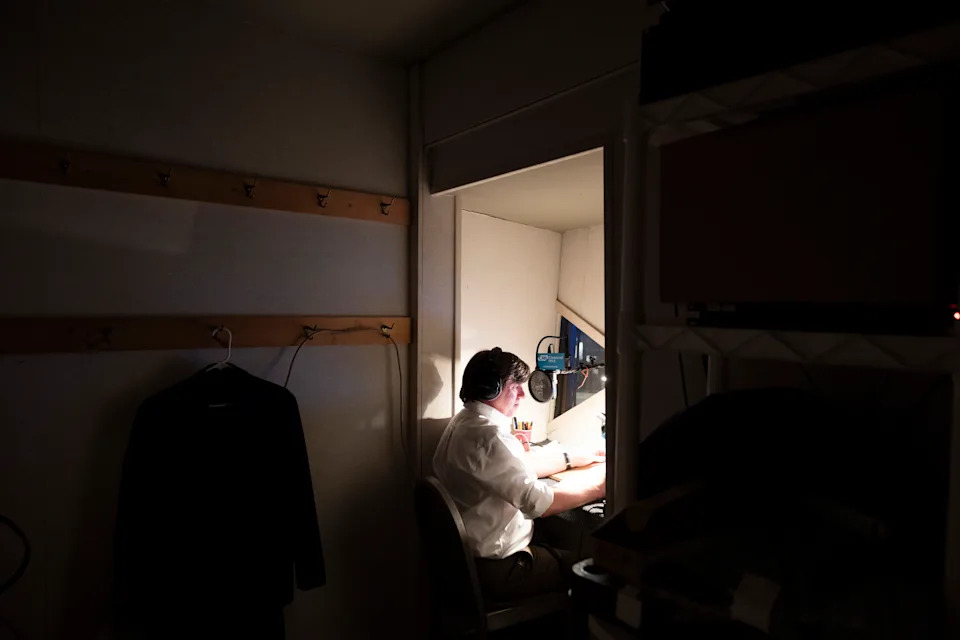
GBH’s Brian McCreath in 2023. – (Angus Mordant/For The Washington Post)
A third impact of the cuts throws the future of music rights into question. One role of the Corporation for Public Broadcasting was to negotiate music licenses for broadcasting and streaming, with federal funding helping to ensure licensing costs weren’t passed down to stations. Without a long-term solution, stations may not be able to play music, period.
A coalition of seven foundations recently announced a commitment of nearly $37 million, including $26.5 million in support for the Public Media Bridge Fund (a philanthropic effort managed by the Public Media Company), but the cuts are already wreaking havoc on some people’s favorite stations.
WETA, which operates a television and radio station and received $17.5 million in federal funding in fiscal 2024, recently eliminated 5 percent of its workforce (12 active staff and nine unfilled positions), canceled three TV shows, made plans to reduce the circulation of its print publication and removed interstitial news breaks from its classical radio programming. This round of cuts clawed back a $9 million appropriation — half a million of which went to support the radio station — and canceled an appropriation set for next year.
Mary Stewart, WETA’s vice president for external affairs, estimates that the station reaches upward of 260,000 weekly listeners and says that support during the station’s current fundraising drive has been strong. “Even so, even though it’s been generous, it’s not able to compensate for that loss of federal funding.”
Like many classical stations in major cities, WETA is tightly woven into the fabric of the regional scene. In addition to airing performances by the NSO, the station has also recorded classical performances at Dumbarton Oaks, the Barns at Wolf Trap and other venues around the region.
WETA also acquires and broadcasts performances from organizations including the Fairfax Symphony Orchestra, the National Gallery of Art and the Library of Congress. (The station also just launched a new HD radio service, Virtuoso, that will offer lunchtime concerts and deeper dives into select recordings.) The endangerment of a station like WETA would leave more than a blank spot on the dial.
Collectively, public radio stations are corralling listeners’ attention to Public Radio Music Day on Oct. 29, an attempt to raise crucial funds as well as awareness of the breadth of “non-commercial” music broadcast by public radio, such as classical, jazz, blues and bluegrass. The loss of public stations could be considered akin to the closure of a boundless museum of American music.
The loss of freely available music resonates beyond the radio. It would deprive young musicians the chance to hear how their future could play out; it would close a window to the past for the elderly; it would replace a richly educational, spiritually beneficial, community-galvanizing experience with more static and noise. (And I hate to think what it would do to my Lyft driver.)
Stewart and others behind the scenes of public media are hopeful that listeners who tune in for the music can also hear the alarms.
“I don’t want to use the word ‘utility,’ because that sounds too hard-edged, but I think there is an appeal to having music in your life, and the ability to have music in your life, all the time,” Stewart says. “If you’re spending 10 or 15 hours or more a week with a radio service, then it really becomes part of your environment.”
‘ The preceding article may include information circulated by third parties ’
‘ Some details of this article were extracted from the following source www.yahoo.com ’