
CT Culture Corner is a weekly look inside the culture, arts and entertainment world in Greater Waterbury, Litchfield County and beyond.
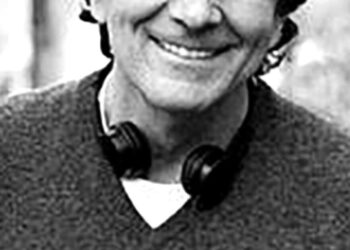
Hollywood legend Robert Redford, who died Sept. 16 at 89, survived a number of personal and professional tragedies, many of which informed his choice of films, including “Ordinary People,” from 1980, about a family suffering the loss of a child, which Redford directed.
Redford’s own mother died when he was in his late teens, of a blood disorder associated with the birth of twin sisters, who died soon after birth. He told TV Guide in 2002 that among his family, “There was great fear I was going to end up a bum.”
Article continues below this ad

Prolific actors Paul Newman, left, and Robert Redford pose for photos arm in arm during the 2004 Westport Country Playhouse gala in Greenwich.
Instead, of course, he became an actor, sex symbol, environmentalist and devotee of independent films, fleeing Hollywood early on for Utah, where where he bought two acres of land from a sheepherder for $500, according to the New York Times. Many of Redford’s movies, including “Butch Cassidy and the Sundance Kid,” “The Electric Horseman” and “Jeremiah Johnson.”
Although he managed a few TV roles, including one on “The Twilight Zone,” he didn’t make his first movie until “War Hunt” in 1962, although he had an uncredited role in the 1960 film, “Tall Story,” in which he had acted on Broadway.
Article continues below this ad
The movie that made Redford a star, however, was Neil Simon’s “Barefoot in the Park” (1967) with Jane Fonda, who already had “Cat Ballou” and “The Chase” on her resume. Fonda would go on to win an Oscar in 1971 for “Klute,” a role another Redford co-star, Barbra Streisand had turned down.
Trivia Question:
How many films did Jane Fonda and Robert Redford make together?
Good Redford rentals
Many terrific Redford films make good weekend rentals, including “Ordinary People,” the frolicsome “Butch Cassidy,” and the often overlooked 1973 gangster film, “The Sting,” Redford’s homage to nature, “A River Runs Through It” with Brad Pitt; the sobering political drama “The Candidate,” the weepy romance, “The Way We Were,” (1973) the thrilling “Three Days of the Condor,” (1973) and the Watergate scandal-based drama “All The President’s Men,” (1976) directed by Alan J. Pakula.For star-crossed romance, you can’t beat Redford with Meryl Streep in 1985’s “Out of Africa.”
Article continues below this ad

Hans Hofmann’s “The Pond,” was painted in 1958, by which time he had closed his eponymous studios in New York and Provincetown to concentrate on his painting. The Yale University Art Gallery will present a focused exhibition of paintings and works on paper that examine Hofmann’s legacy as an artist-teacher. The exhibit runs Nov. 7-June 28.
Hans Hofmann as teacher at Yale Art Gallery
The Yale University Art Gallery will present an exhibition on artist Hans Hofmann running Nov. 7 through June 2026.
Hofmann was born in German and was disqualified from military service in World War I because of a lung condition. Instead, he stayed in Germany, where he opened his own art school in Munich in 1915. He was deeply influenced by the strong colors of Henri Matisse and Robert Delaunay. Hoffman soon became one of the pivotal and most influential teachers in Europe, and later in the United States, to which he moved in 1930, according to the artist’s website.
Article continues below this ad
Hofmann is considered an abstract Expressionist but in him you’ll find all pastiche of -isms symbolism, fauvism, cubism, neo-impressionism, Hofmann employed them all. He was the ultimate fusion-ist, bringing a “dynamic approach to instruction in the formal principles of color, form and space,” according to a news release from the gallery. He was most celebrated by the famous “push/pull” theory he espoused, “which stressed the importance of opposing forces in color or form to create a sense of advancement and recession, thus activating the picture,” according to a news release.
What you’ll see in Hofmann paintings is bold color, vigorous brush work, and a muscular approach to pictorial structure. In a larger sense, Hofmann was pitting painterly abstraction against geometric abstraction and coming up with a new way of painting that allowed emotions to express themselves through color and brush work.
Yale’s show “presents a small but revealing selection of paintings and works on paper from the Gallery’s collection that engage with Hofmann’s dual legacy as an artist-teacher and illustrate how teaching informed his own prolific output,” according to a news release.
Article continues below this ad
Trivia Answer
Robert Redford and Jane Fonda made five films together: “Tall Story,” “The Chase,” “Barefoot in the Park,” “The Electric Horseman” and “Our Souls at Night.”
‘ The preceding article may include information circulated by third parties ’
‘ Some details of this article were extracted from the following source www.ctinsider.com ’