Robert Redford died last week at the age of 89 as he slept in the shadows of the Utah mountains. To call him a movie star does him no justice. He was one of the best to ever hold the screen. To count his films is to list off some of the best films of New Hollywood in the 1960s and 70s. Most commentators have already gone through his great movies with the requisite hyperbole in the time since his passing. Even seemingly overlooked gems like “All is Lost” and “The Last Castle” — acting gigs later in his career — got their just desserts in these tributes.
Equally lauded is his career as a director. Choosing to step behind the camera, he nabbed a Best Director and Best Picture with his first try out of the gate with “Ordinary People.” He would often display his liberal leanings in tackling corporate corruption with “Quiz Show” or Bush-era ethical dilemmas with “Lions for Lambs.” These films contemplated big issues and were crafted carefully with multi-dimensional characters embodied by actors doing their best work. Not all of these were perfect — “The Legend of Bagger Vance” was particularly obnoxious Oscar bait — but it was a second career that only added to Redford’s legacy.

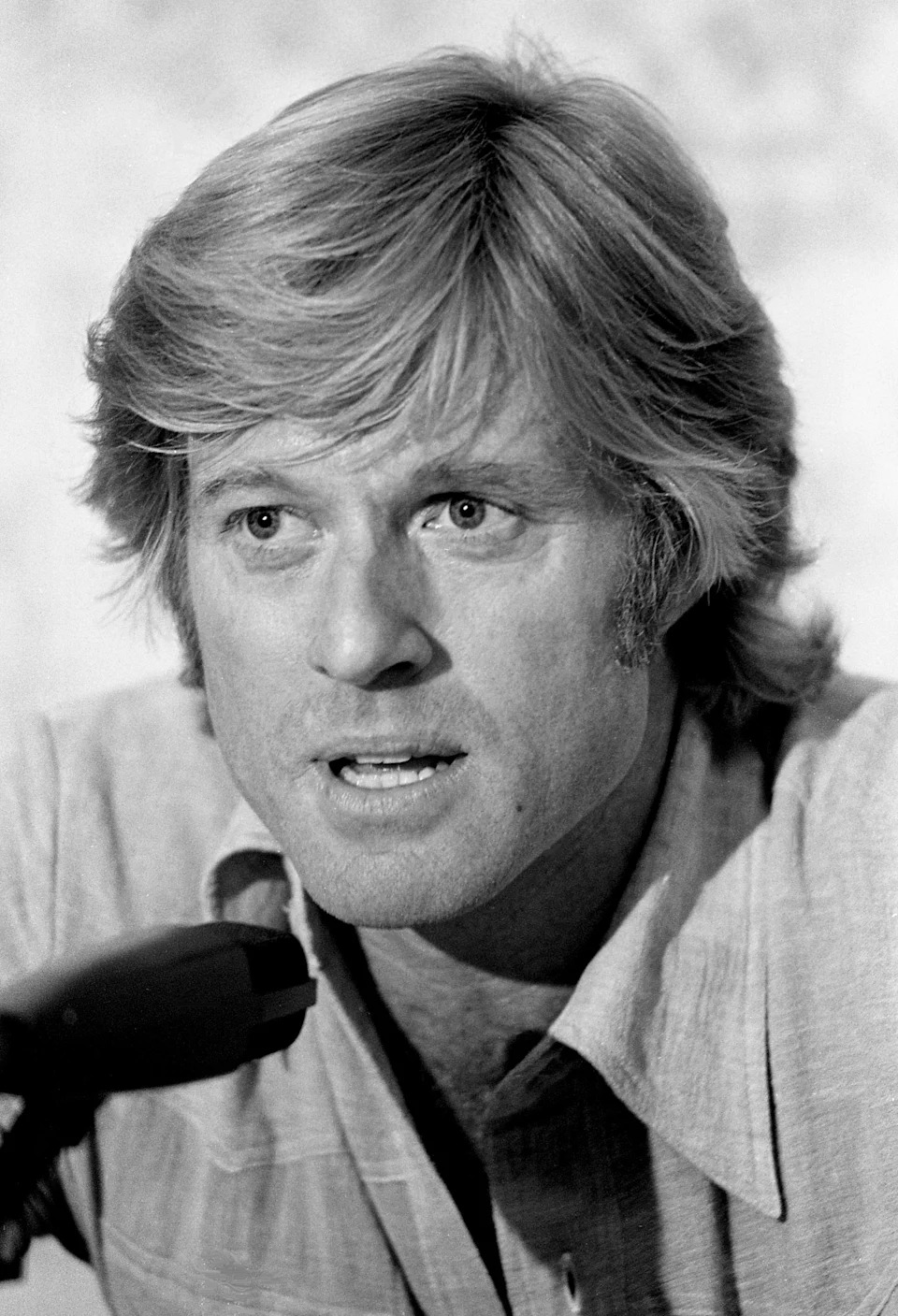
Actor Robert Redford, who plays the role of Washington Post reporter Bob Woodward in the “All the President’s Men,” is answering real media questions during a press conference at the Sheraton downtown hotel on June 10, 1976.
Personally, I am impressed with how he lent his name to environmental causes. (See the disclaimer at the end of this column.) But this is a place to talk about film, so I’ll save that commentary for another time.
I think the most interesting aspect of Redford’s life and career was his effort to bridge the daring and substantive films that solidified his career into something longer-lasting through the Sundance Institute and Sundance Film Festival. While a smashing success for much of its run, even the Sundance Kid couldn’t outrun the cynical corrosiveness that infected the rest of show business.
While Redford could have continued making bank in big blockbusters, he saw Hollywood closing the door on newer filmmakers brimming with vision and audacity. After all, it was risky filmmakers like this during Redford’s heyday who were given a shot and brought back movies from the brink of obliviousness. In the 1980s, shareholder demands took over as the critical factors for greenlighting movies. As Coca-Cola consumed Columbia Picture and Rupert Murdoch maneuvered for 20th Century Fox, quality was diminishing. If you were a filmmaker of color, there was next to no chance to get a picture made.

Actor and director Robert Redford adresses the National Press Club on October 1, 1990, about the dangers facing the environment.
Out of this crisis, Redford’s Park City became a place that nurtured new talent and gave their films a spotlight. If you’ve ever enjoyed anything by Quentin Tarantino or Steven Soderbergh or Richard Linklater (among many others), Sundance is where all of them got their first big breaks and unleashed the indie film renaissance of the 1990s. Between this festival and the advent of digital film equipment, there was perhaps no other time where the movie industry was more egalitarian and inclusive.
Of course, that golden age of filmmaking came to an end just like the earlier phase of Redford’s career. Disney bought Miramax. The other legacy studios developed their own boutique production wings that focused on more “independent-adjacent” projects and muscled out actual indie shops. The opportunities closed up once more. The natural cycle of capitalism struck again.
Even Sundance itself became consumed by its own success. Redford was on a panel in 2013 where he bemoaned the presence of reality show influencers like Paris Hilton. At the time the founder remarked, “(s)he didn’t have anything to do with the films. She and her hard-partying, swag-grabbing cohorts have made the festival not much fun. There are too many people who come to the festival to leverage their own self-interest.” While there are still opportunities for filmmakers to shine, they are outflanked by actors with vanity projects and executives trying to gain some of Sundance’s credibility by osmosis.
Film is forever, as they say, and Redford’s legacy will live on not only as a movie star and a director but as an icon who chose to use his clout and his fortune to give young talent their opportunity. The concept of the movie star like Redford no longer has its luster as audiences will only leave their houses for “event pictures” that are more about spectacle. The type of films Redford directed are more likely to end up on a streaming service than in a theater. The Hollywood Redford embodied is gone and even the best efforts of Sundance couldn’t turn that tide.

Robert Redford, seen right, with Paul Newman appear in the climactic final scene of the 1969 film “Butch Cassidy and the Sundance Kid.”
Yet, as long as you can find films like “The Candidate” and “Three Days of the Condor,” audiences will be reminded of what one man could do with charm and brains and a winning laugh. He could captivate the masses. In a way, Redford and what he represented will never truly be gone. Thank goodness for that.
James Owen is the Tribune’s film columnist. In real life, he is a lawyer and executive director of energy policy group Renew Missouri. A graduate of Drury University and the University of Kansas, he created Filmsnobs.com, where he co-hosts a podcast. He enjoyed an extended stint as an on-air film critic for KY3, the NBC affiliate in Springfield, and now regularly guests on Columbia radio station KFRU.
This article originally appeared on Columbia Daily Tribune: How Robert Redford tried to save Hollywood
‘ The preceding article may include information circulated by third parties ’
‘ Some details of this article were extracted from the following source www.yahoo.com ’