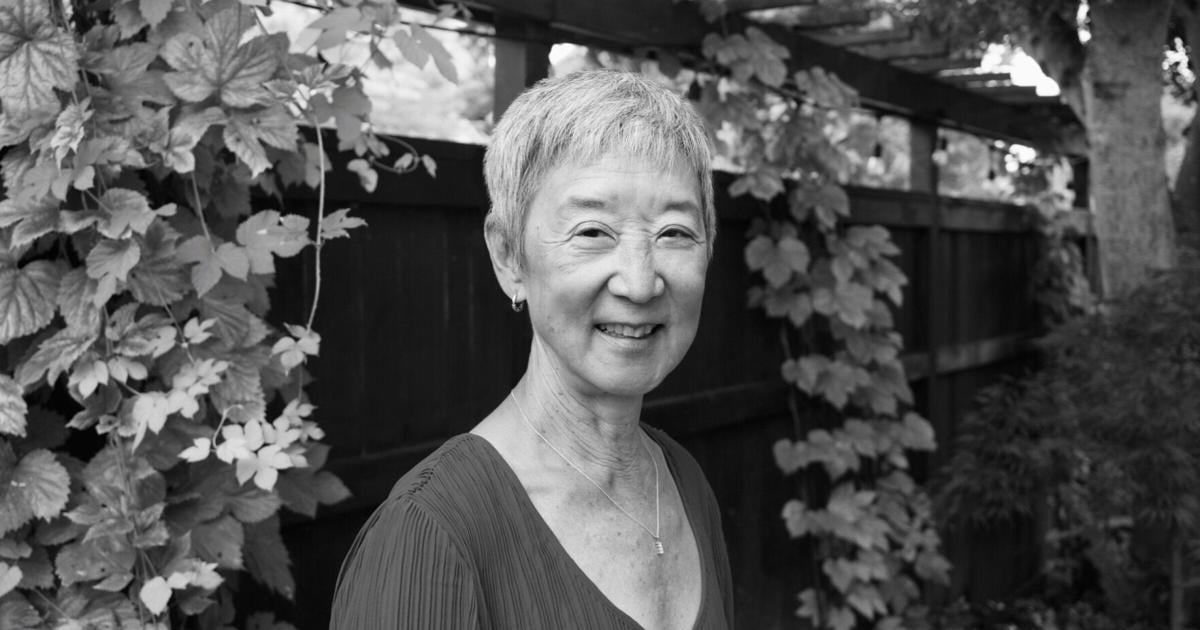
In the 1990s, local author Evelyn Iritani was working on a story for the Seattle Post-Intelligencer when she reached out to Richard McKinnon. She was a business reporter covering the Pacific Rim for the P-I, and part of her research included talking with McKinnon, a professor of Japanese literature at the University of Washington at the time. She learned that McKinnon (the son of an American teacher) was born in Hokkaido, Japan, and was traded to the U.S. during World War II.
“I was shocked. I had done a fair amount of reporting on the U.S. and Japan by that time, and I’d never heard of this civilian exchange,” Iritani said. “And I thought … Who were these people who were on the wrong side of the battlefield?”
That question led Iritani on a decades-long quest to write “Safe Passage: The Untold Story of Diplomatic Intrigue, Betrayal, and the Exchange of American and Japanese Civilians by Sea During World War II” (out March 10 from Farrar, Straus and Giroux). The book tells the stories of both individuals aboard the exchange ships and the government officials who negotiated their wartime journey.
Iritani spoke with The Seattle Times about her research process, reflections on the idea of citizenship and the book’s relevance today. This conversation has been edited for length and clarity.
What was the research process for a story from more than 80 years ago?
There were a few pieces that I was really hoping I could find. One was the diplomacy involved. And for that, I knew I needed to go to the National Archives. You can go back and look at the State Department files from this period and see all of the memos and telephone conversations.
Then it was trying to find people who were survivors. I was very lucky to find a Japanese American who had been on the ship as a teenager, Archie Miyamoto. And he had done a manuscript on this and located people in that community. On the American side, I was very fortunate because a large group of the more than 10,000 allied civilians, mostly Americans trapped in Asia, were missionaries and they are amazing record keepers. They sent reports. They wrote letters and made scrapbooks, so I was able to follow that trail.
Could you talk a little about James Keeley, the bureaucrat in the U.S. Special War Problems Division who helped organize the exchange? How should we think about him as a figure?
I feel like James Keeley was a person who was caught between respecting and upholding his values and what his government was asking him to do. He chose, as most people did during the war, not to challenge the incarceration of the Japanese and Japanese Americans publicly. Personally, he was grappling with those issues, but he didn’t publicly challenge them. He always tried his best to uphold the laws of the land and the commitments his country had made to international laws, to the Constitution. I think that’s a question we all face. How do we respond when our government is doing something that we don’t agree with — what can we do? Or should we do?
How does the book reckon with questions of citizenship?
I think in the historical review of the wartime incarceration, there has been an effort made to emphasize the fact, as it rightly should be, that two-thirds of those 120,000 people who were imprisoned were U.S. citizens. And the exchange for me really put that in stark terms. They called these repatriation exchanges. Repatriation is to be sent to a place of birth or citizenship. But for these Japanese Americans, this was not a repatriation. This was a deportation to a place where they had never lived in many cases, and didn’t speak the language.
The echoes of this book travel throughout history, up until our current moment. How does the book still hold relevance today?
When I started doing this research I thought: I wonder if people are going to believe this happened — that they shipped American citizens to Japan in the middle of a war; they reached south across the border and made deals with Latin American governments to basically do their dirty work and assist them; they were rounding up people without due process, and breaking up families, and then, under great duress, urging these people to voluntarily self-deport, which is essentially what they were doing with this repatriation. As I continued doing the research, it wasn’t until the first Trump administration where I started to really hear these echoes of what was in my book, and pick up a newspaper or hear a broadcast and think: Oh, my God, it is really happening again.
Early on in the book, you write that you thought the story was going to be “a swashbuckling tale of wartime adventure.” How do you reflect on where the story ended up?
I do I think it gets overshadowed sometimes, but I still think there is an amazing maritime story here of how these two governments were able to negotiate this exchange and pull off getting thousands of people onto ships, crossing a dangerous battlefield, narrowly escaping attacks by submarines and making it to safety. But I think it does have a broader message of the dangers when a government loses its moral compass, and the impacts that can have on the innocents caught between the warring governments.
I mentioned the similarities between what happened 80 years ago and what’s happening today. But I think one really striking difference is that there was very little resistance to what happened to both the Japanese incarcerated, as well as these exchangees. Most Americans believed the president and the military leaders who said this was a military necessity.
Today, you have a large and growing resistance on all levels, in the courts, on the streets. That and the fact that a great number of those Japanese Americans who were sent to Japan came back to the U.S. Those are the positives of this story: they were willing to come back to a country that had betrayed their family because they believed in what it represented, and that their future was here.
‘ The preceding article may include information circulated by third parties ’
‘ Some details of this article were extracted from the following source www.yakimaherald.com ’