East Renton-based filmmaker John Forsen had both a personal and practical reason for telling the story of Seattle over 3 ½ hours in 93 video shorts ranging in duration from one to four minutes.
“I came up with the idea because … (I) wondered, how do you tell the history of a place?” Forsen says. “I’m not the biggest fan of these long documentaries that go on and on.”
His three-episode “Seattle: A History in Short Stories” concludes with its final episode on Tacoma’s KBTC-TV at 9 p.m. Thursday (streams next day at kbtc.org). In addition to its TV audience, the series was created with another constituency in mind.
“Teachers can play something about the history of the Black movement in, say, three minutes, and spend the rest of the classroom time talking about it,” Forsen says. “That each episode is made up of individual short stories is what makes this a unique new way to do a history documentary. … I call these shorts small, little appetizers (of history) to get the viewer to say, ‘I want to know more about that.’ ”
Although Seattle’s Cascade PBS station, KCTS-TV, has no plan to air “A History in Short Stories,” Forsen says the series remains available to the outlet should programmers change their minds. The series will also air on The Seattle Channel, King County TV and as part of Alaska Airlines’ in-flight entertainment offerings, and the show has been made available to municipal television stations. Episodes 1 and 2 are already streaming on YouTube; Episode 3 will join them on June 18.
In addition to airing the full episodes, KBTC and The Seattle Channel are airing individual shorts from each episode around programming that doesn’t conform to traditional 30- or 60-minute program lengths.
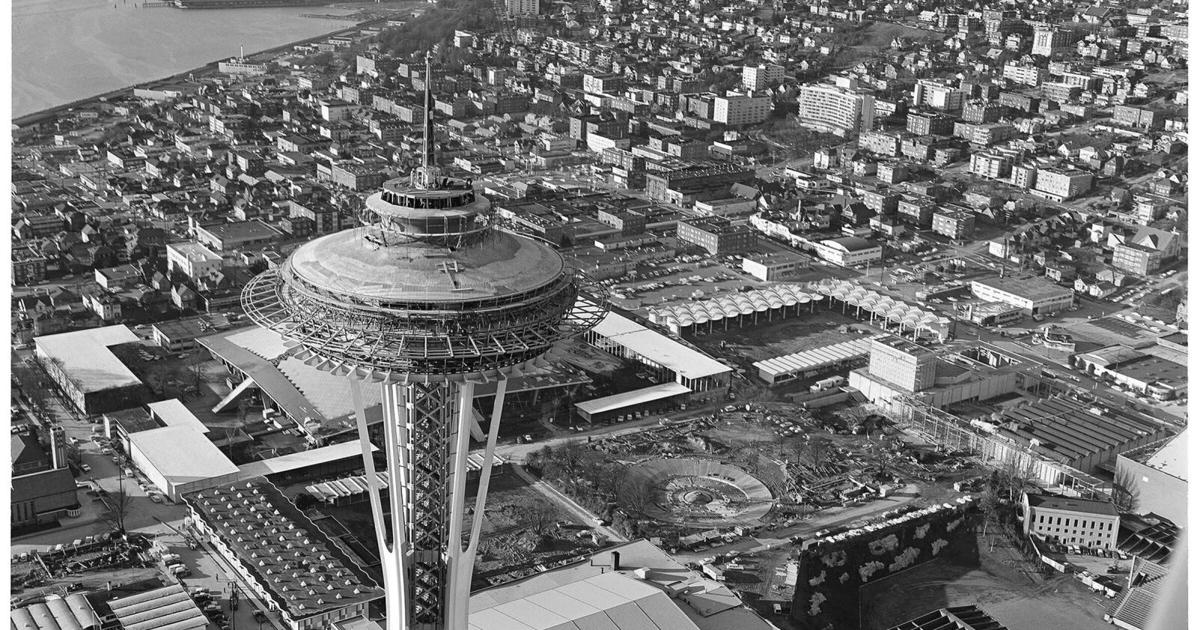
Each “A History in Short Stories” episode comprises 28 to 36 short films. The hourlong first episode, chronicling Seattle history from 15,000 B.C.E. to 1909, debuted on KBTC in June 2025. Episode 2 (1909-62), also an hour, premiered in September. The first two episodes will repeat on KBTC at 7 and 8 p.m. Thursday leading into the 90-minute final episode that offers quick bite stories on Seattle’s second World’s Fair in 1962, building the Space Needle, Black settlers who moved to Seattle after World War II and the orca Namu at the Seattle Aquarium.
Forsen credits the series’ diverse team of consultants and historians with coming up with the show’s topics. Forsen then went out to experts in each subject and asked them to write that segment. Over the series, 58 writers contributed segments narrated by 63 people.
“The whole idea was each writer has their own personality, so I told the writers, ‘This is your story in your voice,’ ” Forsen says. “And then the narrators gave it their twist, too.”
This new, third episode features more Seattle celebrity narrators than the first two installments, including Jean Smart (“Hacks”), Bill Nye (“Bill Nye the Science Guy”), Lily Gladstone (“Killers of the Flower Moon”), Joel McHale (“Community”), Jeff Probst (“Survivor”) and Rick Steves (“Rick Steves’ Europe”).
Forsen offered each of the celebs options, giving them several segments to pick from. Smart chose to narrate two segments, one on Namu and the other on Seattle’s changing culture and loss of iconic buildings.
Despite the brevity of each segment, Forsen encouraged the well-known narrators to “have a little fun with it,” which McHale does in a short on the history of local TV productions, including a glimpse of his 1984-99 comedy sketch series “Almost Live!”
Forsen says “A History in Short Stories” came about after his 2009 10-episode docuseries (around 10 minutes each) on Seattle’s first World’s Fair in 1909.
“I got a lot of emails from teachers asking if they could use it in class,” Forsen says. “So that doc spurred this idea.”
Forsen tried to get local corporations to help fund “A History in Short Stories,” but that support never materialized.
“The hardest part of these things is finding the funding,” Forsen says. “I thought I’d go to Amazon and Microsoft — since all the tech companies are the ones who move tens of thousands of people into the city — and I thought they’d fork over a couple thousand dollars and get their name on it. My pitch was: How can all these people move here know how to be good civic citizens if they don’t know Seattle’s backstories?”
At 68, Forsen is ready for a break after “A History in Short Stories,” but his co-producer, Tom Horton, has an idea for a sequel.
“Tom says, ‘Now we’re hot and ready to do a series on the history of the state,’ ” Forsen says. “So, who knows. Maybe.”
‘ The preceding article may include information circulated by third parties ’
‘ Some details of this article were extracted from the following source www.yakimaherald.com ’