John Wayne flogging beer? Einstein shilling smart meters? The law surrounding the use of a late star’s likeness has evolved considerably over the past 60 years…
Audrey Hepburn selling chocolate. Peter Cushing reprising his role as Moff Tarkin in Rogue One. After years of advancing technology and an array of films and commercials, we’ve become weirdly used to seeing the faces of famous dead celebrities appear on our screens.
Actors and stars have often used the law to prevent their likenesses being used without their permission. The legal case surrounding actor Crispin Glover and the makers of Back To The Future Part II, for example, is a famous one (Universal settled out of court; Glover was handed $760,000).
The law surrounding the likeness of deceased celebrities is slightly different, however – and to see how it’s evolved over time, we need to look back at the career of Bela Lugosi.
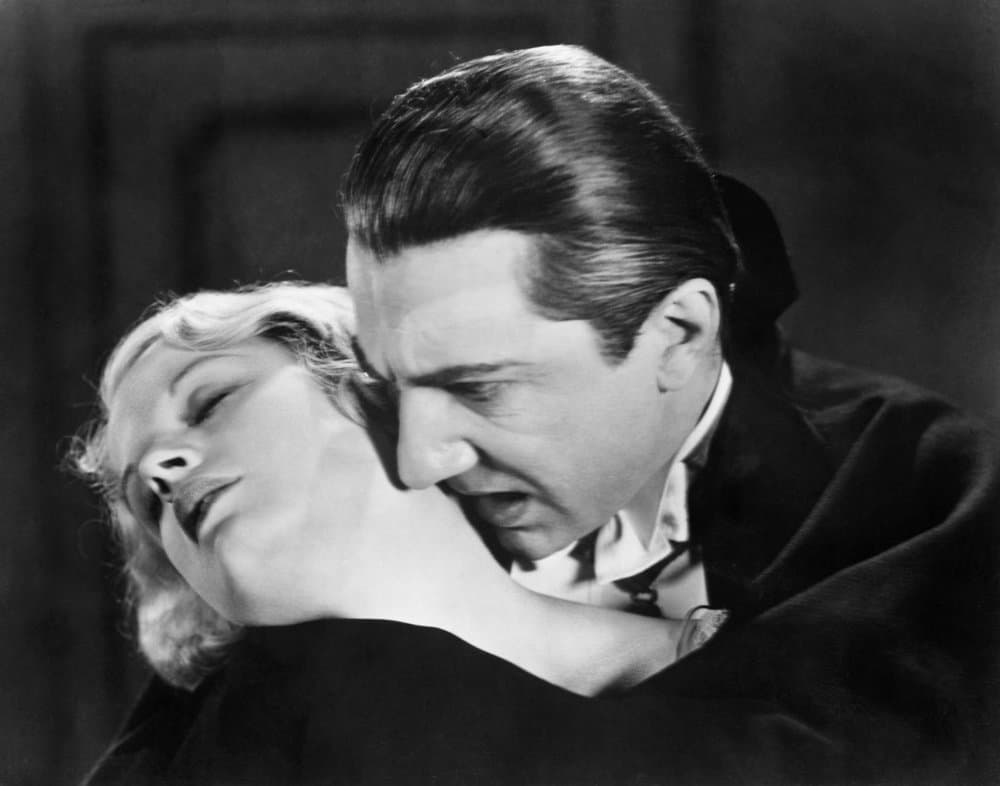
Dracula was arguably Lugosi’s signature role: his pale features, jet-black hair and sonorous voice turning the aristocratic vampire into a cinema icon. But Universal (yes, them again) never gave Lugosi much of a salary for his work; he was given $3,500 (about $70,000 in today’s money) to play Dracula in the 1931 film. When Lugosi struggled to find work in the years that followed, Universal took advantage of his weakened bargaining power and paid him even less.
In 1956, Lugosi passed away suddenly at the age of 73; despite appearing in some classic Hollywood movies, he had little money to his name. Universal, on the other hand, was making a tidy profit from selling a range of toys and merchandise modelled on Lugosi’s likeness.
 Bela Lugosi in 1931’s Dracula. Credit: Universal Pictures.
Lugosi’s son, Bela Jr, who by the 1960s was a qualified lawyer, decided to sue.
The case against Universal was initially brought in 1966, and ground on for over a decade; in 1977, Lugosi Jr and the late actor’s widow, Hope Lininger Lugosi, were awarded $70,000. Universal was barred from profiting further from Bela Lugosi’s likeness.
As Cinefantastique reported the following autumn, the case was a “widely publicized, precedent setting court decision, [with] the heirs receiving the late actor’s Right of Publicity – Lugosi’s right to be compensated for the use-for-profit of his name or likeness.”
Universal didn’t sit back and accept the ruling, however. Instead, it went to the Los Angeles Appeals court and managed to have the case overturned; the studio successfully argued that their ‘freedom of expression’ was being restricted. The court then ruled that the rights to a celebrity’s name and likeness couldn’t be passed on to their heirs.
Bela Jr was nothing if not tenacious, however, and continued to argue for a change in the law for years afterwards. He was instrumental in the establishment of the California Celebrity Rights Act in 1985, which allowed the rights to a person’s name or likeness to be inherited by their estate after death.
The Celebrity Rights Act saw its first high-profile test in 1989. Two years after his death in 1987, footage of Hollywood star Fred Astaire appeared in a series of dance instructional videos. Astaire’s widow, Robyn Astaire, sued the company behind the tapes, Best Film & Video Corporation, arguing that the footage of her late husband had been used without authorisation.
The company argued that it had secured the rights to the star’s image from Ronby Corporation, which had made a deal with Astaire over the right to use his likeness in 1965. Robyn Astaire’s lawyers argued that the deal essentially ceased to apply.
Like the Lugosi estate years earlier, Astaire won the initial case, but this was later overturned on appeal; Best Film argued that the clips had fallen into the public domain, and the court agreed.
That case did, however, lead to the passing of the Astaire Celebrity Image Protection Act in 1999. As detailed in this piece published in a DePaul University law journal, the law was designed to provide “greater protections to the heirs of deceased celebrities by broadening the right to publicity that is discernible to them, as specificed.”
As the DePaul paper notes, living celebrities can protect their name and likeness under existing privacy laws – so a Hollywood star or a globally famous pop star can sue a company if their face is used to sell a product without their permission. The Celebrity Rights Act and the Astair Celebrity Image Protection Act, on other hand, allowed an estate to protect a deceased relative from being commercially exploited without compensation.
Advances in technology saw a rash of adverts begin to appear from the 1990s onwards, with footage of such figures as John Wayne and Humphrey Bogart edited into beer commercials. Those ads existed because the companies behind them made deals with a star’s estate; Robyn Astaire, although fiercely protective of her husband’s image, later allowed doctored footage of Fred to appear in ads for Dirt Devil vacuum cleaners. Fred Astaire’s daughter, Ava, was so angered by the commercials that she sent her own Dust Devil back to its manufacturer.
“Your paltry, unconscionable commercials are the antithesis of everything my lovely, gentle father represented,” Ava Astaire wrote in a letter to the company. She then noted that the Dust Devil she owned had broken a few days before the new adverts aired.
“It is still under warranty,” Astaire wrote. “My first inclination was to put it out with the rubbish, but I don’t want to be responsible for those pieces of plastic remaining forever on some landfill. I certainly do not want it back. I feel that my father was telling me something.”
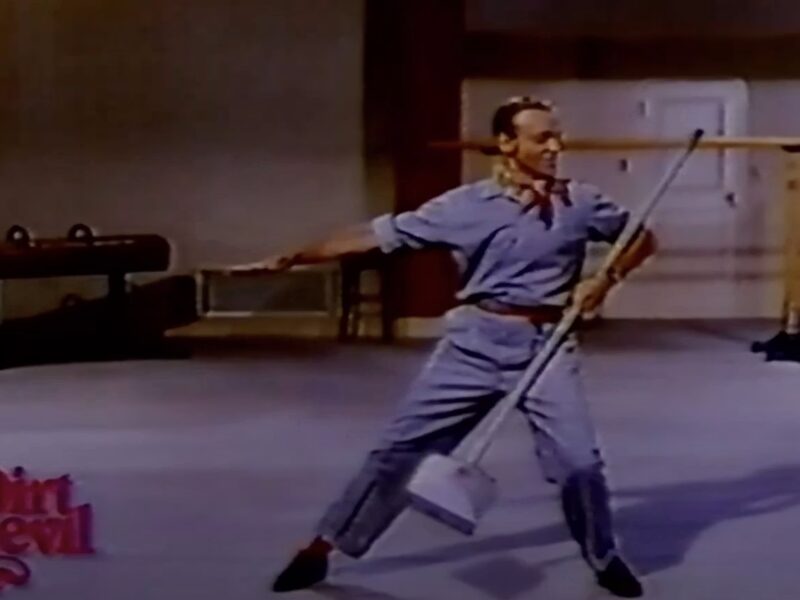 Fred Astaire selling Dirt Devil vacuum cleaners in a 1997 commercial. The footage was taken from his films Easter Parade and Royal Wedding.
Deals such as these highlight the imperfection of any law surrounding a late actor’s likeness. We have no way of knowing whether, say, Bogart would have approved of his image being applied to a beer commercial or not; Ava Astaire certainly thought that her father would have disliked being used to sell vaccum cleaners. There are all kinds of ethical debates to be had about using James Dean or Marilyn Monroe’s face to sell products. But if a star’s estate gives the approval for such usage, those debates are moot – in the eyes of the law, it’s fair game if the heirs give their permission.
These legal protections also mean that celebrity likenesses can be bought and sold like commodities. According to this piece on Marketing Week, Monroe’s image now belongs to a company called Authentic Brands Group, which purchased the rights to the icon from her estate in 2012. Hence why Monroe suddenly started appearing as Max Factor’s ‘brand ambassador’ three years later.
Similarly, the visage of scientist Albert Einstein is now owned by the Hebrew University of Jerusalem. In 2022, it licenced Einstein’s distinctive image to Smart Energy GB, which is why you may have seen a slightly rubbery version of him appear alongside EastEnders star Ross Kemp in ads for smart energy meters.
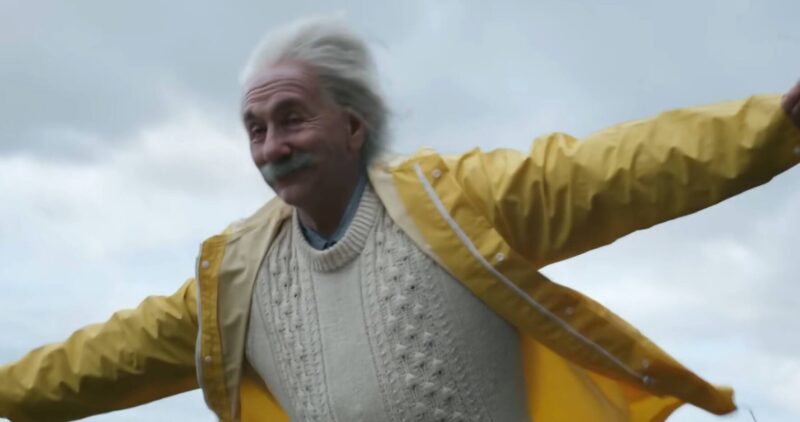 A slightly odd-looking Einstein in adverts for Smart Energy GB.
Some actors have sought to protect their image prior to their own passing. Robin Williams, who passed away in 2014, had long been opposed to having his image used in commercials or to endorse products; when he agreed to play the Genie in Disney’s Aladdin, he had it written into his contract that his performance wouldn’t be used in adverts afterwards. According to the San Francisco Bar Association, Williams later “placed his publicity rights in trust and prohibited all commercial use until 25 years after his death.”
All the same, the use of dead celebrities is still a massive industry worth billions. It’s now common for departed stars to not only appear in adverts, but also show up on stage; the dead musician hologram is now such an established tactic for packing out stadiums that there are listicles devoted to it. Roy Orbison, Tupac Shakur and Frank Zappa are just a few of the late pop and rock icons who’ve performed for audiences as tech-enabled force ghosts.
We were always going to get around to the subject of artificial intelligence eventually, so here we go. The advent of artificial intelligence and deepfakes means that a process that would have once required days of editing old footage or CGI modelling can theoretically be completed within a matter of minutes.
Once again, the law is moving to keep up with technology. In 2014, California brought in new amendments to existing laws, protecting performers – both alive or otherwise – from “unauthorised use of digital replicas of their voice or likeness.”
None of this will, of course, stop estates from selling a deceased celebrity’s face to a company, which in turn could use generative AI to bring that celebrity back to life. We’ve alread seen the tech used to put the late Val Kilmer in a film. Director John Voorhees sought permission from Kilmer’s family to have the star ‘play’ a character in this year’s As Deep As The Grave.
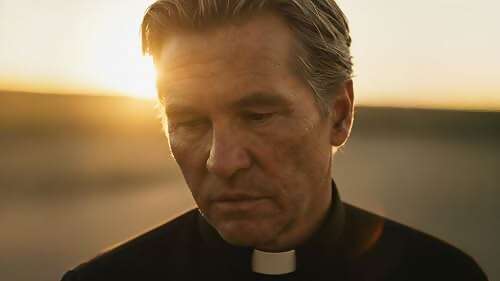 An AI Val Kilmer in As Deep As The Grave. Credit: MC Films.
In his cult sci-fi horror classic Videodrome, director David Cronenberg anticipated the moment we’re now living in. A character in that 1983 film, a Marshall McLuhan-like ‘media prophet’ named Brian O’Blivion (Jack Creley), pops up on television from time to time. At first, he’s on a talk show, speaking to the presenter through a boxy TV screen. Later, he starts talking to unseamly protagonist Max Renn (James Woods), who subsequently discovers that O’Blivion has been dead for years. Before he passed, he recorded countless hours of conversation, recorded directely into the camera lens, which his daughter, Bianca (Sonja Smits) curates and edits into monologues.
Today, Brian O’Blivion would probably exist as data in the cloud; Bianca, the heir to his estate, could then profit from his likeness through social media videos or commercials. Seventy years after Bela Lugosi passed away, there are more dead people on our screens than ever. The unwary may soon look at a TV ad or a film and be entirely unaware that the person they’re watching is essentially a digital ghost.
To paraphrase Brian O’Blivion, we’re going to have to learn to live in a very strange new world.
‘ The preceding article may include information circulated by third parties ’
‘ Some details of this article were extracted from the following source filmstories.co.uk ’