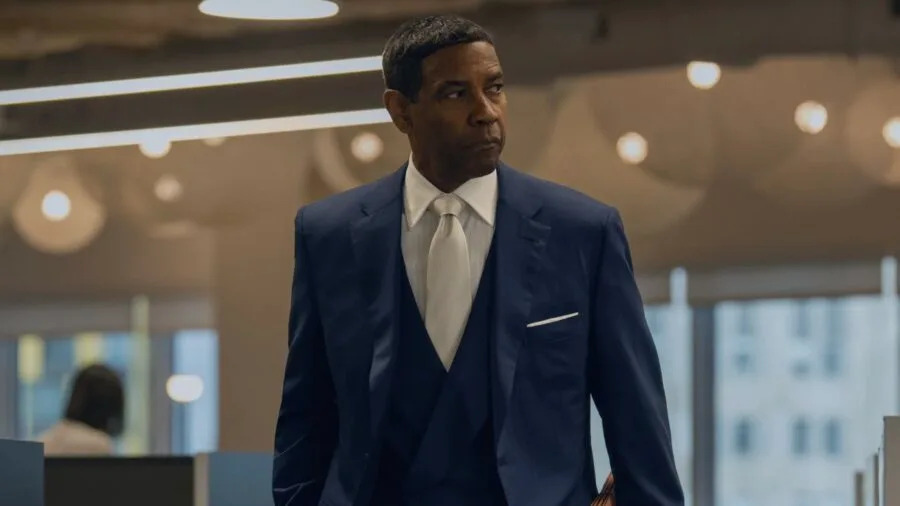
Highest 2 Lowest is proof that the base idea of “remaking movies is bad!” is a stupid, ill-informed, and dismissable opinion in film discussion. Here we have a remake of none other than master filmmaker (Spike Lee says so in the closing credits) Akira Kurosawa’s 1963 kidnapping thrill ride High & Low. Kurosawa’s movie is an untouchable classic that is well-enshrined into film culture. How could Spike Lee have the temerity, the audacity to remake a movie like this?
Because that’s Spike Lee as a filmmaker: bold, in your face, and always assured of his own creative voice. It’s why he is one of our greatest living moviemakers. When you see a Spike Lee joint, you can hear him in the pulse and beat of the cinema. So, it’s no surprise that Lee takes the Japanese businessman dressing of High & Low and turns it into Highest 2 Lowest, a story about the music industry and the changing tides of culture.
Same Story Made Rich By A Different Teller

Highest 2 Lowest snatches the basic structure of Kurosawa’s film; a powerful businessman (Denzel Washington as music mogul David King) is about to purchase controlling ownership in his company when his son is kidnapped. He’s ready to use that purchase money to get his son back, until it’s revealed that the kidnapper grabbed the wrong boy. The specifics get more important in Lee’s version here: the kidnapped boy is the son of King’s childhood friend and employee, Paul (Jeffrey Wright), who also happens to be a former criminal. Things get murky for a while between them, but it all eventually culminates in a chase to find the kidnapper and enact some justice.
Spike Lee and writer Alan Fox are able to take from both Kurosawa’s film and the Ed McBain source novel, King’s Ransom, while adding in a new angle and perspective on the story. David King is an interesting character at a crossroads with his feelings about the music business, and Lee is able to use that perspective to examine aspects of the art world that are clearly important to him. Just hearing David King bring up a rebuttal to AI music tells you that Highest 2 Lowest ain’t here just to play performative pot-boiler.
A Moral About Art Instead Of Class

The one thing I can see being picked apart with Highest 2 Lowest in regards to its remake status is the difference in moral examination between the two movies. Kurosawa’s film is directly about class and its final moments — riffed by Spike Lee in two perfect scenes — are a stark and vicious attack on what a class system produces. Meanwhile, Lee’s film touches on this aspect but ultimately doesn’t want to directly face it. Instead, the ending moments become an examination of two artists and their views on what matters as creators.
Highest 2 Lowest is a touch too privileged to show the right kind of sympathy to its antagonist, and the final moments with the kidnapper are much more purposefully judgmental to him than what Kurosawa’s movie wanted to portray. It’s not necessarily a failing but a change in what the story wanted to be about.
Still, Highest 2 Lowest is a worthwhile riff on a tried-and-true story that reminds me why I’m always interested in whatever Spike Lee is doing. Pairing him with Denzel Washington is always going to grab my attention, and this is another collaboration of theirs you should take the time to watch.
‘ The preceding article may include information circulated by third parties ’
‘ Some details of this article were extracted from the following source www.yahoo.com ’