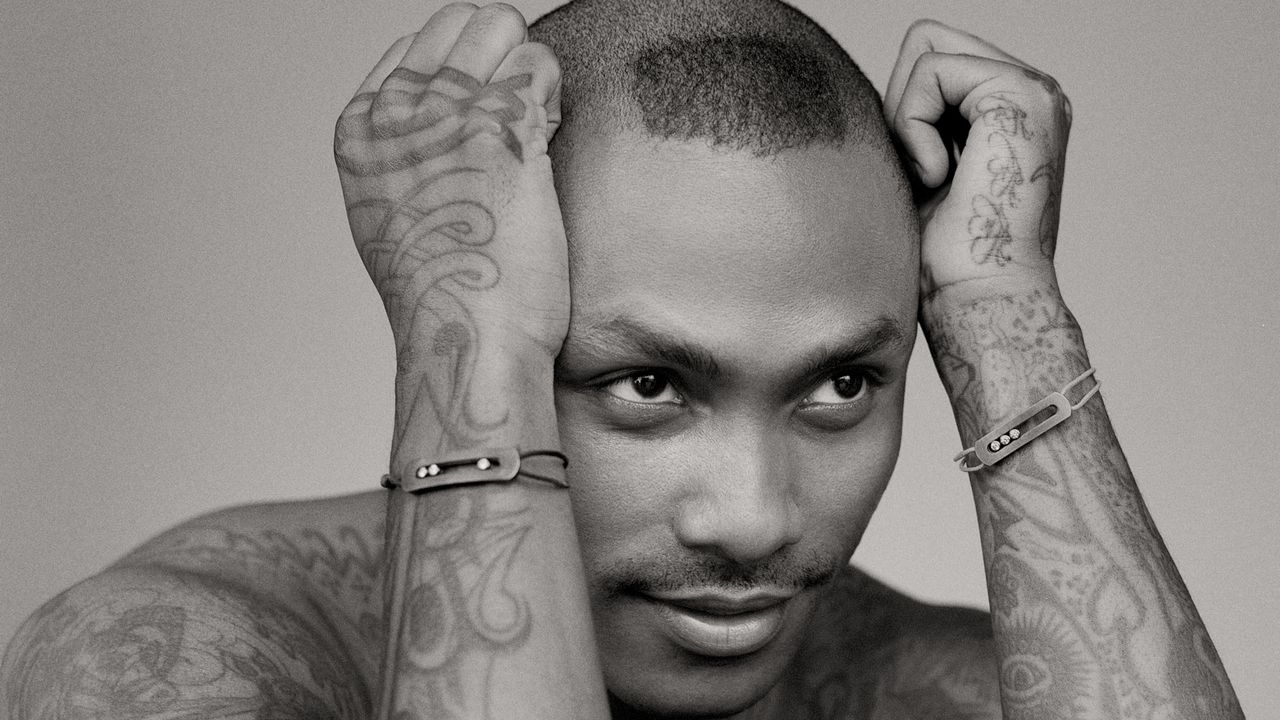
In the summer of 2022, Steve Lacy’s “Bad Habit,” a buoyant but doleful song about a missed shot—“I bite my tongue, it’s a bad habit,” he sings ruefully—started going crazy on TikTok. Lacy, who was twenty-four at the time, was previously best known as a guitarist in the Internet, a psych-R. & B. band that emerged out of the sprawling Los Angeles hip-hop group Odd Future. “Bad Habit” was an unexpected but delightful hit. That fall, the track was nominated for three Grammys, including Song of the Year, and spent thirty-five weeks on the Hot 100, including three at No. 1. Interestingly, “Bad Habit” was also the first single ever to top five of Billboard’s genre charts (including R. & B. / Hip-Hop and Rock & Alternative), which speaks to the odd elasticity of Lacy’s sound. A song such as “Bad Habit” can perhaps exist only now, in an era in which every piece of music is available on an endless lateral plane—a time in which genre, as an organizing principle, has largely fossilized.
Earlier this month, Lacy released his third LP, “Oh Yeah?,” a gorgeous, deeply humane record. Lacy has matured as a songwriter: “Oh Yeah?” is rhythmically expansive, and its lyrics are feverish, incriminating. His style, though, is still idiosyncratic—a particular mix of bedroom melancholy and broadband corruption. The new songs effectively marry the immediacy and offline charm of early-nineties R. & B. (Babyface, TLC) with the disaffection of life lived through a screen.
I recently met Lacy in the lobby of a hotel on the edge of New York’s Chinatown. It was a steamy, fluorescent afternoon; we carried our iced coffees to Seward Park, finding an empty bench in the shade. Lacy’s best songs combine elements of psychedelia, hip-hop, and alternative R. & B. (a genre developed and perfected, in the early twenty-tens, by artists such as Frank Ocean, SZA, and the Weeknd). Some parts of “Oh Yeah?” seem to take inspiration from indie rock (Weezer, Dirty Projectors, occasionally Beck), whereas others skew more experimental (Sun Ra, Parliament-Funkadelic). Substantive verses are new terrain for Lacy, who, as a younger writer, worried more about hooks and beats. “ ‘Verses? Who cares!’ That was my vibe when I first started,” Lacy said. But, on this record, “I was kind of mopey until I got a good verse. And then I was FaceTime-ing everyone: ‘Look at this! I said this!’ ”
Lately, Lacy has been listening to a lot of Moondog, the avant-garde composer known to mid-century New Yorkers as the Viking of Sixth Avenue. (Beginning in the nineteen-forties, Moondog, who was born Louis Hardin, could be found on the streets of Manhattan sporting a horned helmet and a voluminous gray beard, playing an array of bespoke instruments.) “Moondog is not playing chords,” Lacy said. “Where I come from, it’s super chords—the flat-9, the flat-5.” Before “Bad Habit” took off—and before Lacy turned twenty-one—he was already finding considerable success as a producer, having worked with Kendrick Lamar, Solange, Mac Miller, and Vampire Weekend. Lacy made the beat for “PRIDE.,” a dreamy, spectral cut from “DAMN.”—Lamar’s Pulitzer Prize-winning, triple-platinum album from 2017—using his cracked iPhone 6, an iRig adapter, and the GarageBand app. “I’m, like, ‘Am I gonna be the artist, or am I gonna be the artist that inspires other artists?’ Everybody took it,” he said of his style. “I gave it away, actually. Chorus, guitar, R. & B. drums.” Now he’s been trying to “flip my process on its head.” Lacy pointed to “The Feeling,” a soulful, wavy new song about submitting to passion. “Chords don’t happen until the acoustic guitar on the chorus. Then it fades in, and you’re, like, Whoa, where’d the fuck that come from? Those little nerdy things excite me.”
‘ The preceding article may include information circulated by third parties ’
‘ Some details of this article were extracted from the following source www.newyorker.com ’