Sony
Corporation and TCL have announced that the two electronics manufacturers have
agreed to move forward with “discussions and consideration” for a strategic
partnership in the home entertainment field. According to a press release from
Sony, the two companies have signed “a memorandum of understanding to confirm
their intentions to establish a joint venture that will assume Sony’s home
entertainment business, with TCL holding 51% and Sony holding 49% of its
shares.” This new joint venture would be in charge of Sony’s home entertainment
division, including TVs and audio equipment, handling the full process “from
product development and design to manufacturing, sales, logistics, and customer
service for products,” according to the press release.
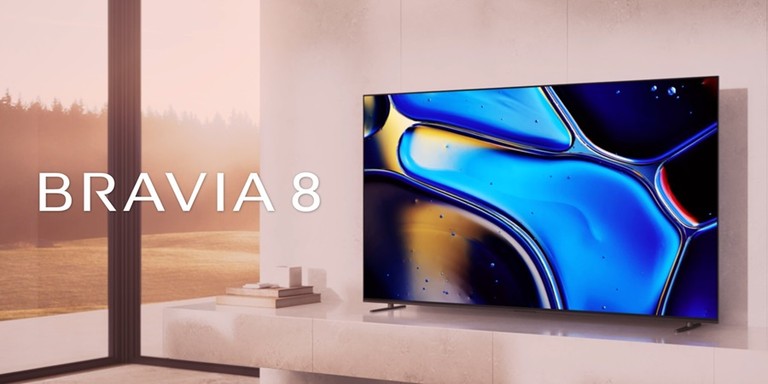
Sony’s
excellent BRAVIA TVs, which celebrated their 20th anniversary in 2025,
would continue to be produced under this new partnership, though TCL’s majority
stake in the joint venture would give the Chinese company the power to
determine the future of Sony’s product line. The two companies are proceeding
with discussions with a goal of “executing definitive binding agreements” by
the end of March 2026. There will be regulatory approvals to sort out, and
other conditions to satisfy, but the two companies expect that the new joint
venture will commence its operations in April of 2027.
The
aim of the new company appears to be to advance the Sony brand by leveraging
Sony’s high-quality picture and audio technology, along with its premium brand
recognition and operational expertise (including supply chain management),
while utilizing TCL’s advanced display technology and panel production
capacity. TCL enjoys a huge industrial footprint, end-to-end cost efficiency,
and vertical supply chain strength that will be a boon to Sony’s bottom line.
The products produced by the new company will still be branded with the
globally-recognized Sony and BRAVIA names.
TCL’s
display division, TCL CSoT (China Star Optoelectronics Technology Co.), has
become one of the world’s
largest LCD panel manufacturers since its founding in 2009. The company already
produces panels for other TV makers, and the global market for large TVs
continues to expand in the era of high-res gaming and streaming video. The
joint Sony/TCL company would “create innovative products that meet the expectations of
customers worldwide and achieve further business growth through outstanding
operational excellence,” according
to the press release, with both companies committing to supporting the
sustainable growth of the new company.
We
are pleased to have reached this agreement with TCL for a strategic
partnership. By combining both companies’ expertise, we aim to create new
customer value in the home entertainment field, delivering even more
captivating audio and visual experiences to customers worldwide.
—
Kimio Maki, Representative Director, President and CEO, Sony Corporation
We
believe that this strategic partnership with Sony represents a unique
opportunity to combine the strengths of Sony and TCL, creating a powerful
platform for sustainable growth. Through strategic business complementarity,
technology and know-how sharing, and operational integration, we expect to
elevate our brand value, achieve greater scale, and optimize the supply chain
in order to deliver superior products and services to our customers.
—
DU Juan, Chairperson, TCL Electronics Holdings Limited
Although
we have not seen major manufacturers join forces like this recently, this is
definitely not the first time that TCL has gobbled up business from a premium
legacy company. TCL’s seemingly unstoppable
trajectory of growth would not have been possible without the absorption
of existing tech and resources from other companies. In 2020, for example, TCL CSoT
took over Samsung Display’s LCD factory in Suzhou, China, as Samsung sold off
over 2,000 patents relating to LCD technology. (See our article Samsung Dumps LCD For New Quantum Dot OLED TVs.) TCL acquired another 500+ U.S.
patents regarding LCD technology from Samsung Display in August 2022.
In
the US market, TCL gained popularity with its affordable smart TVs powered by the user-friendly Roku
platform. But what began as a budget brand is now “focusing on mid-to-high-end
markets around the world,” according to TCL. The company reached a big
milestone along that path in 2019, when TCL was the first company to introduce
LCD TVs with miniLED backlighting. A version of that technology is now used in
high-end LCD TVs from virtually all major brands. This rapid transformation has
seen TCL competing not only with Chinese rivals like Hisense, but also with the
top premium TV manufacturers, such as Samsung and LG.
Last year’s QM7K Series,
for example, included Bang & Olufsen audio and topped out with a massive
115-inch model with a $20K price tag to match. (See our article TCL
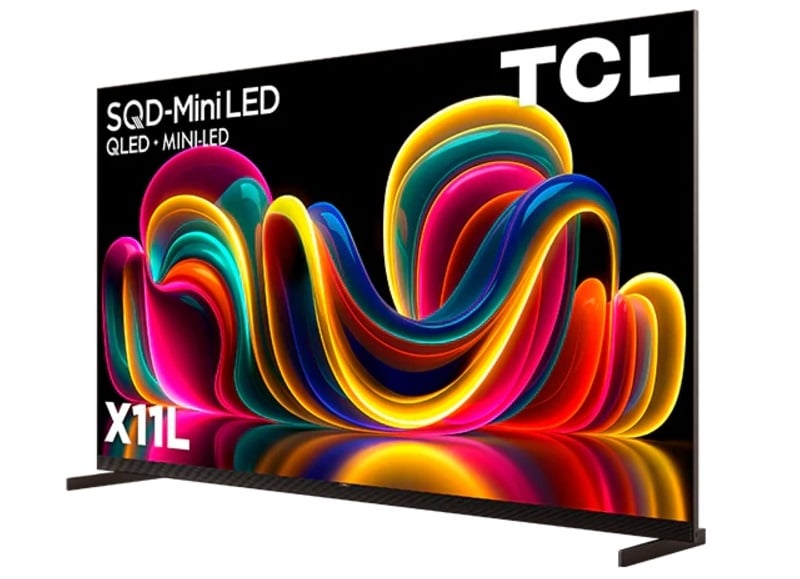
QM7K Series: Advanced Halo Control System & Bang & Olufsen Audio.) At CES 2026, TCL introduced a
gigantic new display incorporating a
Super Quantum Dot layer, which reportedly results in better color and increased
brightness.
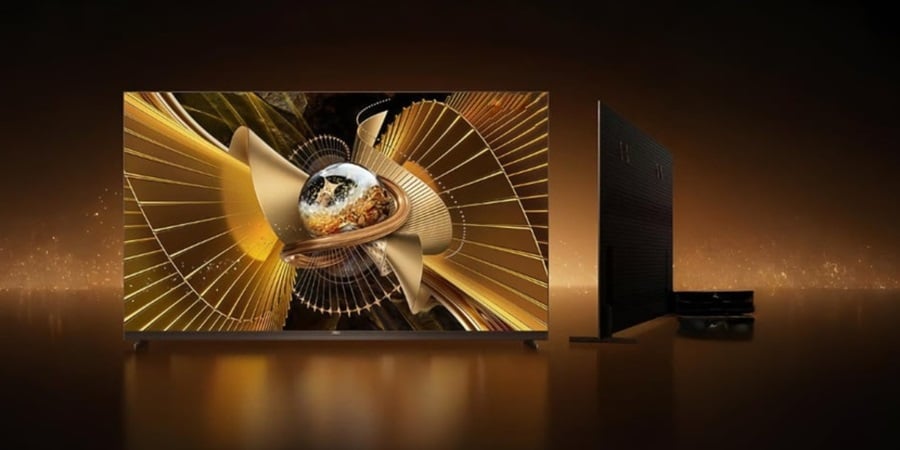
This model, called the X11L, will be among the first wave of
high-end TVs to support Dolby Vision 2. So far, Sony has not indicated whether
the company’s 2026
TVs will support the feature. In the US, only Hisense and TCL have committed to
doing so. Perhaps Sony’s partnership with TCL means that future Sony TVs can be
expected to support Dolby Vision 2, but it’s too early to tell.
Kaveh
Vahdat is a founder and CEO at RiseAngle, a San
Francisco company focused on video game development. Vahdat spoke with CNET about the Sony/TCL partnership,
saying that “even well-known, premium brands are finding it hard to compete on
their own against companies like Samsung and LG that control more of the
hardware stack and ship at massive volume.” Unlike Samsung and LG, Sony does
not have a display division producing
its own panels. LG Display produces the WOLED panels used in the Sony BRAVIA 8 TV, for example, and Samsung Display
produces the QD-OLED panels used in Sony’s high-end BRAVIA 8 II. According to Vahdat,
the partnership between Sony and TCL is “less about Sony stepping back from TVs
entirely and more about adapting to how the smart TV market now works.”
In
seeking clarification about the two companies’ roles moving forward, What
Hi-Fi?
reached out to Sony, and received the following response (which doesn’t add
much new information):
We
consider the two companies to be nearly equal partners; both Sony and TCL will
provide steadfast support for the sustainable growth of the new company, to
create innovative products that meet the expectations of customers around the
world and pursue further business growth through operational excellence. At this
stage, the announcement reflects an initial memorandum of understanding, and
further details are still under discussion. We will communicate further at the
appropriate timing when there is confirmed information to share.
—
Sony
So far, we know
nothing about what will happen to Sony’s line of AV receivers, soundbars, and
other home audio products. But fans of Sony’s OLED TVs have real cause for
concern. TCL has never been a supporter of OLED technology, and continues to
push its LCD-based panels, which do enjoy the advantage of higher overall
brightness (even if they can’t match OLED’s perfect blacks and pixel-level
dimming control). It seems highly unlikely that the joint venture controlling
Sony’s future would continue buying OLED panels from Samsung and LG, when the
whole point of the partnership is to take advantage of TCL’s manufacturing
power. Does this mean that Sony OLED TVs will soon become extinct? Share your
thoughts in the related forum thread below.
‘ The preceding article may include information circulated by third parties ’
‘ Some details of this article were extracted from the following source www.audioholics.com ’