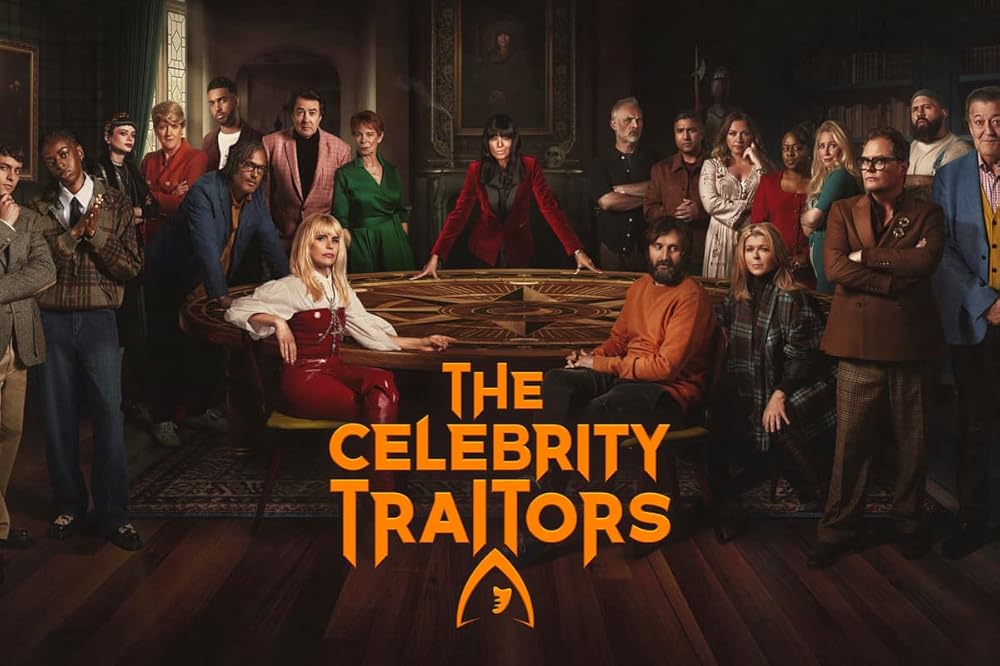
Omilana’s so-called “crime” was not deception-it was depth. Because his YouTube legacy revolves around elaborate pranks, social experiments, and performance art, his fellow celebrities treated his every move as inherently duplicitous. In their eyes, he wasn’t a player; he was a symbol of suspicion. Yet when he spoke with reason, when he offered logical arguments and challenged inconsistencies, his intelligence was recast as manipulation. Contestants like Tom and others wielded the lazy vocabulary of herd politics-phrases like “stirring the pot” or “playing too hard”-as a way to dismiss anything they couldn’t intellectually match.
The irony is breathtaking. In a show built on deceit, the one person most experienced in the art of illusion was crucified not for lying, but for understanding the game better than they did. His attempts to bring evidence, nuance, or even humour to the discussion were consistently turned against him. Every word he said became ammunition in a witch hunt masquerading as consensus.
What’s worse is the moral timidity that infected the group once the first accusation stuck. Like sheep in expensive coats, the celebrities rallied around the safest narrative: “It must be Niko.” The absence of independent thought was almost operatic. Instead of suspicion being a tool, it became a contagion-transmitted through fear of being next on the chopping block. In that sense, Celebrity Traitors exposed something deeper than gameplay: the instinctive human need to belong, even if it means being wrong together.
This failure of critical thinking is amplified by editing that indulges it. The camera lingers not on reason, but on reaction. Moments where Omilana tries to clarify or appeal to logic are often undercut by knowing glances, ominous cuts, or smirking confessionals that frame his rationality as menace. The show’s weakness, then, is not simply that it allowed the mob to dominate-it enabled it. It let the narrative of “the prankster who must be guilty” override any fair assessment of the game’s reality.
In the end, the betrayal wasn’t merely part of the format. It was existential. The celebrities betrayed the very premise of The Traitors-to think critically, to doubt strategically, to discern truth from illusion. They didn’t outwit a traitor; they outnumbered a target. And when the smoke clears, the only real trick played was on themselves.
‘ The preceding article may include information circulated by third parties ’
‘ Some details of this article were extracted from the following source www.imdb.com ’