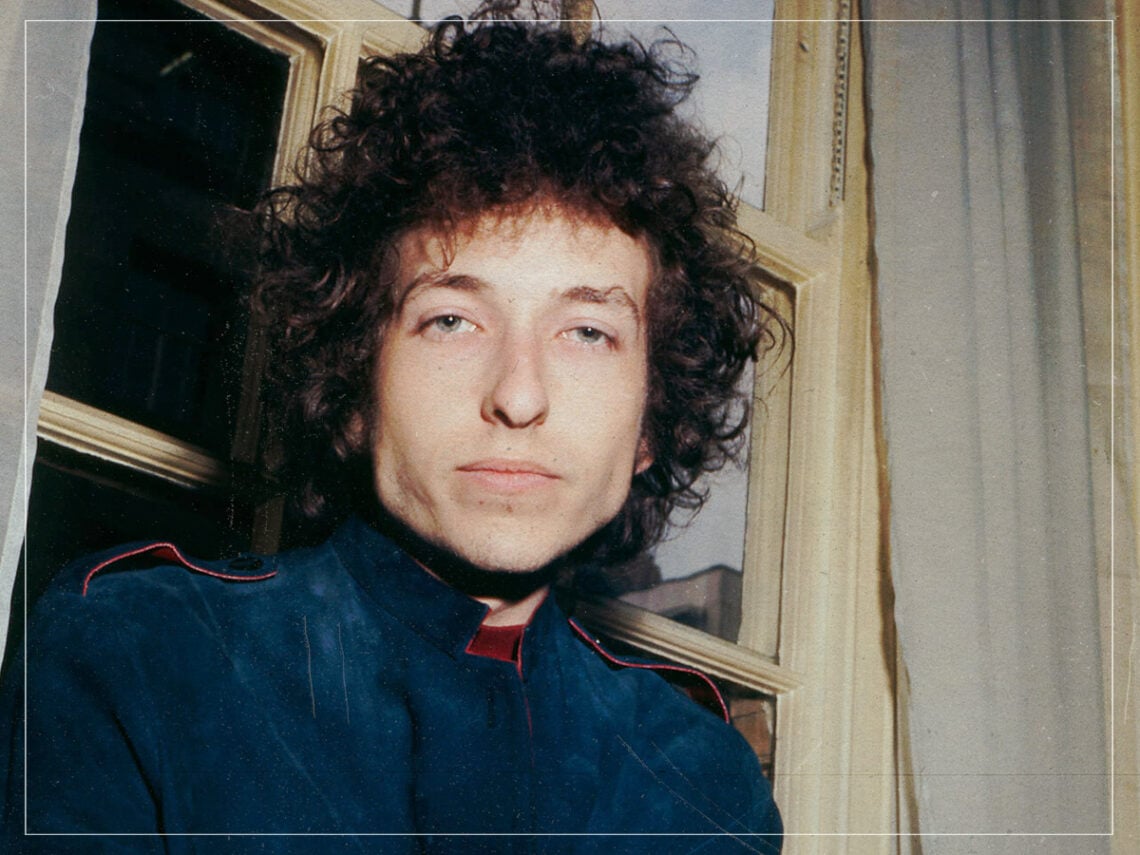
(Credits: Far Out / Alamy)
Following an adolescent fascination with 1950s rock ‘n’ roll, Bob Dylan became gradually spellbound by folk music. After modelling his early material on American folk, as popularised by Woody Guthrie, Dylan branched out to pioneer his distinctive form of folk rock, first exhibited in his 1965 album Bringing It All Back Home.
Much to the disaffection of folk purists at the Newport Folk Festival in ’65, Dylan famously “went electric” during his most inspired run in the mid-60s and continued dancing to his own tune. As a musical innovator, Dylan drew inspiration from various genres, past and present and, for many years, maintained a contemporary sound.
The moment would be a defining fork in the road for music. Not just Dylan’s own pathway, which was given a whole new map forward, but for music in general. Dylan’s decision proved that genres could be changed and an artist’s style could go along with it. The freewheelin’ trooubador wasn’t just a folk artist any more he had stepped into the world of pop.
When discussing his enduring admiration for The Rolling Stones in a 2009 interview with Bill Flanagan, Dylan pinpointed the moment in history when he began to lose interest in contemporary pop music.
“The Rolling Stones are truly the greatest rock and roll band in the world and always will be,” Dylan asserted. “The last, too. Everything that came after them, metal, rap, punk, new wave, pop-rock, you name it …. you can trace it all back to The Rolling Stones. They were the first and the last, and no one’s ever done it better.”

Continuing, the singer-songwriter explained that while enjoyable music never ceased to materialise, a peak was reached in the 1960s. “Those ’50s and ’60s records were definitely important,” he said. “That might have been the last great age of real music. Since then, or maybe the ’70s, it’s all been people playing computers. Sam Cooke, the Coasters, Phil Spector, all that music was great, but it didn’t exactly break into my consciousness.”
There is naturally a hefty degree of bias in Dylan’s preference for the older decades of the 20th century. The singer found his way in the world during those particular years; his heroes, his adversaries and his cultural counterpoints all found their feet during those decades. It is perhaps refreshing that Dylan is as equally blinded to the changing landscape of music as any other music lover.
Dylan explained that, during the ’50s and ’60s, he learned from the best in the business. “I was listening to Son House, Leadbelly, the Carter Family, Memphis Minnie and death romance ballads,” he continued. “As far as songwriting, I wanted to write songs like Woody Guthrie and Robert Johnson. Timeless and eternal. Only a few of those radio ballads still hold up, and most of them have Doc Pomus’ hand in them.”
Despite such assertions, the octagenarian is by no means disillusioned with more modern music. During an interview with the Wall Street Journal towards the end of 2022, an 81-year-old Dylan outlined his current listening habits.
Among his surprisingly diverse list were the rap artists Eminem and Wu-Tang Clan, both of whom Dylan said he is “a fan of.” He praised both for their “feeling for words and language” and added that he enjoys “anybody whose vision parallels mine.” Also included in that praise were Royal Blood, Celeste, Rag’ n’ Bone Man and Nick Cave.
“Some I’ve seen live,” he added. “The Oasis [Gallagher] brothers, I like them both, Julian Casablanca [sic], the Klaxons, Grace Potter. I’ve seen Metallica twice. I’ve made special efforts to see Jack White and Alex Turner. Zac Deputy, I’ve discovered him lately. He’s a one-man show like Ed Sheeran, but he sits down when he plays.”
Listen to Bob Dylan’s 2020 single ‘I Contain Multitudes’ below. In the lyrics, Dylan gives a shoutout to “them British bad boys, The Rolling Stones.”
Related Topics
The Far Out Bob Dylan Newsletter
All the latest stories about Bob Dylan from the independent voice of culture.
Straight to your inbox.
‘ The preceding article may include information circulated by third parties ’
‘ Some details of this article were extracted from the following source faroutmagazine.co.uk ’