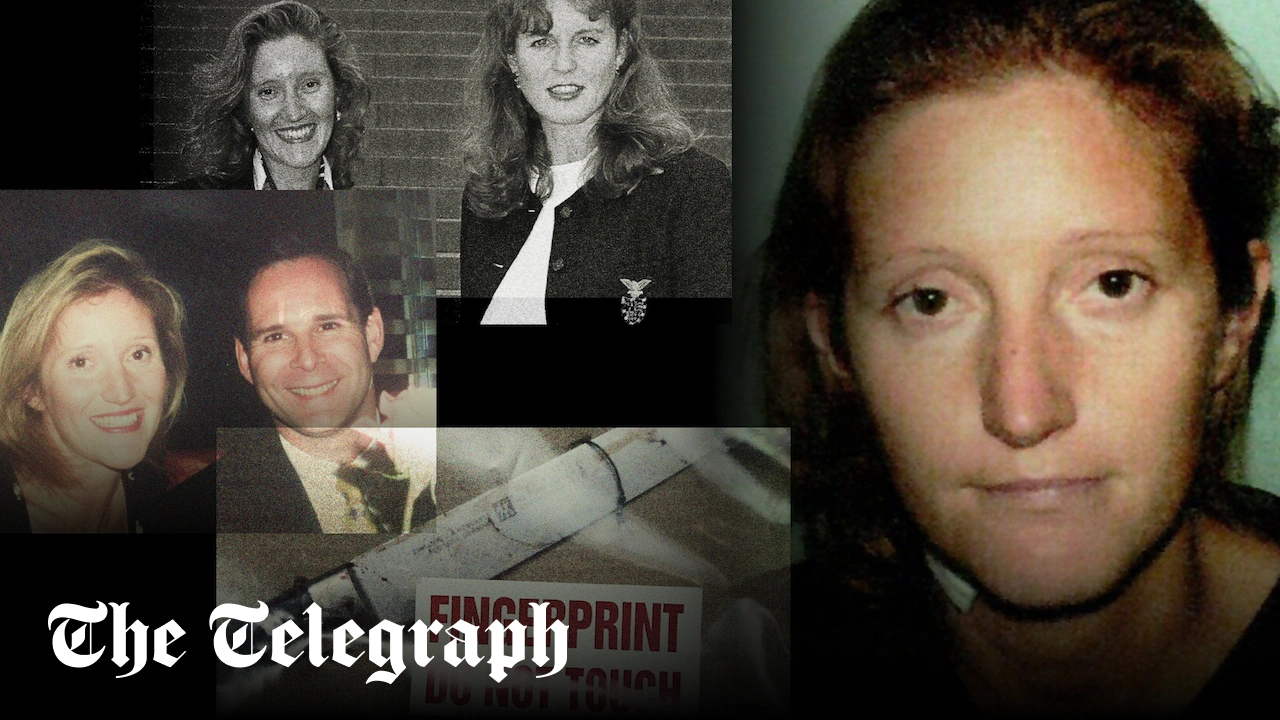
By 1997, Andrews had married and divorced a man 20 years her senior from whom she split after five years and “a couple of flings” (hers). A second relationship with Dimitri Horne, a Greek shipping magnate, descended into Andrews “basically stalking” him, he claimed later, smashing up his flat and, once, “punching and kicking him”. By the time she met Cressman, Andrews had taken a drug overdose, fallen into deep depression and described herself (in hindsight) as the “ultimate in insecurity”.
Their relationship was volatile, the court heard later. She made allegations about his extreme sexual tastes and violence behind closed doors. His family, defending him in death, were horrified, pointing to ex-girlfriends who did not make the same claims. “She tried hard to destroy his reputation but, thank the Lord, she didn’t do it,” said his father, Harry Cressman, in 2003.
In the fading summer of 2000, Cressman took Andrews to the French Riviera. The trip, by all accounts, was disastrous, with Jane hoping that he would propose and him eventually telling her that he had no intention of doing so. Of the aftermath, his mother recalled: “He thought that Jane would do something to herself, and that there would be a tragedy. Instead, it worked out the other way round.”
On September 16 of that year, Cressman made a 999 call. “We are rowing, someone is going to get hurt unless… I would like police to come and split us up. I would like someone here to stop us hurting each other,” he told the operator. The following day, he was beaten with a cricket bat while lying in bed and stabbed in the chest with a kitchen knife. Andrews, who fled after the murder, never denied killing him, though she pleaded self-defence.
The holiday and the call are portrayed on screen in The Lady. Cressman’s death is not. “We knew from the beginning that we didn’t want to show the violence,” says O’Malley. “It was never disputed that Jane killed Tommy; there’s nothing to be gained by showing the violence aspect of that.”
Cressman’s body was found in his flat the next day by a work colleague who had gone looking for him. Two days after that, Andrews was found curled up under a blanket in her VW Polo in a lay-by in Cornwall, having taken an overdose of painkillers.
The narrative in court, The Telegraph reported at the time, was that she “murdered her lover in anger and jealousy when he refused to marry her and described her as like a pair of old slippers he could not get rid of”. The Telegraph’s report described Andrews, then 34, sitting “expressionless” at the Old Bailey as Judge Michael Hyam told her: ‘‘In killing the man you loved, you ended his life and ruined your own.’’ On May 16 2001, she was given a life sentence for murder.
‘ The preceding article may include information circulated by third parties ’
‘ Some details of this article were extracted from the following source www.telegraph.co.uk ’